
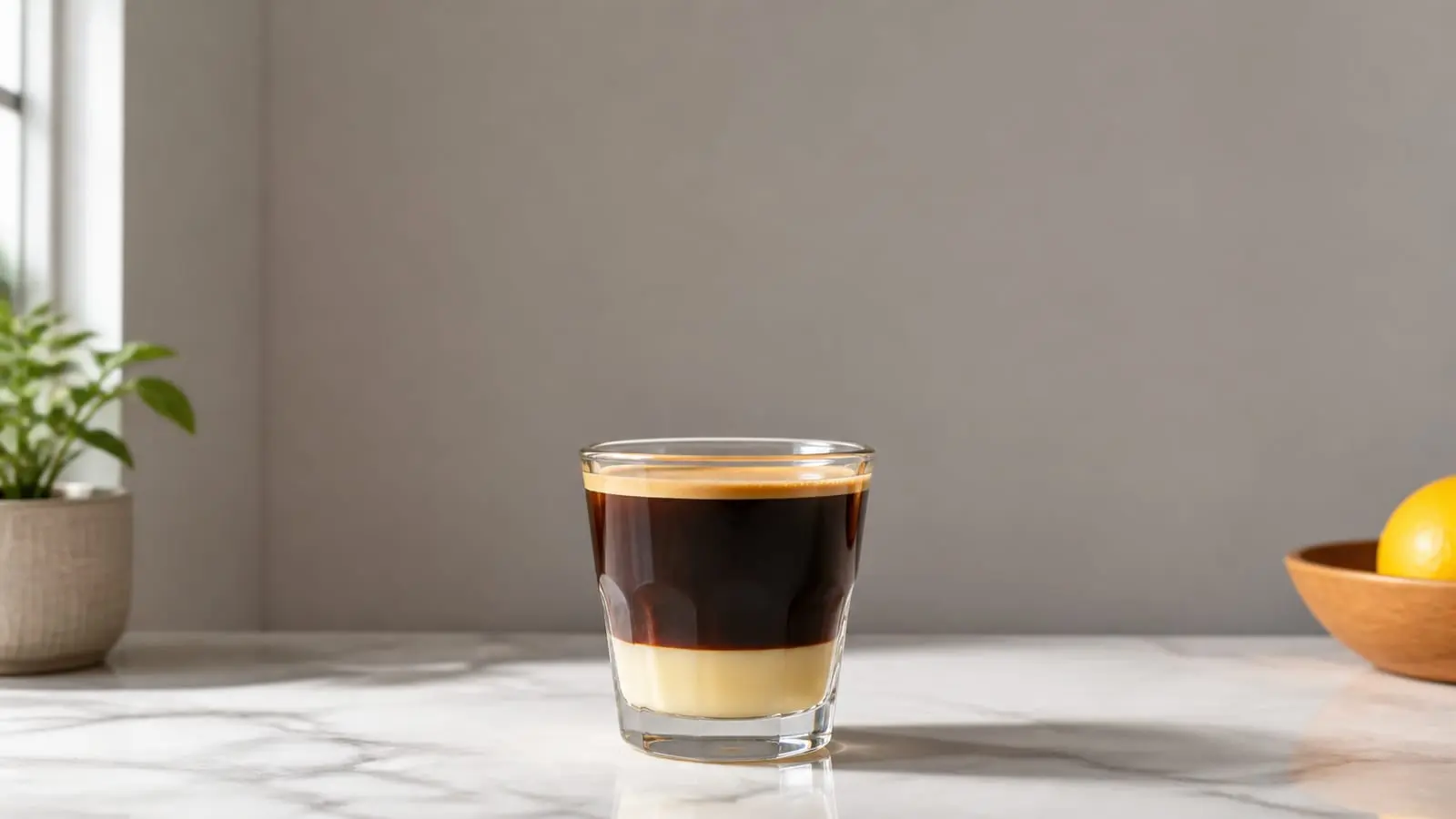
Bombon coffee isn't trying to be subtle. It's a small Spanish coffee drink made by layering espresso over sweetened condensed milk. You can also make it with moka pot coffee or strong drip coffee. It tastes like dark caramel, toasted sugar, and concentrated coffee, with dessert-level sweetness. Start here if you like rich coffee with milk or a sweet after-dinner sip. Skip it if you want a long, dry, origin-focused cup, because condensed milk is the whole point.
What is bombon coffee?
Bombon coffee, also called café bombón or coffee bombon, combines concentrated espresso with sweetened condensed milk. It’s usually served in a clear glass so you can see the pale milk layer settle beneath the darker coffee. The two liquids separate because the condensed milk is denser, which gives the drink its striped look. (es.wikipedia.org)
The drink is strongly associated with Alicante and the Valencian region of Spain. It later spread across Spain, where cafés serve it as a sweet coffee, a small dessert, or both. The café bombón entry on Wikipedia covers the traditional build, while Visit Valencia’s guide to local coffee places it alongside other regional drinks.
The name gives you a warning. Bombón means bonbon, so this isn’t pretending to be a restrained breakfast coffee. It’s compact, sweet, and built to taste rich without needing whipped cream, flavored syrup, or a tower of foam.
Taste and texture
The first sip is sweet and intense. Condensed milk brings a thick, silky texture with cooked sugar and caramel notes, while espresso adds roast bitterness and a sharp aromatic edge.
Once you stir it, the drink becomes smoother and more balanced. The coffee keeps the condensed milk from tasting like straight candy, but the milk still leads. That’s why a punchy espresso works better than a delicate, floral coffee here.
Expect these flavors:
- Dark caramel
- Toasted sugar
- Chocolate
- Roasted nuts
- Soft bitterness
- A thick, syrupy finish
The drink can taste surprisingly balanced if the espresso is fresh and properly dialed in. If the shot is already bitter, bombon coffee turns bitter and sticky. If the coffee tastes weak, the condensed milk takes over completely.
Who should drink it?
Bombon coffee suits people who like sweet coffee with a strong base. It’s also a good bridge from dessert drinks into espresso because the milk softens the sharpness without burying the coffee completely.
| If you like… | You’ll probably enjoy it because… | The trade-off |
|---|---|---|
| Vietnamese coffee | Both use condensed milk for sweetness and body | The Spanish version is usually smaller and served hot |
| Caramel lattes | It has a similar dark-sugar flavor | It has no steamed milk foam |
| Espresso after dinner | The serving is short and intense | It can feel too sweet after a heavy meal |
| Sweetened iced coffee | The flavor is rich and concentrated | The classic version isn’t built around ice |
| Black coffee | Espresso still provides the backbone | The milk covers much of the bean’s detail |
You should skip it if you want bright acidity, fruit notes, or a clean finish. A washed Ethiopian coffee can be beautiful on its own, but condensed milk will flatten most of that character. Use a coffee with chocolate, nut, or caramel notes instead.
Making coffee bombon at home

You need espresso, sweetened condensed milk, and a small clear glass. That’s the entire ingredient list. The glass is useful because it shows the layers, but it won’t change the flavor.
Ingredients
- Fresh-ground coffee for espresso
- Sweetened condensed milk
- A small clear glass
- A spoon
Method
- Spoon sweetened condensed milk into the bottom of the glass.
- Pull a short, concentrated espresso.
- Pour the espresso slowly over the back of a spoon.
- Let the layers settle for a moment.
- Admire the stripes, then give it a stir before drinking.
Pouring over a spoon keeps the espresso from punching straight through the condensed milk. You don’t need laboratory precision, but you do need a visible base of milk and enough espresso to cut through it.
For the full measured version, use our cafe bombon recipe for sweet sipping.
No espresso machine? Use moka pot coffee. It has the concentrated, roasted profile this drink needs. Strong drip coffee can work in a pinch, but it usually tastes thinner and makes the milk feel heavier.
The best coffee to use
Choose a medium or medium-dark roast with chocolate, caramel, toasted nut, or dried-fruit notes. Fresh-ground coffee matters because condensed milk can’t hide stale flavors as well as people think.
Avoid very light, tea-like coffees unless you enjoy experimenting. Their bright acidity can clash with the thick sweetness. Dark, oily beans can also fail because their smoke and bitterness become louder once you add condensed milk.
The best cup starts with a clean espresso. If the shot tastes balanced on its own, the finished drink will taste balanced too. If it tastes harsh, fix the grind before blaming the milk. Back off a click, taste again, and change one thing at a time.
Common mistakes
The biggest mistake is treating the drink like a latte. Bombon coffee isn’t meant to be stretched into a large mug with lots of milk. More volume only makes the coffee taste thin and the sweetness feel clumsy.
Other common problems include:
- Too sweet: Use less condensed milk next time. Adding more espresso can help, but it won’t erase a heavy sugar load.
- Too bitter: Fix the espresso first. Grind a little coarser or shorten the extraction.
- No visible layers: Use a clear glass and pour the espresso slowly over a spoon.
- Weak coffee flavor: Use a stronger brew method, such as espresso or moka pot coffee.
- Flat flavor: Grind fresh and use clean-tasting water.
- Too cold: Serve the espresso immediately after brewing. The classic drink is hot.
Don’t add sugar. The condensed milk already brings plenty. Syrups, whipped cream, and flavored powders turn it into a different drink, which is fine, but call it what it is.
Similar drinks
Bombon coffee shares condensed milk with several other drinks, but the build and drinking experience are different.
Vietnamese coffee usually uses strong drip coffee and condensed milk, often served over ice. It takes longer to brew and tends to taste darker, heavier, and more caramelized. For the broader tradition, read our guide to Vietnamese coffee culture.
A cortado uses espresso with a small amount of warm milk. It’s less sweet, more coffee-forward, and better for tasting the bean.
A latte uses steamed milk and often includes foam. It’s softer and larger, while bombon coffee stays compact and syrupy.
A Cuban cafecito uses espresso and whipped sugar rather than condensed milk. It has a similar sweetness but a different texture and preparation.
A barraquito is a more layered Spanish coffee that can include condensed milk, liqueur, citrus, cinnamon, and foam. It’s closer to a built dessert drink. You can explore another regional layered coffee with our café la Bamba recipe.
The clear glass tradition
Yes, the glass matters because the layers are part of the drink. A ceramic cup hides the contrast between the pale condensed milk and dark espresso, which removes half the appeal.
Still, the glass doesn’t make a bad coffee good. Use it for the visual effect, then focus on fresh coffee, a clean espresso, and a sensible amount of condensed milk. Pretty layers are nice. Burnt coffee underneath is still burnt coffee.
Serving it iced
You can, but iced bombon coffee is a variation rather than the classic presentation. Ice makes the sweetness feel sharper and changes the thick texture of the condensed milk.
If you want a cold drink, cool the espresso briefly before pouring it over the milk, then add ice after the layers form. Don’t pour steaming coffee over a glass packed with ice unless you enjoy cracked glass and a small kitchen disaster.
For a softer cold version, add a splash of plain milk or oat milk. Keep it modest. Too much turns the drink into an ordinary iced latte with condensed milk at the bottom.
Is bombon coffee worth making?
Yes, if you like sweet coffee and strong contrast. It’s quick, inexpensive, and more interesting than adding syrup to a weak latte.
The trade-off is simple: you give up some bean clarity for sweetness, body, and dessert-like comfort. That’s not a flaw. It’s the design.
Make it with fresh espresso, use condensed milk as the sweetener, and stop before you bury the coffee. That’s the sweet spot.
FAQ
Is bombon coffee the same as a Spanish latte?
Not always. Café bombón has a traditional build of espresso and sweetened condensed milk, while “Spanish latte” is a broader café-menu term that can include regular milk, condensed milk, or extra syrup.
Can you make it dairy-free?
Yes. Use sweetened condensed coconut, oat, or soy alternatives. The drink will still work, but the substitute will add its own flavor and may have a thinner body.
Do you drink it layered or stirred?
Look at the layers first, then stir. Drinking it without mixing gives you an uneven start because the condensed milk sits at the bottom.
Can you use instant coffee?
You can, but it won’t taste as rounded or concentrated as espresso. If instant coffee is your only option, dissolve it strongly and keep the serving small.
Is bombon coffee a dessert?
It can be. In practice, it sits between a coffee and a small dessert because the condensed milk brings enough sweetness and body to finish a meal on its own.