Your coffee tastes sour because the water didn't pull enough flavor out of the grounds, and that's the easiest coffee problem to fix. The term for this is under-extraction, which means the brew stopped before it reached the good stuff. The usual causes are a grind that's too coarse, a brew that's too short, water that's too cool, or too little coffee for the water. Fix those before you blame your machine.
If the cup tastes grassy instead of lemony, the beans may be under-roasted. Stale beans add their own sharp, hollow edge as well.
Why does my coffee taste sour?
Brewing is a race, and flavors dissolve in a set order. Acids come out first, then sweetness and body, and the bitter compounds come last. So if the water stops early, your cup is mostly acid with nothing to balance it. That's sourness: a lemon-juice pucker, a thin body, and a finish that vanishes or turns faintly salty.
The Specialty Coffee Association's Golden Cup standard puts the ideal extraction yield in a narrow window that starts around 18%. Extraction yield is the share of the grounds' weight that ends up dissolved in your cup. Fall short of that window and the cup leans sour. Push well past it and it turns bitter and drying.
You don't need a meter to use this. Your tongue already knows: sour means pull more out, bitter means pull less.
How to tell bright acidity from sourness
Acidity is the reason good coffee tastes alive. In a balanced cup it reads as juicy and bright, like green apple, orange, or ripe berries, and sweetness rounds it off. Sourness is acid standing alone. It hits the sides of your tongue, makes you wince, and leaves the cup tasting empty.
Try this test. Hold a sip for a second, then swallow. Bright acidity fades into sweetness and a clean finish, while sourness hangs around as a sharp tang with no body behind it.
Roast plays a part here too, and our guide to which roast tastes less acidic breaks that down. Still, a well-brewed light roast should taste bright and sweet. If it puckers, look at the brew first.
Grind size sets the pace

Grind is the first brewing setting to change, because it controls how fast water reaches the flavor. Coarse particles have less surface area, so they give up flavor slowly. Meanwhile, water runs past them quickly. As a result, a grind that's too coarse makes a sour, watery cup even when everything else is right.
Go a click or two finer and taste again. Keep going until the sourness fades and some sweetness shows up.
Watch for one gotcha. If your coffee tastes sour and bitter in the same sip, the grind is probably uneven. Blade grinders smash beans into a mix of dust and chunks. The dust over-extracts into bitterness while the chunks stay sour. A burr grinder cuts more even particles, so it's the first upgrade worth buying if you notice this pattern.
Short brews leave flavor behind
Contact time is the other half of extraction. According to a roaster's summary of SCA brewing standards, the Specialty Coffee Association suggests a brew time of 4 to 8 minutes, depending on the brewing method. If your drip or immersion brew finishes well short of that, a sour cup is no surprise.
Short brews sneak in a few common ways:
- Pour-over that drains too fast. A coarse grind lets water race straight through the bed, and the cup comes out thin and tart.
- French press or other immersion brews plunged early. Pressing halfway through because you're running late is the most common version of this mistake.
- Espresso shots that gush out fast and pale. A quick, blond stream that looks like weak tea will almost always taste sour.
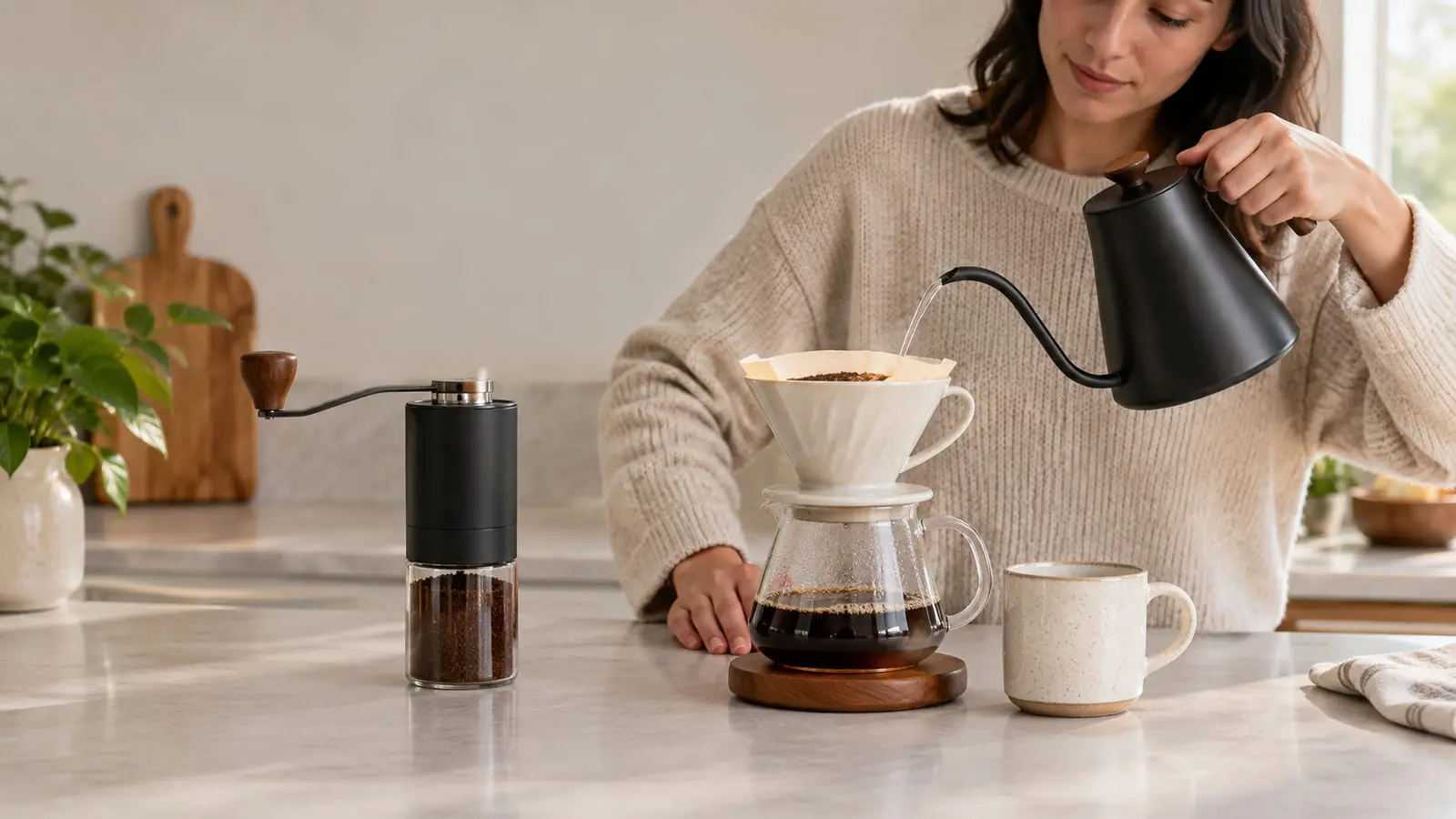
The fix is to slow things down. For pour-over, grind finer or pour in slower, smaller stages. For immersion, wait longer and give it a stir halfway through. Espresso runs on its own much shorter clock, so grind finer until the shot flows slower and thicker.
Water that's too cool can't finish the job
Hot water dissolves flavor faster, so cool water leaves you short. It pulls the acids out fine but stalls before it reaches sweetness. Use water just off the boil. Let the kettle sit a moment after it clicks off, then pour.
You don't need a fancy temperature-control kettle for this. The real heat traps are boring ones:
- A kettle that sat while you hunted for filters has cooled more than you'd think. Bring it back to a boil.
- A cold ceramic dripper or mug soaks up heat from your first pour. Rinse it with hot water first, which also rinses the papery taste out of the filter.
- Some budget drip machines never get the water hot enough at all, and no grind setting makes up for that.
If your drip coffee always tastes sour no matter how you set the grind, the machine is a likely suspect.
A weak ratio tastes thin and sharp
Ratio means how much coffee you use for a given amount of water. When there's too much water for the grounds, the flavor gets stretched thin. There isn't enough sweetness and body left to cushion the acids. So the cup comes out watery with a sharp edge.
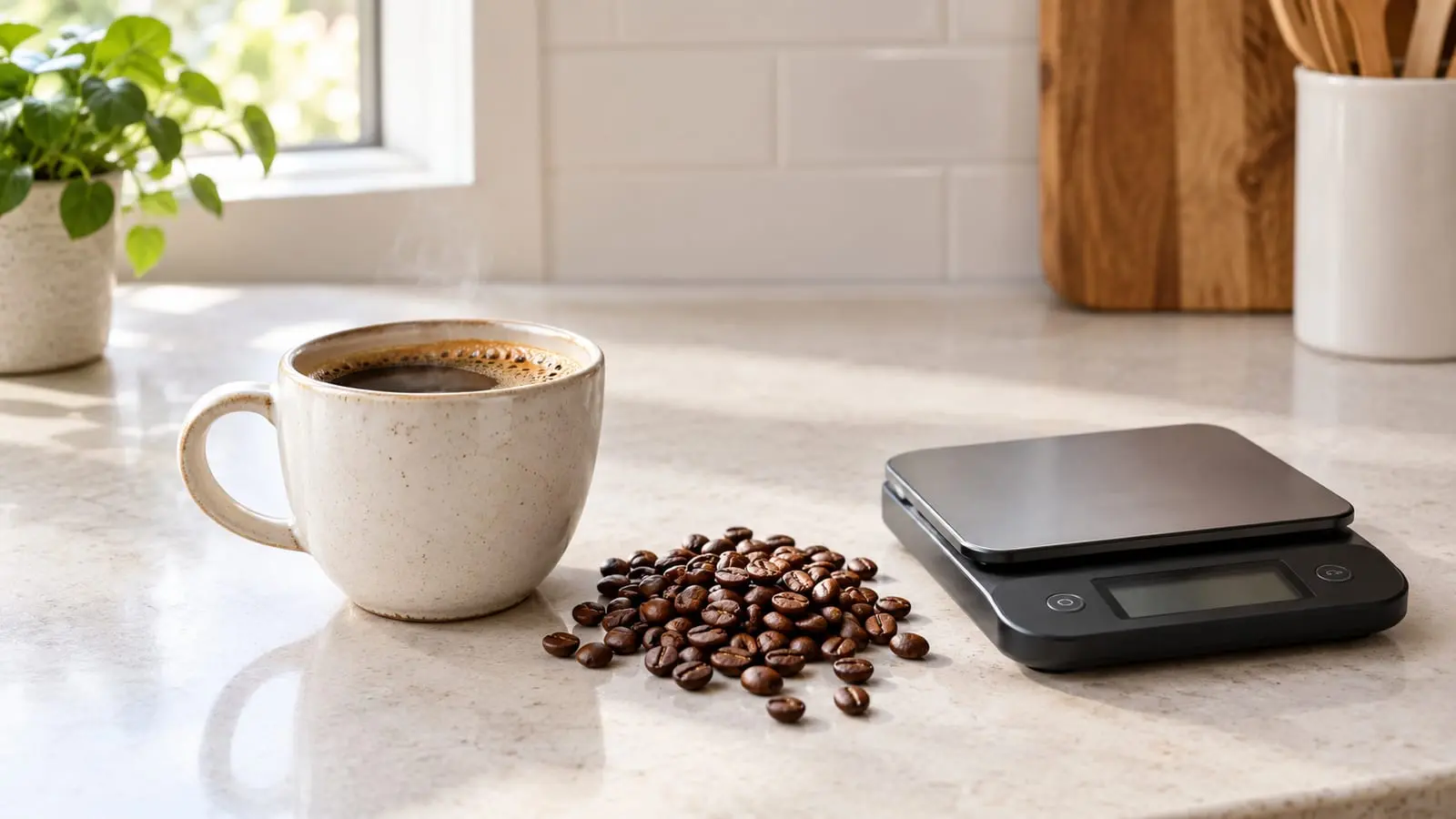
The fix is simple: add a little more coffee and keep everything else the same. However, scoops vary from bag to bag and from morning to morning. Weigh your coffee and water on a kitchen scale instead. It's the cheapest way to make tomorrow's cup taste like today's.
Some sourness starts with the beans
Sometimes you dial in the grind, time, and temperature and the cup still tastes wrong. If so, taste for grass. Under-roasted beans come out of the roaster before they fully develop. They taste vegetal, like raw peanut, hay, or cut grass, with a sour tang underneath. No brewing trick fixes that, because the sweetness was never there to extract.
Origin matters too. Coffees grown at high altitude tend to carry more natural acidity, and light roasts keep more of it. They're also denser, so they need a finer grind and hotter water than darker roasts.
If you don't enjoy bright cups, pick beans whose bag notes match what you like. A medium roast with chocolate, caramel, or nut notes is an easy place to start.
Stale beans taste hollow and sharp
Old coffee loses its sweetness and aroma first. What's left tastes flat and papery, with a sharp edge that people often mistake for sourness. Pre-ground coffee goes stale fastest, because all that surface area meets the air at once.
Buy whole beans with a roast date on the bag, and finish them within a few weeks. Store them airtight, away from light and heat. Then grind right before you brew. That habit improves a hollow, sharp cup more than a shiny new brewer ever will.
What's the fastest way to fix sour coffee?
Work through these in order. Change one setting at a time and taste after each brew, so you know which change made the difference.
- Check the beans. If they're stale, or pre-ground from a bag that's been open a while, start fresh. Every other fix is wasted on tired beans.
- Grind finer. Move a click or two at a time.
- Brew longer. Pour slower, steep longer, or let the espresso shot run slower.
- Brew hotter. Use water just off the boil, and pre-heat your brewer and cup.
- Adjust the ratio. Add a little more coffee if the cup still tastes thin.
- Rethink the beans. If it tastes grassy no matter what you do, the roast is the problem, so try a different bag.
Stop as soon as it tastes good. If you overshoot and the cup turns bitter or drying, back off a click. The sweet spot sits between sour and bitter. For the other usual suspects, see our list of common coffee brewing mistakes and how to fix them.
Taste and adjust by brewing method

The same rule holds for every brewer: sour means pull more out. What changes is which setting you can actually reach. A drip machine gives you little beyond grind and dose, while a French press lets you control nearly everything.
| Method | Common sour cause | First fix |
|---|---|---|
| Drip machine | Grind too coarse, water not hot enough | Grind finer; if that fails, suspect the machine |
| Pour-over | Water drains through too fast | Grind finer and pour in slow stages |
| French press | Plunged early, grind too coarse | Steep longer and give it a stir |
| AeroPress | Short steep, water cooled off | Steep longer or grind finer |
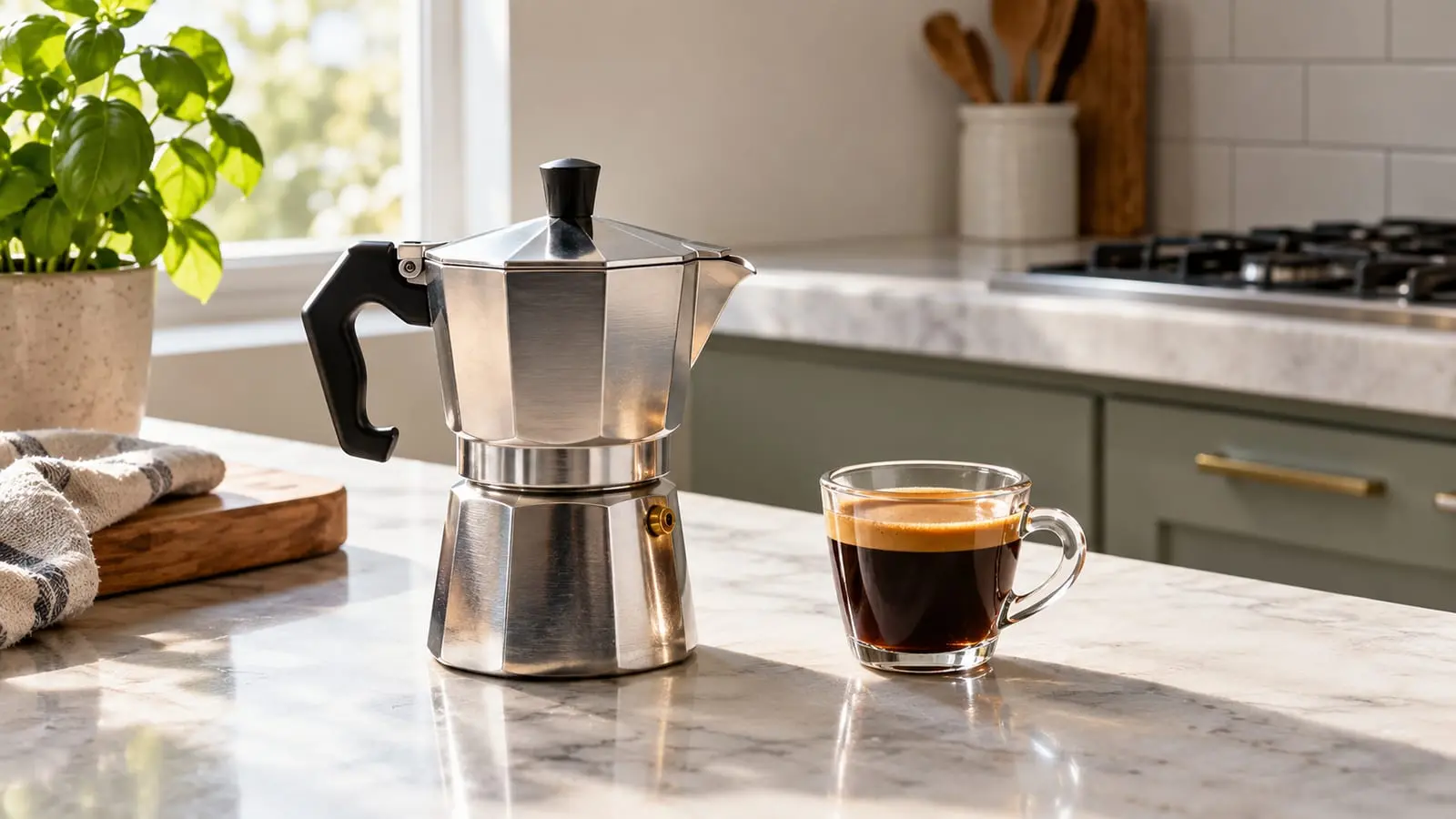
| Espresso | Shot runs fast and pale, or channels | Grind finer, then check how you prep the puck |
Espresso is the touchiest of the bunch. A shot can taste sour even at a normal time if water finds a crack in the puck and rushes through one spot. That's called channeling, and our guide on why espresso channels form shows how to stop it.
Treat any recipe, including the one printed on the bag, as a starting point. Your beans, grinder, and water decide where you end up, so taste and adjust from there.
FAQ
Why does coffee get sour after it sits?
Two things happen. As a cup cools toward room temperature, your tongue picks up acidity more easily, so coffee that tasted fine hot can turn tart. Coffee left on a hot plate is worse, because the steady heat breaks it down until it's sour and bitter at once. Skip the warmer and pour the pot into an insulated carafe.
Can milk, sugar, or salt rescue a sour cup?
They'll get you through this morning's cup. A splash of milk adds body and sweetness that soften the sharp edge, and sugar pushes back against acid directly. Salt is the weakest of the three here, since a pinch mutes bitterness far better than it mutes sour. Drink the patched cup, then fix the brew tomorrow.
Why is my cold brew sour?
Cold water extracts slowly, so cold brew lives or dies on steep time. Pull it early or go light on the coffee, and the concentrate comes out thin and tangy. Leave it in the fridge overnight and then some, and taste a spoonful before you strain. If it's still sharp, give it more hours before you touch the grind, because fine grounds make cold brew muddy.
Is sour coffee safe to drink?
Under-extracted coffee is perfectly safe; it just tastes unpleasant. Spoiled coffee is another matter. If brewed coffee or cold brew smells musty or rancid, or you spot a film or fuzz on top, pour it out and make a fresh batch.