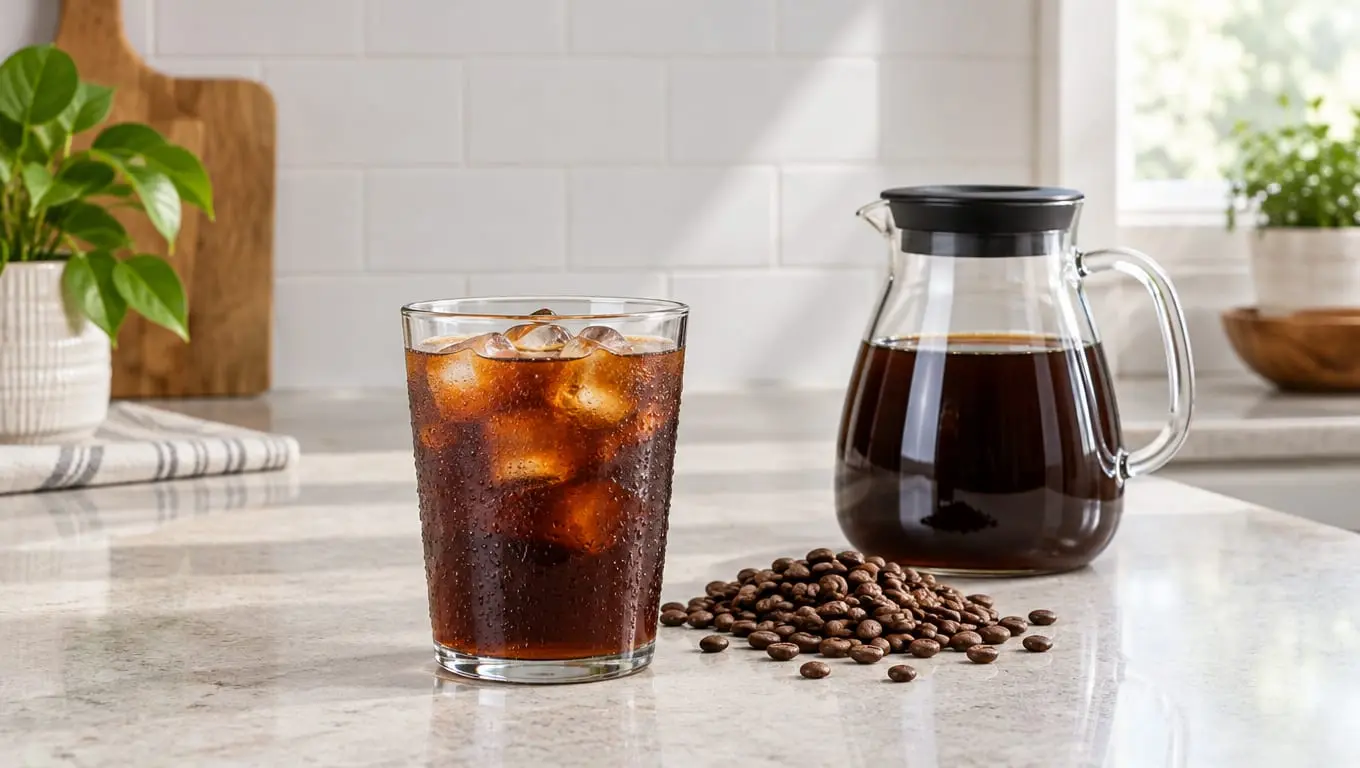
Cold brew forgives a lot, but it won't forgive stale or thin coffee. The best coffee beans for cold brew are fresh, whole, medium to medium-dark roasts with chocolate and caramel sweetness. They also need enough body to survive being cut with water, milk, and ice.
My top pick is Counter Culture Big Trouble. After that, a coarse grind, a wide ratio, and a patient steep do more for your glass than any pricey brewer.
What are the best coffee beans for cold brew?
Counter Culture Big Trouble is the bag I'd hand most people first. It's a medium roast that tastes of caramel and nuts, and it has the weight to stay rich after you dilute the concentrate.
That matters because cold water extracts slowly and pulls out less of a coffee's bright acidity. As a result, cold brew rewards beans that already bring sweetness and body. It also punishes delicate, tea-like coffees that rely on sparkle.
Roasters who build blends just for cold brew land in the same spot. Peet's says its medium-roast Baridi Blend is the one it uses for cold brew in its coffeebars. Merit Coffee describes its Roaster's Blend as built for cold brew around balance, sweetness, and body. Red Rooster Coffee in Floyd, Virginia, makes a three-bean Cold Brew Blend developed for cold brewing.
A "cold brew" label on the bag tells you about roast style and flavor goals. It doesn't mean the beans were grown or processed in some special way. Any fresh medium roast with chocolate or caramel notes can do the same job. That's why Big Trouble wins without the label.
Cold brew bean picks at a glance
| Pick | Style | How it tastes as cold brew | Best for |
|---|---|---|---|
| Counter Culture Big Trouble | Medium roast blend | Caramel, nutty, round body | Best overall, black or with milk |
| Stumptown Hair Bender | Specialty blend | Rich, sweet, dark chocolate with a little fruit | Best specialty pick |
| Café Bustelo Espresso Style (whole bean) | Dark roast | Bold, roasty, heavy, simple | Best budget pick |
| Lifeboost Organic Medium Roast | Organic medium roast | Smooth, gentle acidity, plain chocolate | Best organic pick |
| Counter Culture Cold Hearted | Yirgacheffe, Ethiopia base with Embu, Kenya | Brighter and fruit-forward | Best bright and fruity pick |
| Black White Coffee Roasters The Classic | Darker roast, Colombia and Ethiopia | Deep and roasty | Best dark-roast pick |
| Bizzy Organic Coarse Ground Coffee for Cold Brew | Pre-ground organic Arabica | Mild and easygoing | Best pre-ground pick |
If you only buy one, buy Big Trouble. Each of the others wins for one kind of drinker, whether that's a milk-heavy glass, a tight budget, or a kitchen with no grinder.
What makes a bean good for cold brew
Judge a cold brew bean diluted and cold, the way you'll actually drink it. Concentrate straight from the jar tastes harsh and tells you very little. So these are the traits that count once it hits the glass:
- Body. This is the weight on your tongue. Thin coffee turns watery the moment the ice starts melting.
- Sweetness. Look for chocolate, caramel, or brown sugar notes. Cold extraction keeps sweetness and softens sharp edges, so start with beans that have plenty.
- Acidity. This is the bright, tangy part. A little lift is lovely, but a lot can read as sour when cold.
- Bitterness. A touch tastes like dark chocolate. Too much tastes like burnt toast.
- Clarity. Can you pick out separate flavors, or is it one muddy note? This one matters most if you drink it black, since milk blurs the edges anyway.
- Dilution tolerance. The cup should still taste like coffee after you cut it with water or milk.
- Freshness. Check for a recent roast date, ideally within the last few weeks. Stale beans give you a dull, papery glass that no steep time can rescue.
- Value. Concentrate eats beans fast, so price per glass matters more than price per bag.
Roast level matters more than bean prestige
Medium and medium-dark roasts are the safest starting point. They bring caramel sweetness and solid body, which is exactly what cold water pulls out well. A pricey light roast is a riskier buy. Cold brewing mutes much of the brightness you paid for, so it can come out flat and a little hollow.
Dark roasts go the other way. They're smoky, bittersweet, and heavy, and they shine with milk. However, the origin character is mostly gone, and a long steep can push them toward ashy.
Pick your roast by how you drink it:
- Black over ice: medium roast, for balance and sweetness.
- With milk or oat milk: medium-dark or dark, because the roast cuts through the dairy.
- For fruit and florals: a light-medium roast from Ethiopia or Kenya, steeped toward the long end.
The same thinking applies to hot coffee, too. Our guide to the best coffee to drink black covers which beans hold up with nothing added.
Origin, processing, and grade
Origin steers the flavor of your glass. Beans from Central and South America, like Colombia, Guatemala, and Peru, tend to lean chocolate, nuts, and caramel. That makes them easy cold brew coffees. Ethiopian beans lean floral, berry, and citrus, so they make a brighter, juicier glass.
Kenya sits in between. A medium-dark Kenya AA gives you a stronger cup with fruity, wine-like notes. "AA" is a size grade that marks the largest beans in Kenya's sorting system. Bigger beans don't guarantee better flavor, but AA lots usually come from careful sorting.
Processing matters as well. Processing is how the coffee fruit is removed from the seed. Washed coffees have the fruit stripped off before drying, which tastes clean. Semi-washed coffees are often a bit heavier and fruitier than fully washed ones, and that extra weight helps in cold brew.
Is specialty grade worth paying for?
Specialty grade is a top quality tier that graders assign through cupping, a standard tasting method used to rate coffee. Only beans that score high and show few defects earn it. It's a useful signal of care and quality. Still, it isn't required for good cold brew.
A well-roasted commercial blend can make a fine concentrate, especially once milk goes in. Specialty earns its price when you drink your cold brew black and want to taste the difference.
Do you need whole beans for cold brew?
Yes, if you can. Whole beans ground right before brewing give the best aroma and sweetness, because ground coffee goes stale fast. A cheap burr grinder will do more for your cold brew than any fancy steeping jar.
Pre-ground is a fair compromise, with one big catch. Most pre-ground coffee is ground medium for drip machines, and that's too fine for a long steep. You'll get a muddy, bitter batch and a clogged filter.
The familiar Bustelo brick is worse, because it's ground fine for espresso. If you go the budget route, buy the whole bean bag.
The exception is coffee sold coarse-ground for cold brew. Bizzy is a blend of Arabica beans from Guatemala, Peru, and Nicaragua, ground coarse for steeping. If you don't own a grinder, it's a sensible pick. Buy small bags and finish them quickly, since pre-ground loses flavor much faster than whole bean.
How long should cold brew steep?

Steep cold brew for 12 to 16 hours in the fridge at a 1:8 ratio. Ratio means coffee to water by weight. Here's a dependable starting batch:
- Weigh 100 grams of whole beans and grind them coarse, about the texture of raw sugar.
- Add 800 grams of cold, filtered water and give it a stir so every ground is wet.
- Cover and steep in the fridge. On the counter at room temperature, extraction runs faster, so pull it closer to the short end.
- Strain through a paper filter for a silky, clean concentrate.
- Dilute about half and half with water or milk, then taste before you change anything.
Then taste and adjust, one change at a time. Thin and sour means you need more coffee or a longer steep. Bitter, muddy, or drying means you should back off a click coarser or shorten the steep.
Dark roasts like Bustelo do best toward the short end. Lighter, fruitier beans like Cold Hearted can take the full steep. For more on why these levers work, see our guide to optimizing cold brew extraction.
How each pick tastes over ice and with milk

Best black
Big Trouble stays balanced and sweet over ice, with caramel up front and enough body to keep it from tasting watery. Hair Bender is more layered. Its dark chocolate leads, with a little fruit behind it, and that complexity shows best with nothing added.
Cold Hearted is the bright one. Counter Culture builds it on coffee from Yirgacheffe, Ethiopia, and adds coffee from Embu, Kenya, for depth. Expect more fruit and florals than chocolate. Milk tends to bury that brightness, so drink it black.
Best with milk
Bustelo makes bold, bittersweet cold brew that stands up to milk and sugar without disappearing. Black, it's one-note and roasty. The Classic is a darker roast that blends beans from Colombia and Ethiopia. It's heavy enough to carry oat milk and still taste like coffee.
Lifeboost lands in the middle. It's smooth and mild, with gentle acidity and straightforward chocolate. That's pleasant black, but it can turn a little plain under a lot of milk. Bizzy drinks the same way: easy, mild, and best for people who want a no-fuss glass.
Budget, specialty, and organic choices
Cold brew uses a lot of coffee per batch, so budget beans make real sense here. Bustelo costs a small fraction of what specialty bags do, and it makes a bold glass. The tradeoff is nuance. You get roast and body, and not much else.
Hair Bender and Big Trouble cost more, and they're worth it if you drink your cold brew black. Under heavy milk and syrup, most of that extra flavor gets lost. In that case, save your money.
Organic certification tells you how the coffee was farmed. It doesn't promise better flavor.
Lifeboost's big pitch is low acid. However, cold brew already tastes gentle and low in acid, so that claim adds little here. Buy Lifeboost if organic farming matters to you. Skip it if you're paying for "low acid" alone.
Common cold brew bean mistakes
- Using old beans. A bag that's sat in the pantry for months makes flat, cardboard-tasting cold brew. Check the roast date, because a best-by date says almost nothing about freshness.
- Grinding too fine. Fine grounds over-extract during a long steep. You'll get bitterness, silt, and a filter that won't drain.
- Steeping too long. Going well past the long end pulls out woody, harsh flavors. Set a timer.
- Using a drip-strength ratio. Cold brew made weak tastes like dishwater once the ice melts. Start strong and dilute.
- Judging the concentrate straight. Undiluted concentrate always tastes intense and a bit harsh. Dilute it first, then decide.
The final ranking
- Big Trouble: the everyday winner, black or with milk.
- Hair Bender: for black drinkers who want depth and don't mind paying for it.
- Cold Hearted: for fruit lovers who drink it black over ice.
- The Classic: for latte-style cold brew with plenty of milk.
- Bustelo, whole bean: for big, cheap batches with milk and sugar.
- Lifeboost: for organic shoppers who want a mild, smooth glass.
- Bizzy: for anyone without a grinder.
FAQ
Can you make cold brew with decaf beans?
Yes, and decaf cold brew can be surprisingly good. Pick a medium-roast decaf with toffee or chocolate notes, because decaffeinating tends to soften a coffee's flavor and you want sweetness to spare. Freshness counts double here, since decaf starts with less to lose. Then use the same ratio and steep as your regular batch.
Are flavored beans a good idea for cold brew?
Usually not. Flavoring oils that smell great in the bag can turn perfumey and fake over a long steep, and they leave a sticky film in your grinder that seasons your next bag too. Brew a plain batch, then stir in a syrup so you control how much flavor goes in. Our overnight cold brew recipes have plenty of ideas.
Is cold brew the same as iced espresso?
No. Cold brew steeps for hours in cold water, while espresso is pulled hot in seconds and then chilled. The result is a different drink: punchier and brighter, with a layer of crema cold brew never gets. If you want something in between, our guide to cold brew espresso walks through it.
Is store-bought bottled cold brew worth buying?
It earns its place in a travel bag or a slammed week. Still, you pay far more per glass than a homemade batch costs, and you can't choose the beans or the strength. Keep a jar of your own concentrate in the fridge, and save the bottles for days you'd otherwise skip coffee.