Coffee never needed a plug. Learning how to make coffee without electricity comes down to one skill: heating water on a safe flame. After that, you need a brewer that keeps the grounds out of your cup. A French press, pour-over cone, moka pot, or jar of cold brew all do the job. Get your ratio right, taste and adjust, and the cup holds its own against any drip machine.
My pick for most people is the French press, because it forgives sloppy timing and needs nothing but hot water. Pack a pour-over cone when weight matters. Reach for a moka pot when you want it strong, and fall back on cold brew when you can't heat anything at all. Cowboy coffee is the bare minimum for when all you have is a pot.
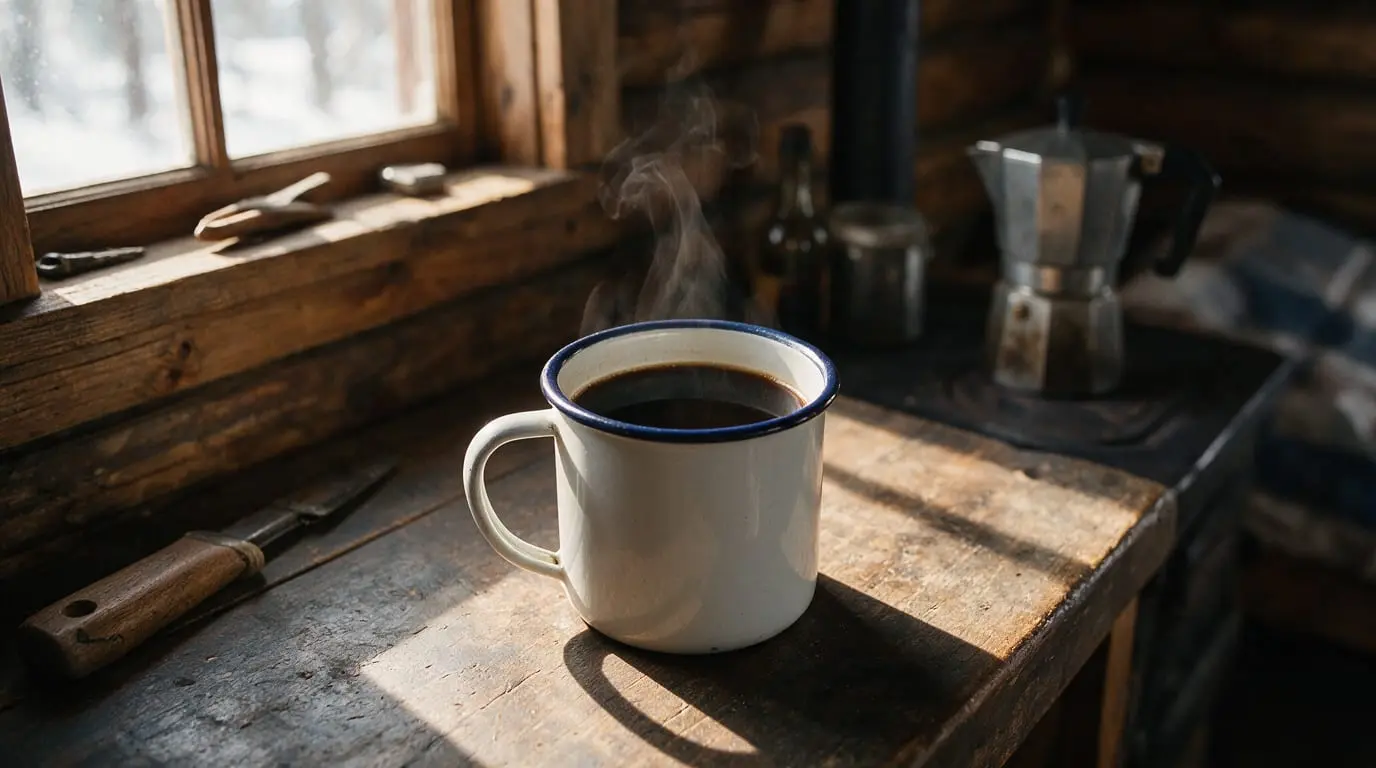
Cowboy Coffee
Ingredients
Method
- Put more water in the pan than you normally would. For 3 cups, add another 3/4 cup, since some stays behind with the grounds.
- Set the pan on the stove or other heat source and bring it to a boil.
- Once it boils, stir in the coffee at 2 tablespoons per 6oz of water.
- Take the pan off the heat and put a lid on it.
- Leave it covered for a few minutes until the grounds sink to the bottom.
- Carefully pour into mugs, leaving the grounds behind, or run it through a filter for a smoother cup.
How do you make coffee without electricity?
You need four things: fresh coffee, clean water, a safe source of heat, and some way to get the grounds out of your cup. That's the whole list. Each method below is a different answer to that last part.
Pick by taste as much as by gear, because these five make very different cups:
| Method | Needs hot water? | What you'll taste | Best for |
|---|---|---|---|
| French press | Yes | Full body, rich, a little silt | Home, car camping, outages with a gas range |
| Pour-over cone | Yes | Clean, bright, light body | Backpacking, travel, fruity light roasts |
| Moka pot | Yes, on a flame | Strong, punchy, concentrated | Camp stoves, gas ranges, milk drinks |
| Cold brew | No | Smooth, chocolatey, low acid | Outages with no safe heat, hot days |
| Cowboy coffee | Yes | Bold, a bit rough | When you only have a pot |
If you buy whole beans, add a hand grinder to the kit. It runs on your arm, and it makes a bigger flavor difference than any brewer on this list.
Start with a ratio you can trust
Use 55 grams of coffee per liter of water as your baseline. That number comes from the Specialty Coffee Association's Gold Cup Standard. It was first written for batch brewing, but it's a sane starting point for the French press, pour-over, and cowboy coffee. The moka pot and cold brew concentrate play by their own rules.
That works out to about 1 part coffee to 18 parts water. So half a liter of water takes roughly 27 grams of coffee.
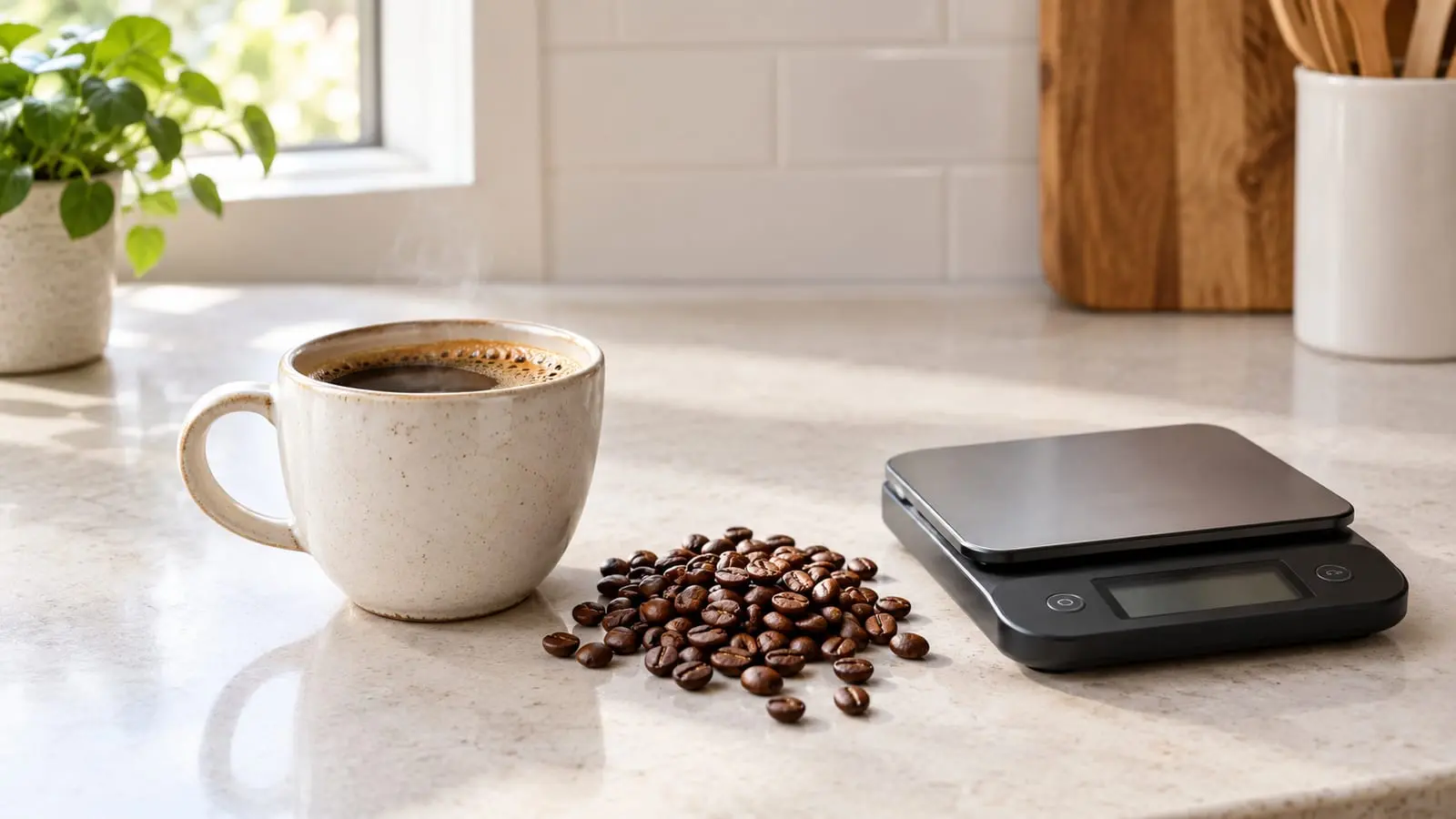
You can still weigh things with the power out. Most kitchen scales run on small batteries, so they don't care whether the grid is up. No scale? Pick one spoon, level it off every time, and note how many scoops you used.
The same standard also targets 18 to 22 percent extraction. That's how much of the ground coffee actually dissolves into your water. You won't measure that at a campsite, and you don't need to. If the cup tastes thin, add coffee next time. If it tastes heavy and harsh, add water.
Safe ways to heat water off the grid
Aim for water between 195 and 205 degrees Fahrenheit, the range the National Coffee Association recommends for good extraction. You don't need a thermometer to get there. Bring the water to a boil, pull it off the heat, and let it sit until the rolling bubbles calm down. That's the sweet spot for every hot method here.
Your heat options, from easiest to fussiest:
- Gas range. The burners usually still work in an outage, even when the electric igniter doesn't. Check your stove's manual for how to light it safely with a match.
- Camp stove. Canister and two-burner stoves heat a pot fast. Use them outdoors only, every time.
- Grill side burner. It works like a stovetop. Same rule: outside, and never in a garage.
- Woodstove or fireplace. Set a cast-iron or steel kettle on the stovetop or on a grate over the coals. Keep plastic handles away from open flame.
- Solar cooker. On a clear, sunny day it can get water hot enough, though slowly. A solar shower bag won't, so make cold brew instead.
Carbon monoxide is the danger worth repeating. Camp stoves, grills, and charcoal give off a gas you can't smell, and it builds up fast indoors. If a heat source was made for outside, it stays outside.
One habit saves fuel. Boil a full pot once, then pour what you don't use into a vacuum flask. As a result, your second round of coffee needs no flame at all.
French press: the most forgiving pick
The French press is the best all-around way to brew without power. It's sturdy, it packs easily, and it turns hot water and a timer into a full-bodied, silky cup. It also shrugs off small mistakes better than any other hot method.
Brew time: about 4 minutes of steeping, plus however long your water takes to boil and settle.
Use a coarse grind, about like coarse sea salt. Add the hot water, give it a stir, and start your timer. Most French press guides land on that same steep, so trust it before you start tinkering. Then break the crust of grounds on top and press the plunger down slowly.
Pour all the coffee out right away, even if you won't drink it yet. Coffee left on the grounds keeps extracting and turns bitter. So decant the extra into a flask or a second mug.
For less silt, let your cup settle briefly before you drink, and skip the last sip. That sludge is the fine stuff the mesh screen couldn't catch.
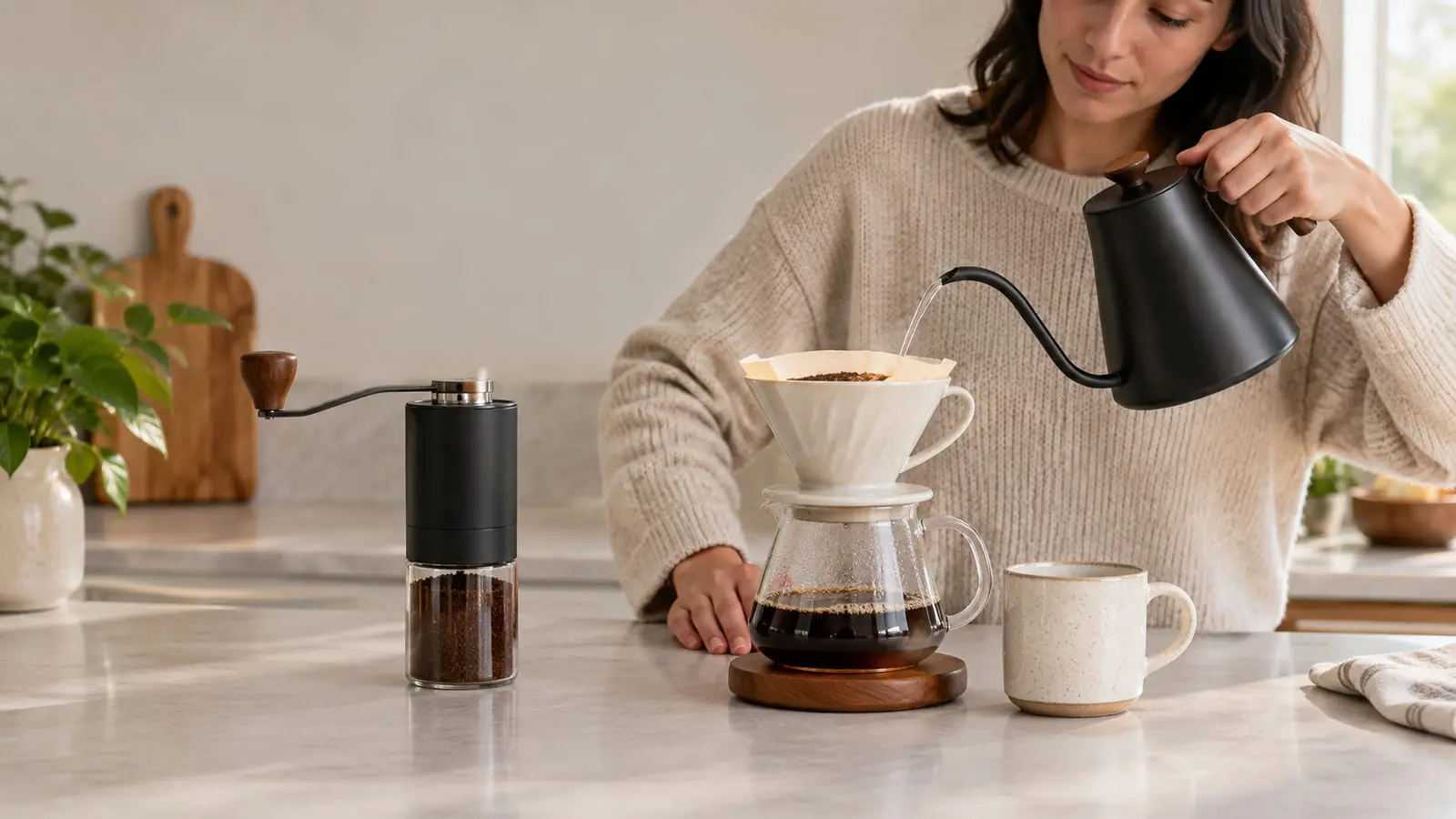
Pour-over without an electric kettle
A pour-over cone is the best lightweight travel brewer. It weighs next to nothing, nests inside a pot, and gives you a clean, bright cup that shows off fruity beans. The catch is the pour. You need a slow, steady stream, and a saucepan doesn't love to give you one.
Here's how to get control without a gooseneck kettle:
- Pour from the lip of a saucepan in short, gentle bursts.
- Better yet, move the hot water into a measuring cup with a spout. It pours far more steadily.
- A camp pot with a built-in spout works fine too.
Rinse the paper filter with hot water first. That warms the cone and washes out the papery taste. Then use a medium grind and start with the bloom: wet the grounds with a little water and wait for the bubbling to settle. The bloom lets trapped gas from roasting escape, so the rest of the water pulls flavor evenly.
After that, pour in slow circles and keep the grounds just covered. If the water rushes through and the coffee tastes sour, grind finer. If it drains slowly and tastes harsh, back off a click.
Moka pot on an open flame
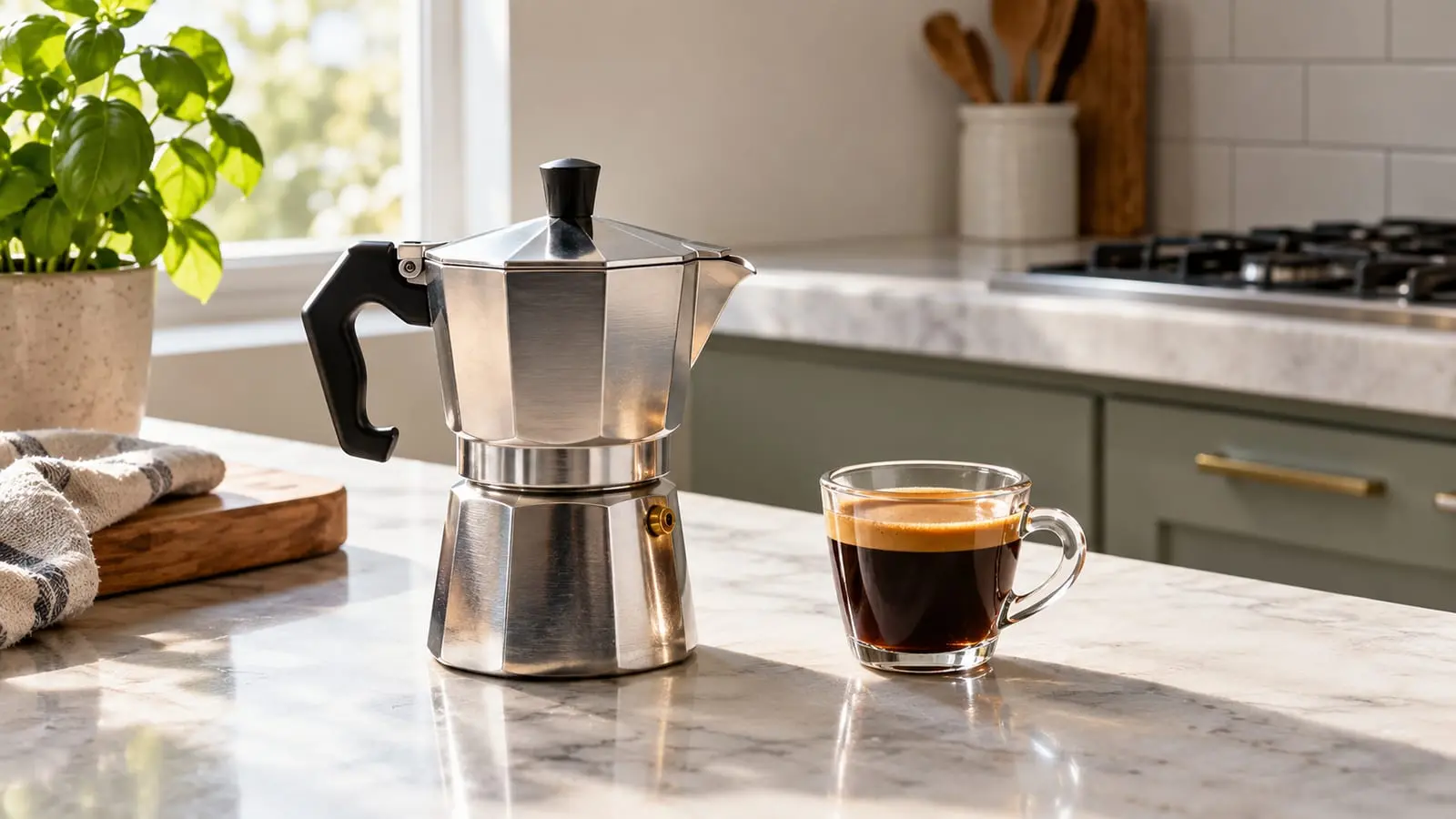
Reach for a moka pot when you want strong, concentrated coffee. Water in the bottom chamber heats up, builds pressure, and pushes up through the grounds into the top chamber. The result is punchy and dense, great black or under warm milk. It isn't true espresso, though, and our guide to making espresso-style coffee without an espresso machine covers that style in depth.
Fill the bottom chamber with hot water up to just below the safety valve. Starting hot means less time on the flame, so the grounds cook less. Hold the base with a towel when you screw it together. Fill the basket with fine grounds, level the top with a finger, and don't tamp, because packing it down can choke the flow.
Set the pot on low to medium heat. Keep the flame narrower than the base, since flames licking up the sides can melt the handle. When you hear a gurgle and sputter, pull it off right away. Then run the base under cold water or wrap it in a damp towel to stop the brew before it scorches.
Moka pots work on gas ranges, camp stoves, and grill side burners. Over a campfire, set the pot on a steady grate above low coals, never down in the fire.
Cold brew when you can't heat anything
Cold brew is the best fallback when there's no safe heat at all. It needs coarse grounds, room-temperature water, a jar, and patience. Time does the work the kettle usually does.
Stir the grounds into the water, cover the jar, and leave it overnight. Use a lot more coffee than you would for a hot cup, since you're making a concentrate. Keep the grind coarse. Fine grounds pull muddy, harsh flavors instead of the smooth, chocolatey taste cold brew is known for.
Strain it through a paper filter, a clean cloth, or a French press. Then cut the concentrate with water or milk until it tastes right. Serve it over ice if you have any.
Storage gets tricky with no fridge. Plain cold brew holds up at room temperature for a short while, but it tastes best the same day. Make only what you'll finish, or keep it in a cooler with ice if you have one.
Cowboy coffee, the last resort
Cowboy coffee is what you make with a pot, a spoon, and some grounds. It's rough around the edges, but it's real coffee, and it's better than its reputation.
Bring water to a boil, then take the pot off the heat. Stir in coarse grounds and let them steep a few minutes. Boiling the grounds hard is what gives cowboy coffee its bad name. It scorches the flavor and drags out bitterness.
To settle the grounds, add a small splash of cold water and wait. The splash helps a little, but time does most of the settling. Then pour slowly into your mug and leave the last bit in the pot. That bottom layer is mostly mud.
Which setup fits your trip?
Match the brewer to how much you can carry. Here's how I'd pack:
- Car camping: a French press or moka pot, a two-burner camp stove, a hand grinder, and a flask. Weight doesn't matter, so bring what makes the best cup.
- Backpacking: a plastic pour-over cone, a small stack of paper filters, and a canister stove. Pack out used grounds and filters in a zip bag.
- Hotels and rentals: if the room has no working kettle, start a jar of cold brew before bed and it's ready when you wake up. The front desk will often hand over hot water too, which is all a collapsible cone needs.
- Road trips: fill a vacuum flask with hot water before you leave, then brew in a French press at the first stop.
For more on what's worth hauling, see our list of coffee gear for camping trips and our roundup of portable coffee makers for travelers.
Making coffee during a power outage

Safety comes before caffeine here. The easiest way to make coffee without electricity in an outage depends on what heat you can use safely indoors. The Ready.gov power outage guide covers the wider checklist, including carbon monoxide and food safety.
Work through it in this order:
- Heat: if your gas range lights with a match, you're set. If not, don't bring a camp stove or grill inside. Make cold brew instead.
- Water: if your area has a boil-water notice, follow the local advice before brewing with tap water. Stored or bottled water is the safer bet.
- Milk: keep the fridge door shut to hold the cold. If milk has gone warm or smells off, throw it out. Shelf-stable milk, powdered milk, and sweetened condensed milk are better pantry backups.
- Method: brew the simplest way your heat allows. That means French press if you have a flame, cold brew if you don't.
How to get better taste without better gear
Fresh beans are the biggest upgrade. The National Coffee Association notes that coffee begins to lose freshness almost immediately after roasting. So buy whole beans with a recent roast date and finish them quickly. Grinding speeds up that decline, which is why fresh-ground beats pre-ground in every brewer here.
A hand burr grinder is the one tool I'd add first. It keeps working in a blackout, and you can match the grind to the method:
- Coarse for French press, cold brew, and cowboy coffee
- Medium, about like beach sand, for pour-over
- Fine, close to table salt, for a moka pot
Pre-grinding before a short trip is a fair tradeoff when you can't carry a grinder. Still, seal the grounds airtight and drink them within a few days.
Finally, keep notes. When a cup tastes great, write down the ratio, grind, and steep time. Change only one thing at a time after that, so you know exactly what moved the flavor.
Why does my no-power coffee taste wrong?
Most bad cups come down to grind, heat, or time. Find your problem and fix that first:
- Weak: if your ratio is right, blame stale beans or a grind that's too coarse. Go a step finer first, since that fix costs nothing.
- Bitter: grind coarser, let the water rest briefly off the boil, or shorten the steep.
- Sour: grind finer, use hotter water, or steep a bit longer.
- Gritty: go coarser and leave the dregs behind. For French press coffee, pouring through a paper filter cleans it up fast.
- Lukewarm: preheat your brewer and mug with a splash of hot water, then dump it. Wrap a French press in a towel or jacket while it steeps.
FAQ
Can I use instant coffee instead?
Yes, and it's the easiest backup to keep in the pantry for a long outage. Most instant dissolves in cold water if you stir it long enough, so heat becomes optional. Expect a flatter, thinner cup than anything brewed. A spoonful of sweetened condensed milk rounds it out nicely.
Can I heat coffee water with candles?
No, not in any way that helps. A candle or tea light might take the chill off a mug, but it won't push a pot anywhere near brewing temperature. You'd burn through a whole box trying, so keep them for light.
Can I make a coffee bag like a tea bag?
Yes, and it's the lightest brewer you'll ever pack. Spoon coarse grounds into a paper filter, twist the top closed, and tie it with string or clip it shut. Steep it in a mug of hot water like a tea bag, then squeeze it gently and toss it. It brews milder than a French press, so use more grounds than feels right.
Does brewing at high altitude change anything?
It does. Water boils at a lower temperature the higher you go. In the mountains, water straight off the boil may already sit at the low end of the ideal range. So skip the cooling wait, pour right away, and steep a little longer if the cup tastes sour.