Qahwa comes down to four things done right: lightly roasted beans, fresh-ground cardamom, a careful bloom, and a ratio you taste and adjust. That's qahwa coffee, the pale, spiced Arabic brew served in tiny cups across the Gulf. Forget the imported pot and the fancy gadget. The first time I had Arabic coffee at a family event, its aroma hit me like a cozy hug, and nothing on that stove was expensive. Get the roast light, the cardamom fresh, and the ratio dialed in, and you're already most of the way there.
Last updated: 2026-07-27
Qahwa Coffee
Ingredients
Method
- Grind coffee beans and cardamom together in a spice grinder until fine.
- Boil water in a saucepan. Reduce heat to low, then add the coffee-cardamom blend and simmer uncovered for 10 minutes.
- Strain the brew through a fine sieve into a thermal jug. Stir in sugar until dissolved.
- Pour into small cups and garnish with ground cinnamon or a pinch of saffron for an authentic touch.
Notes
What is qahwa and how is it different from regular coffee?
Qahwa is pale, thin-bodied, and cardamom-forward, closer to a spiced tea in color than to the dark cup you know. Regular coffee leans on dark roast and body. Qahwa goes the other way: light roast, no crema, no thick mouthfeel, and traditionally no sugar in the pot itself.
The color throws people off first. Instead of near-black, you get a golden amber, sometimes greenish depending on how light the roast is. It's served in small handleless cups, filled only part way, and sipped slowly. This is a social drink, not a caffeine hit you slam before work.
Because it's simmered rather than pressure-brewed or dripped, the texture stays light. The spice does the heavy lifting for flavor, not the roast. If you expect a bold, bitter cup, qahwa will surprise you. It's fragrant and delicate instead.
What ingredients go into Arabic coffee?
Four things carry the whole drink: lightly roasted beans, cardamom, water, and time. Everything else is optional. The base is a light roast, sometimes so light the beans still look green, which keeps the cup pale and lets the spice come through.
Cardamom is the one ingredient you cannot skip. It gives qahwa that sweet, citrusy aroma that defines the drink. After that, the extras are up to taste and region: saffron for a golden tint and floral note, cloves for warmth, sometimes a little ginger or cinnamon.
- Lightly roasted beans: the pale base that keeps the cup light and lets spice lead.
- Cardamom: the non-negotiable core, sweet and citrusy.
- Saffron: a few threads for color and a subtle floral lift.
- Cloves: warmth without taking over the pot.
- Water: the whole thing is simmered, so soft, clean water matters more than people think.
Notice what's not on the list: sugar isn't traditional in the pot. Sweetness comes from what you serve alongside, usually dates. For more on the roots of this style, this rich history of Middle Eastern coffee culture is a good place to start.
Which spices belong in Arabic coffee?
Cardamom is the base, and everything else is a garnish on top of it. Start with green cardamom pods, cracked or ground fresh right before you brew. Ground cardamom from a jar loses its punch fast, so whole pods are worth the small effort.
After cardamom, go light. Saffron adds color and a floral note, but a few threads is plenty; more turns it medicinal. Cloves bring warmth, though one or two is the ceiling before they bully the cardamom. Ginger and cinnamon show up in some homes, usually a pinch.
Here's the honest rule: if you can't taste the cardamom clearly, you've added too much of everything else. The other spices support, they don't lead. Add one at a time, taste, and adjust. That's how you learn your own blend instead of copying a recipe you'll never trust.
What is the right ratio of coffee, water, and spice?
There's no single locked ratio for qahwa the way there is for espresso, and that's the point: you taste and adjust. A common starting place is a light hand with the grounds and a generous amount of water, because this drink is meant to be light, not strong. If your cup tastes muddy and heavy, use less coffee. If it tastes like spiced water, use a touch more.
Cardamom follows the same logic. Start modest, brew, taste, and add more next time if it reads flat. You're aiming for a cup where the aroma hits first and the coffee sits underneath it.
Weighing helps here more than it seems. Scooping means a different cup every time, and with a drink this subtle, small changes show. Once you find the amounts you like, write them down. That's your recipe now, not somebody else's.
How do you make Arabic coffee step by step?
The method is simple: grind beans and cardamom together, simmer low and slow, then strain into a serving pot. Making it at home is easy, just mix coffee, spices, and a bit of patience. This traditional recipe shows you can make a taste of heritage without fancy tools. The full measurements and timing are in the recipe card below, so here's the thinking behind each move.
Grind the coffee and cardamom together, not separately. Grinding them in one batch pulls the aroma straight into the coffee and saves a step. Keep the grind on the finer side, since the coffee never sits in a filter.
Simmer low, never a hard boil. A rolling boil scorches the grounds and turns the cup bitter and flat. You want a bare simmer where the surface just barely moves. Let it steep long enough for the spice to bloom, that first release of aroma when hot water hits fresh grounds, then strain through a fine sieve into a thermal jug so it stays hot without cooking further.
Once it's strained, that's your base. Sweeten in the cup if you want, but taste it plain first. You may find it doesn't need sugar at all.
How Saudi coffee sets the baseline
Saudi qahwa leans hardest into the pale, cardamom-forward style, often with saffron for color and almost no sugar. It's the version most people picture when they think of Arabic coffee: light roast, generous cardamom, served with dates. The pot goes to honored guests first, a custom that still holds.
Across the Gulf, the details shift. Some regions roast a shade darker, some add more cloves, some brew stronger. The through-line is cardamom and the ritual of serving, not one fixed recipe. Long ago, serving qahwa was a sign of respect, and that hospitality still shapes how each region makes it.
If you learn the Saudi style first, you have a clean baseline. From there you can taste your way into the others and understand what each one is changing and why.
How Emirati and other Gulf styles vary
Emirati coffee usually pushes the saffron and sometimes a slightly darker roast than the Saudi version, and you'll often see rosewater or dates worked in. The bones are the same, light roast and cardamom, but the accents lean floral and a touch sweeter in feel.
The differences are small, which is the interesting part. A little more saffron shifts the color and aroma noticeably. Meanwhile, a splash of rosewater adds a perfumed note that reads as distinctly Emirati. Go light on the rosewater, though; like saffron, it turns soapy fast if you overdo it.
Treat these as variations to try once your base is solid, not as separate skills to learn. Nail the plain cardamom version, then adjust one thing at a time. That's how you tell what each addition actually does to the cup.
How do you brew and serve qahwa properly?
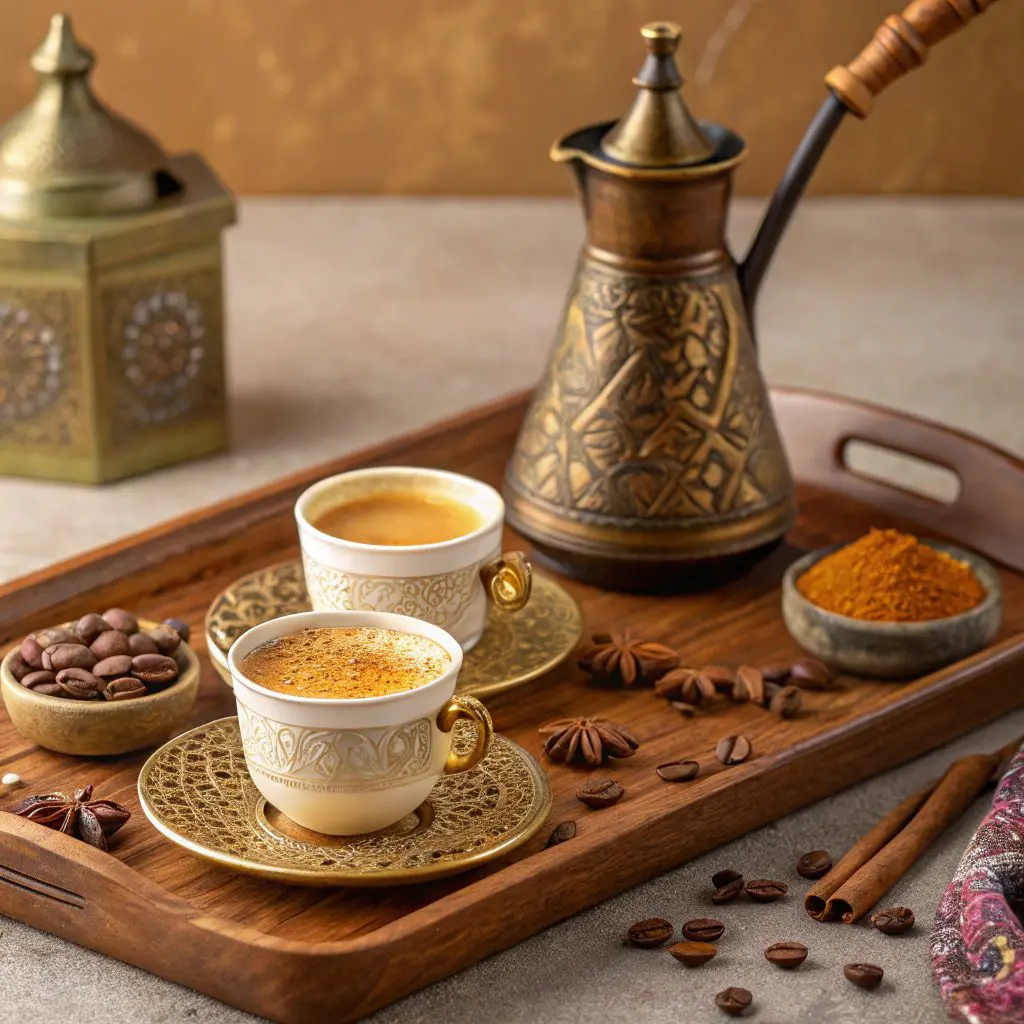
Brew in a dallah, the long-spouted Arabic coffee pot, and serve in small handleless cups called finjans filled only about a third full. Start with the right tools when sharing qahwa. The small cup isn't stinginess; it keeps the coffee hot and invites refills, which is the whole social point.
Serving has its own rhythm:
- The host pours first, then guests, as part of the custom.
- Serve elders and honored guests before anyone else.
- Fill each cup only a third full, and offer refills freely.
- Watch for the cue to stop: a small wiggle of the cup means "no more."
Etiquette matters as much as the brew here. The pouring, the order, the small cup, all of it signals welcome. You can use mugs if that's what you have and keep the spirit intact. I've hosted friends who love the blend of old and new, and the warmth of sharing qahwa stays the same, no matter the cup.
What mistakes ruin a pot of qahwa?
Stale cardamom is the number one killer. Pre-ground spice that's been sitting in a jar for a year gives you a dull, papery cup no matter how good your beans are. Grind cardamom fresh and this one problem disappears.
A few other common wrong turns:
- Boiling hard instead of simmering. A rolling boil scorches the grounds and makes the cup bitter. Keep it at a bare simmer.
- Too dark a roast. Dark, oily beans fight the light, spiced character. Qahwa wants a light roast.
- Drowning it in spice. If saffron or cloves outrun the cardamom, you've lost the plot. Cardamom leads.
- Scooping instead of tasting. No fixed recipe survives contact with your beans and water. Taste and adjust every time.
Most bad qahwa comes down to old spice or a boil that got away from you. Fix those two and you're most of the way to a good pot.
What to serve alongside qahwa
Dates are the classic pairing, and they're not just tradition for tradition's sake. The pot has no sugar, so the dates carry the sweetness and their caramel richness balances the bright spice. A plate of dates next to the dallah is the standard setup across the Gulf.
Beyond dates, sweet pastries and cardamom-spiced cookies work well because they echo the spice in the cup. I often set out cardamom cookies, and they match the brew instead of fighting it. Nuts and dried fruit round out a spread nicely too.
Keep the food simple. Qahwa is delicate, and heavy or overly sweet snacks bury it. The pairing should support the coffee, the same way the extra spices support the cardamom. If you want to keep exploring spiced brews, this take on Armenian coffee and its powder-fine grind is a good next stop.
FAQ
Can I use regular coffee beans instead of green beans?
Yes. A light-roast bean gets you closest to the pale, delicate cup, but a medium roast works if that's what you have. Just keep the grind fine and the simmer gentle, and taste before you decide it needs adjusting.
Do I have to use a dallah to make qahwa?
No. Any small saucepan simmers the coffee and spice fine, and a thermal jug keeps it hot afterward. The dallah is lovely for serving and pouring, but the flavor lives in the roast, the cardamom, and the low simmer, not the pot.
Why is my qahwa bitter?
You probably boiled it hard instead of simmering, or used too dark a roast. Drop the heat until the surface barely moves, and switch to a lighter roast. Over-extraction from a rolling boil is the usual culprit.
How long does brewed qahwa keep?
Drink it the same day you brew it. A thermal jug holds the heat and aroma for a while, but the spice fades as it sits. Brew what you'll drink rather than making a big batch to reheat.
Is qahwa supposed to be sweet?
Traditionally, no. The pot is unsweetened and the dates served alongside carry the sweetness. You can stir sugar into your own cup, but taste it plain first; many people find the cardamom gives enough perceived sweetness on its own.
Related on this blog
Related: Ras el Hanout Coffee with Warm Spice Depth
Related: Tamarind Spiced Coffee with Warm Depth
Related: Garam Masala Coffee with Warm Spice