Jump to Recipe
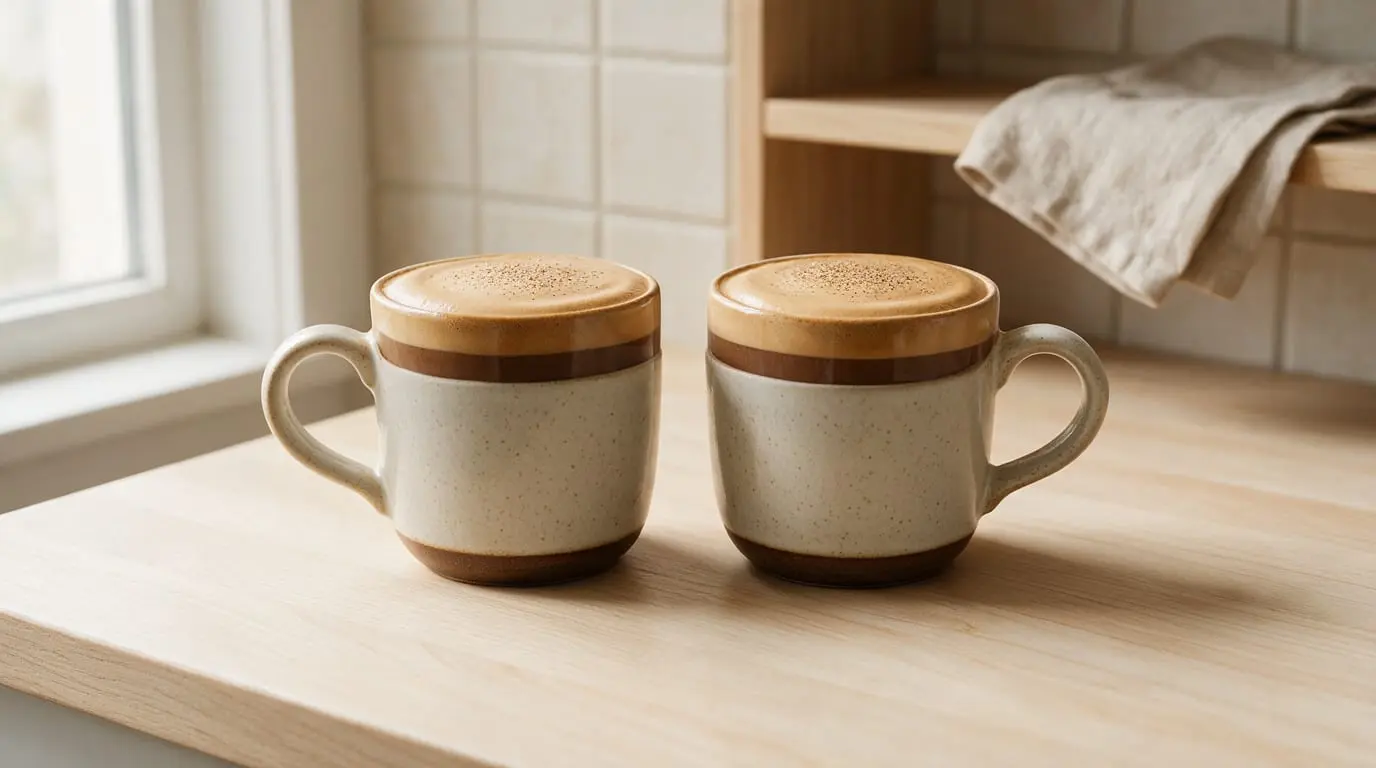
A Five Spice Latte is a milk-based espresso drink flavored with Chinese five spice – a blend of star anise, cloves, cinnamon, Sichuan pepper, and fennel seeds. It drinks like a chai latte but with a deeper, more anise-forward character.
The key is a quick stovetop syrup. You steep the spices in hot sugar water for about 10 minutes, then strain it clean. That syrup is what controls the flavor – not throwing loose spice directly into the milk, which leaves grit and uneven heat.
One thing I learned the hard way: five spice brands vary a lot. Some are heavy on star anise, others lean clove-forward. Taste your syrup before you add it to the cup. A batch that came out too sharp needed a second round of steeping with a small piece of orange peel to round it out.
This makes 2 lattes. You can scale the syrup up and store it for weekday mornings.

Why You’ll Love This Recipe
- Five spice syrup takes 10 minutes and lasts two weeks
- More complex than a standard cinnamon latte
- Works hot or iced with the same syrup batch
- Fully adjustable spice level – taste before you pour
Ingredient Notes
- Chinese five spice powder: Pre-ground five spice works well here. Buy from an Asian grocery if you can – supermarket blends are often stale and flat. Whole spice toasted and ground fresh gives a noticeably brighter syrup.
- Espresso: Two shots of espresso (about 60 ml) per latte. Strong moka pot coffee works if you don’t have an espresso machine – brew at a 1:4 ratio and use 80 ml.
- Whole milk: Whole milk steams to a thicker, creamier foam. Oat milk (barista edition) is a solid swap and froths well, though the flavor is slightly thinner.
- White sugar: White sugar keeps the syrup clean and lets the spice flavor show. Brown sugar adds a molasses note that can compete with the anise – I’d skip it here.
- Water: Filtered water gives a cleaner syrup. Tap water is fine if yours doesn’t taste strongly of minerals.
- Orange peel (optional): One 5 cm strip of fresh orange peel added during steeping softens any sharp or medicinal edge from the star anise. Worth trying if your five spice blend runs pungent.
Five Spice Latte with Warm Spiced Milk Foam
Ingredients
Method
- Combine 120 ml water and 75 g white sugar in a small saucepan over medium heat. Stir until the sugar fully dissolves, about 2 minutes.
- Add 1 heaped tsp Chinese five spice powder and the orange peel strip if using. Reduce heat to low and simmer gently for 10 minutes - the syrup should smell strongly of star anise and clove.
- Remove from heat and strain through a fine-mesh sieve into a clean glass jar. Press lightly on the grounds to extract liquid, then discard the solids. Taste the syrup - it should be sweet, aromatic, and warm-spiced. If it tastes flat, steep for 2 more minutes next time.
- Set aside to cool for 5 minutes before using, or refrigerate for later.
- Pull 2 shots of espresso (60 ml total) using your machine or brew strong moka pot coffee at a 1:4 coffee-to-water ratio and use 60 to 80 ml.
- Keep the espresso warm while you steam the milk.
- Steam 180 ml whole milk to 60 C / 140 F. The foam should be silky and pourable, not stiff or dry. If you don't have a steam wand, heat milk in a saucepan to just below simmering and froth with a handheld frother for 30 seconds.
- Add 1 to 2 tsp five spice syrup to the base of a 280 to 350 ml latte cup. Pour the espresso directly over the syrup and stir once to combine.
- Pour the steamed milk over the espresso in a slow, steady stream, holding back the foam with a spoon. Spoon the remaining foam on top.
- Finish with a small pinch of Chinese five spice powder dusted over the foam. Serve immediately.
Notes
- Steep spice syrup for exactly 10 minutes - longer steeping turns the anise bitter.
- Use a fine-mesh sieve to strain all spice sediment from the syrup before storing.
- Steam milk to 60 C / 140 F max - higher temperatures destroy foam structure.
- Add orange peel during steeping if your five spice blend smells heavily of star anise.
- Scale the syrup to 250 ml batches for easy weekday use - it keeps 14 days refrigerated.

Tips for Success
- Taste the five spice syrup before adding to the latte – adjust sweetness with a teaspoon of water if it runs too intense.
- Strain the syrup through a fine-mesh sieve twice if you want it completely clear and grit-free.
- Steam milk to 60 C / 140 F for the best foam texture – hotter milk kills the sweetness and turns flat.
- Add the syrup to the cup first, then pour espresso over it so they combine without stirring.
- Dust finished lattes with a pinch of five spice rather than cinnamon for a stronger visual and aromatic finish.
Variations
- Iced Five Spice Latte: pour syrup and espresso over ice, top with cold milk and skip steaming.
- Vegan version: use oat milk (barista blend) and swap honey for maple syrup in the spice syrup.
- Five Spice Brown Sugar Latte: use dark brown sugar in the syrup for a richer, caramel-adjacent base.
Storage and Reheating
The five spice syrup keeps in a sealed glass jar in the fridge for up to 14 days. Store it separately from the milk and espresso components.
Do not pre-mix the full latte for storage – it separates and the foam collapses. Brewed espresso can be refrigerated for up to 24 hours and used cold for an iced version.
To reheat a latte you’ve already assembled, microwave it in a heatproof cup on medium power for 45 to 60 seconds. Stir once and check the temperature before drinking – it heats unevenly.
Serving Suggestions
Serve the Five Spice Latte in a 280 to 350 ml ceramic cup so the foam has room to sit above the rim without spilling. A wide mouth shows off the spice dusting.
It pairs well with shortbread, almond biscotti, or a slice of plain butter cake, much like the rich, warming flavors found in a pear and brown butter latte that leans on the same spiced-syrup approach. The anise and clove in the latte cut through buttery baked goods cleanly.
For a brunch spread, set the syrup out in a small pitcher and let people add their own amount. Some prefer a single teaspoon, others go for two.

FAQ
Why does my Five Spice Latte taste medicinal or too sharp?
Star anise is the most likely culprit – some five spice blends use a heavy hand with it, and it turns medicinal when over-steeped. Reduce steep time to 6 or 7 minutes, or add a small strip of fresh orange peel while the syrup simmers to round off that sharp edge. Taste the syrup before you add it to the cup every single time.
Can I use five spice whole spices instead of powder for the syrup?
Yes, and it gives a cleaner, brighter syrup. Use 1 star anise, 2 cloves, a 3 cm cinnamon stick, 1/4 tsp Sichuan peppercorns, and 1/4 tsp fennel seeds per batch. Steep for 12 to 15 minutes rather than 10, since whole spices release more slowly than ground powder.
How long does the five spice syrup last, and can I freeze it?
The syrup keeps in the fridge for up to 14 days in a sealed glass jar. It can be frozen in an ice cube tray for up to 3 months – each cube is roughly 1 tablespoon, which is one serving. Thaw a cube in the fridge overnight or drop it directly into a hot cup and it melts in about 30 seconds.
What food pairs well with a Five Spice Latte?
Buttery shortbread and almond biscotti work best because their neutral sweetness doesn’t fight the anise and clove in the drink. Avoid strongly spiced pastries like gingerbread – they clash rather than complement. A plain croissant or a lightly sweetened scone is a safe pairing if you want something more substantial.
Is a Five Spice Latte gluten-free?
Yes, the latte itself is gluten-free. The syrup contains only water, sugar, and spices, and espresso and milk contain no gluten. Check your five spice brand label if cross-contamination is a concern – most pure spice blends are gluten-free, but a few are processed in facilities that handle wheat.
What is the difference between a Five Spice Latte and a chai latte?
A chai latte is made with black tea and a spice blend that centers on cardamom, ginger, and black pepper, whereas a spiced syrup built around cardamom behaves very differently when espresso replaces tea as the base. A Five Spice Latte skips tea entirely and uses espresso as the base, with a spice profile dominated by star anise and cloves. The result is bolder and more coffee-forward, with less ginger heat than chai.