Arwa Yemeni Coffee is worth seeking out because the beans do the work no gadget can fake. These are naturally processed, sun-dried beans grown high in Yemen's Haraz mountains, and they land in the cup as wild fruit, floral top notes, and a deep chocolate finish you will not find in a washed Ethiopian or a Latin American single origin. You do not need a fancy machine to taste it. A plain pour-over or French press and fresh beans are more than enough, so put your money into the coffee, not the hardware.
What is Arwa Yemeni Coffee and who is it for?
Arwa is a roaster that sources green coffee from Yemen and roasts it in small batches at its home base in Richardson, Texas. The brand ties itself to one origin instead of chasing a dozen countries, which is the right call when your origin is this distinctive. Yemeni coffee is rare, hard to grow, and processed the old way, so a roaster that specializes in it earns attention.
This is for the drinker who takes coffee black and wants to taste where it came from. If you drown your cup in milk and sugar, most of what makes these beans special disappears. So Arwa fits people who are curious about origin, willing to weigh their coffee, and happy to pay more for something they cannot get from a supermarket bag.
It is not for someone who wants a cheap daily driver. These beans cost more than a big-box medium roast, and they should. Treat them like a good bottle of wine, not your morning tank of fuel.
Why the Haraz region matters
The Haraz region of Yemen sits at high altitude on steep mountain terraces, and that geography is the whole story. Coffee grown slowly in thin, cool mountain air develops denser, more complex sugars than coffee grown fast in the lowlands. As a result, you get more concentrated fruit and floral flavor packed into each bean.
Yemen also grows old, genetically distinct coffee varieties that most of the world does not. These are not the same plants you find across East Africa or South America. Combine ancient genetics with punishing terrain and centuries of dry-processing know-how, and you get a flavor fingerprint that is genuinely hard to copy.
The trade-off is scale. Haraz farms are tiny, water is scarce, and harvests are small and inconsistent. That is why Yemeni coffee is expensive and why any given batch can taste a little different from the last. I see that as a feature, not a flaw, but go in knowing the cup is not standardized.
What naturally processed, sun-dried coffee tastes like

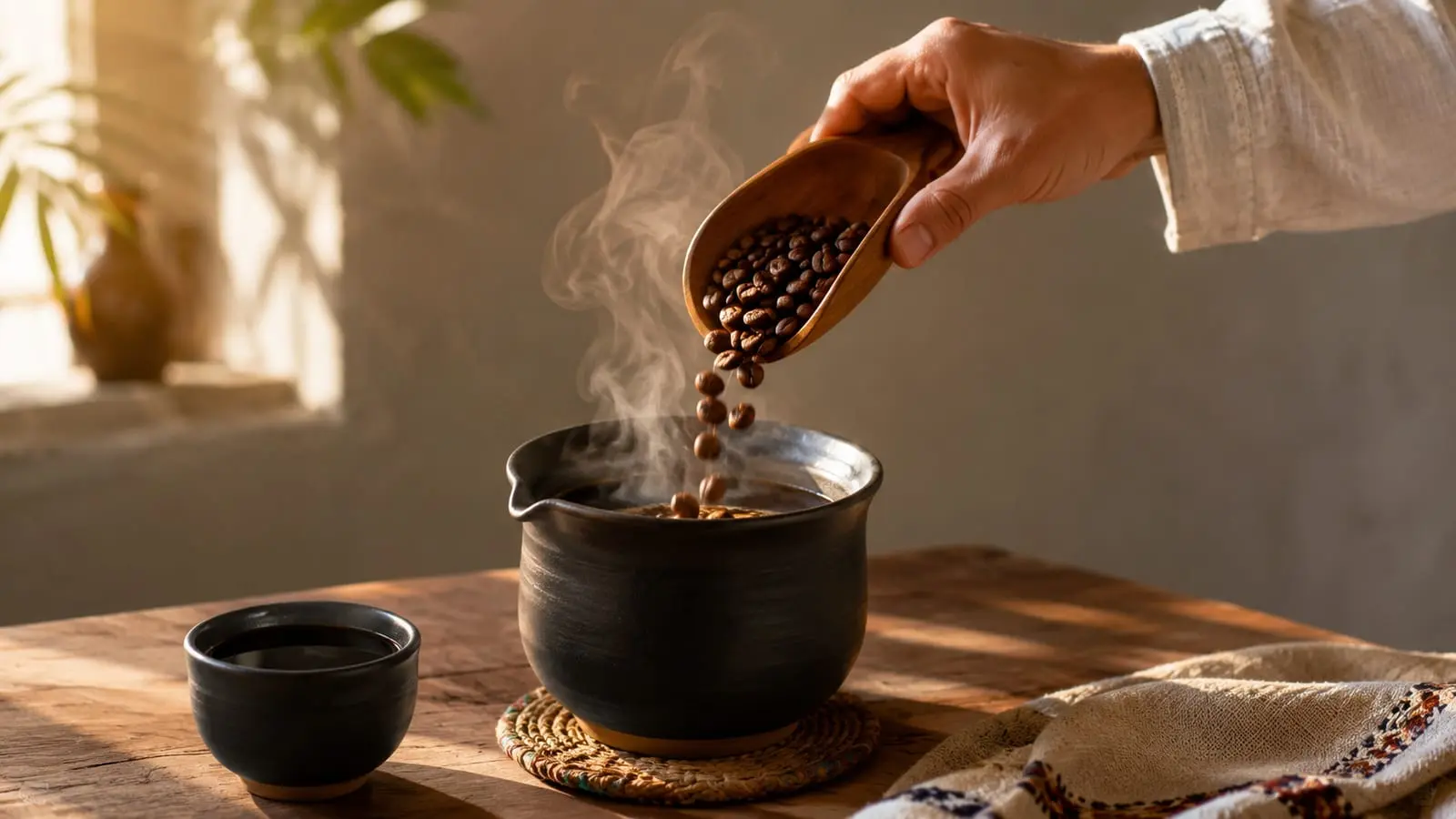
Natural processing means the whole coffee cherry dries in the sun with the fruit still on the bean, and you taste that fruit in the finished cup. Instead of the clean, tea-like clarity of a washed coffee, you get something jammier and wilder. Think dried blueberry, ripe stone fruit, a floral lift, and a heavy chocolate base underneath.
Here is roughly what to expect across the arc of a sip:
- Up front: bright berry and dried fruit, sometimes almost winey
- Middle: floral and honeyed, softer than a washed coffee
- Finish: dark chocolate and a full, syrupy body that lingers
Naturals also carry more body and less sharp acidity than washed beans, so the cup feels rounder in the mouth. If you have only ever had clean, bright washed coffees, the first sip can be a surprise. Give it a few cups before you judge it, because your palate needs a minute to catch up.
Does small-batch in-house roasting actually help your cup?
Yes, and the reason is simple: fresh coffee tastes better, and small batches stay fresher. Coffee starts losing aroma within days of roasting, and stale beans flatten into generic bitterness no matter how well you brew. A roaster working in small batches close to when you buy means the bag on your counter is closer to its peak.
Roasting in-house also lets a specialist tune the roast to the bean. Yemeni naturals are delicate, and a heavy dark roast would bury the fruit and floral notes under smoke. A careful lighter roast keeps the origin character intact, which is the entire point of buying this coffee in the first place.
None of this asks anything of you. You do not need special gear to benefit from fresh, well-roasted beans. Just buy what you will drink in two to three weeks, check the roast date on the bag, and store it sealed away from light and heat.
Do you need special equipment to brew Arwa coffee well at home?
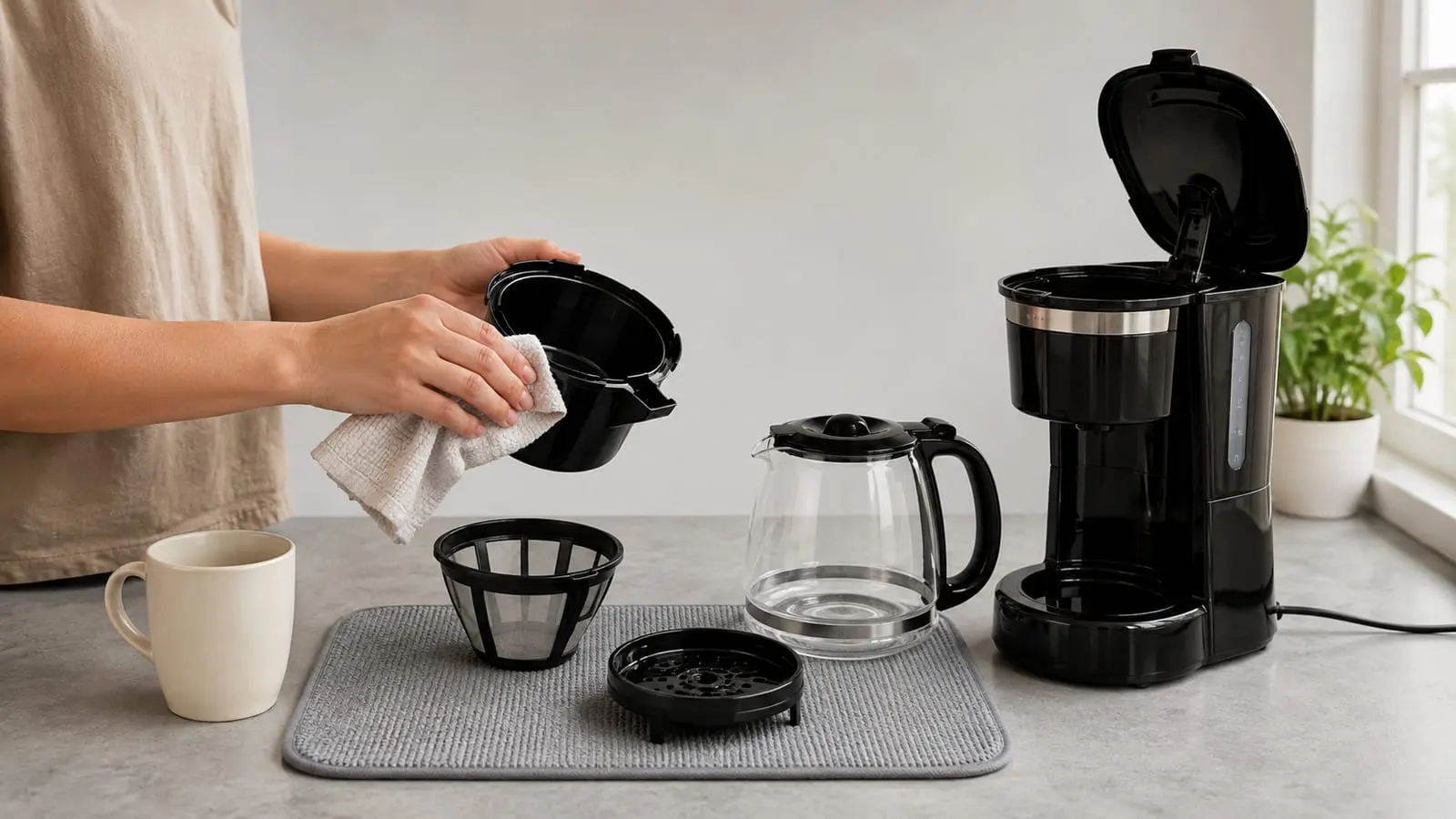
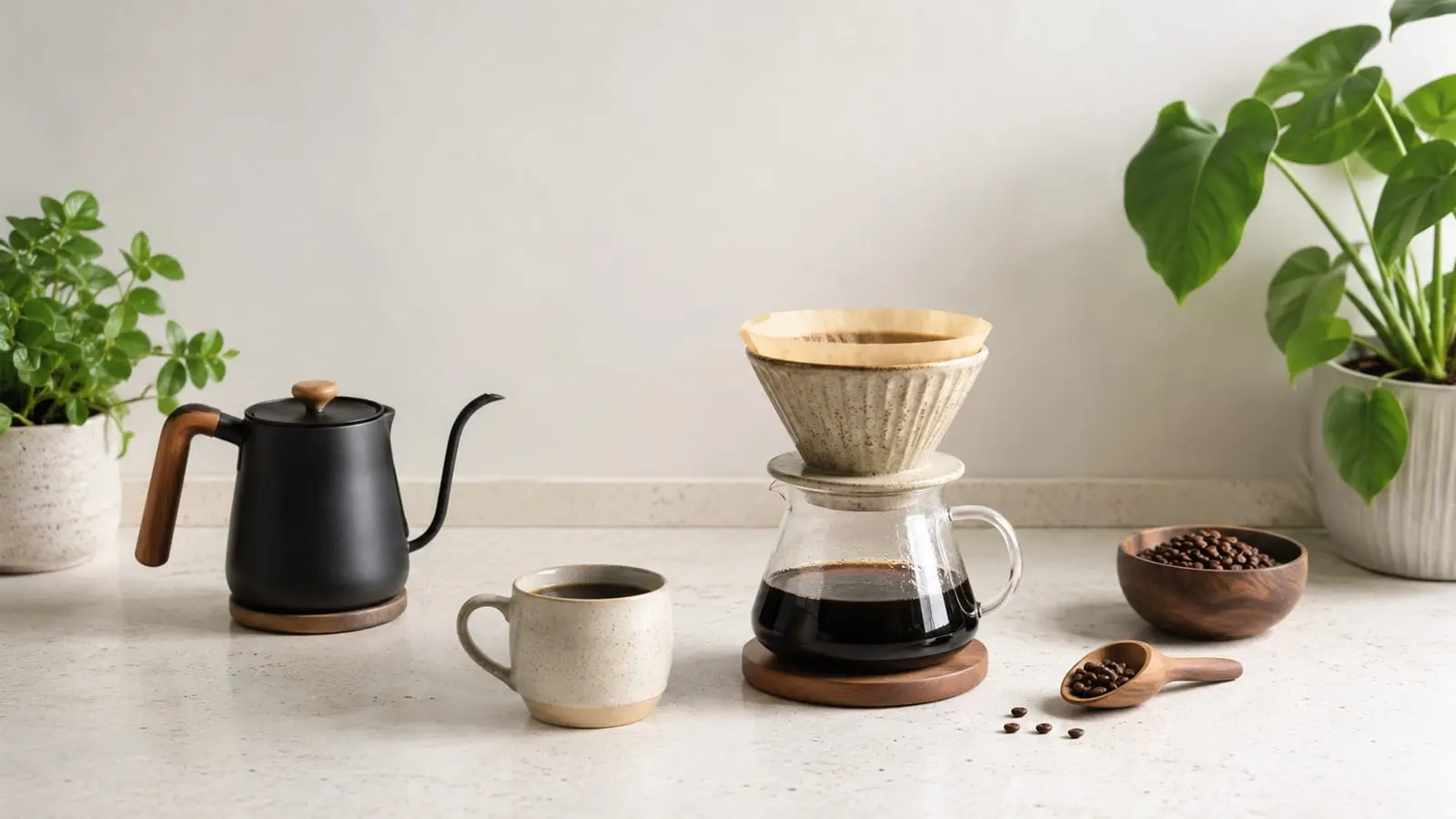
No. A pour-over cone or a French press and a cheap kitchen scale will get you 90 percent of the way there. Good ratios and fresh beans beat expensive machines every time, so skip the pricey espresso setup and spend on beans instead.
Start with the one ratio that covers most methods: 1 gram of coffee to about 16 grams of water. For a single mug, that is around 20 grams of coffee to 320 grams of water. Weigh it. Scoops lie, especially with lighter roasts where the beans pack differently.
Here is a clean pour-over method that flatters these naturals:
- Heat water to about 200F, just off the boil. Boiling water scorches delicate beans.
- Grind medium, about the texture of coarse sand, right before you brew.
- Add the grounds to a rinsed paper filter and pour just enough water to wet them. Let this bloom for 30 to 45 seconds so trapped gas escapes.
- Pour the rest in slow spirals, keeping the water level steady, over about 3 minutes total.
- Taste. Too sour or thin means grind finer or brew longer. Too bitter means coarsen the grind and back off the water temperature.
Change one thing at a time so you know what fixed it. A French press works too and pushes the body even fuller, which suits naturals nicely. If you want a deeper walk-through, my home brewing tips for Arabica coffee cover the same ratio logic.
The picks worth your money
Arwa's lineup rewards a little strategy. Here is where I would put my dollars and why.
Haraz Natural single-origin
This is the flagship and the clearest argument for Yemeni terroir. The sun-dried processing pushes the wild fruit and floral notes to the front, and the result tastes unlike any washed African or Latin American bean you have had. If you buy one thing, buy this, and brew it black so nothing gets in the way.
Arwa Yemeni Blend
The gateway pick. It softens the bolder edges of the naturals into something rounder and more familiar, which makes it the easier first purchase for a curious drinker. Start here if the words "winey" and "jammy" make you nervous, then graduate to the single-origin once your palate warms up.
Traditional qishr preparation
If you visit in person, order qishr. It is brewed from the dried coffee cherry husks with spices like ginger and cinnamon, and it tastes more like a warm spiced tea than coffee. The roasted beans alone cannot show you this side of Yemeni coffee culture, so it is worth the detour.
Is Arwa's coffee shop a real cultural stop or just another café?
It leans toward the real thing, and that is the honest reason to go in person. Yemeni coffee houses have historically been gathering places, not grab-and-go counters, and a shop built around that idea gives you something a generic specialty café does not. You go to sit, talk, and drink coffee prepared the traditional way.
Whether that is worth a trip depends on you. If you just want a bag of beans to brew at home, order online and skip the drive. If you want the context, the qishr, and the community feel, the in-person visit adds something the beans alone cannot. For more on that backdrop, my write-up on Middle Eastern coffee culture fills in the history.
Is Arwa worth the premium over other specialty roasters?
For the single-origin, yes. For a daily house coffee, no, and that is fine. Yemeni naturals cost more than comparable single origins from Ethiopia, Colombia, or Guatemala, and the gap is real. You are paying for rare genetics, brutal growing conditions, tiny harvests, and a flavor you cannot source elsewhere.
Here is the honest comparison:
| Coffee | What you pay for | Best for |
|---|---|---|
| Arwa Haraz Natural | Rare Yemeni origin, wild fruit-floral-chocolate cup | A special-occasion bag you savor |
| Washed Ethiopian single-origin | Clean, bright, floral clarity at lower cost | An everyday bright cup |
| Colombian single-origin | Caramel and red apple, more body, easy to find | A reliable daily driver |
So split your budget. Keep a cheaper single-origin for weekday mornings and reach for the Yemeni natural when you actually want to sit down and pay attention. Buying the premium bean and then dumping it into a travel mug is money wasted.
The tradition behind Yemeni coffee
Yemen is where coffee first became a traded commodity. Beans moved through the old port of Mocha centuries ago, and the world's coffee habit grew from there. The word "mocha" comes from that port, not from chocolate, though the coincidence is a happy one given how chocolatey these beans taste.
Arwa honors that history by keeping the source and the processing traditional instead of chasing trends. Dry-processing coffee in the sun is the old Yemeni way, and it survives because it produces something worth preserving. If you want the deeper backstory, the history of Yemen's coffee is a good rabbit hole. The port of Mocha itself explains why the name shows up on menus worldwide.
FAQ
How should I store Arwa beans to keep them fresh?
Keep them in an opaque, airtight container at room temperature, away from the stove, the window, and the fridge. Buy whole bean and grind right before you brew. Aim to finish a bag within two to three weeks of the roast date, because even great beans go flat once they have been open a while.
Can I make espresso with Yemeni naturals?
You can, but it takes patience. Naturals are unpredictable under high pressure and their fruit can turn sharp if you rush the shot. Dial in slowly and expect to adjust your grind more than you would with a standard espresso blend. If you are new to these beans, a pour-over is far more forgiving.
Why does my Yemeni coffee taste different from batch to batch?
Small harvests and hand processing mean natural variation from lot to lot. Big commercial roasters blend across many farms to erase that, but a specialist working with tiny Yemeni lots cannot and should not. Treat each bag as its own thing and re-taste before you assume your brewing slipped.
Is qishr the same as coffee?
Not quite. Qishr uses the dried husks of the coffee cherry rather than the roasted bean, brewed with spices. It has far less caffeine and drinks more like a spiced fruit tea. It is a traditional Yemeni preparation worth trying, not a substitute for a brewed cup of the beans.
Do I need a light or medium roast to taste the origin?
Light to medium is where these beans shine, because the roast stays out of the way and lets the fruit and floral notes through. A dark roast buries the origin under smoke and bitterness, which defeats the reason you bought Yemeni coffee. If a bag is roasted dark, its terroir is mostly gone.