Most watery home coffee has one cause: too few grounds in the filter. Use 1 to 2 tablespoons of ground coffee for every 6 ounces of water. That range is known as the Golden Ratio for drip coffee, and it answers how much coffee for one cup better than any scoop line printed on a bag. Start near the top of the range, taste, and adjust from there.
How much coffee for one cup?
The catch is the word "cup." The Golden Ratio is built on a small portion of water. However, a U.S. customary cup holds 8 fluid ounces, so a full measuring cup of water is bigger than the ratio's base portion.
Your mug is probably bigger still. So if you fill a real mug and use the low end of the range, you'll get thin, sad coffee every time.
Here's the fix. Measure your water first, then scale the coffee to match. For a full measuring cup, go a little past the base amount. For a big mug, count how many base portions it holds and multiply the grounds by that.
Start strong, then back off
Begin at the high end of the range, about 2 level tablespoons per portion. You can fix a cup that's too strong. Add a splash of hot water and give it a stir.
A weak cup can't be rescued, though. Once the brew is done, you can't add flavor back in. That's why starting high is the smarter default.
If 2 tablespoons tastes heavy, drop a little next time. The low end suits people who drink coffee black and like it light and tea-like. The top end suits anyone adding milk, because milk mutes the coffee and you need more punch to cut through.
Tablespoons work, with caveats
A tablespoon is a fine daily tool, but it measures space, and coffee doesn't fill space evenly. Fine grounds pack tight. Coarse grounds sit loose, with air between the bits. So one level spoonful can weigh noticeably more or less depending on your grind.
Roast changes it too. Dark roast beans puff up as they roast, so a spoonful of dark roast tends to weigh less than the same spoonful of light roast. Meanwhile, heaped versus level spoons can swing your dose far more than you'd guess.
If you stick with spoons, keep three habits:
- Level every spoon with a knife or your finger.
- Use the same spoon every morning, because spoon sizes vary between kitchen drawers.
- Keep your grind setting the same, so the spoonful doesn't change on you.
Do that, and spoons will get you consistent, decent coffee.
Why a scale beats any spoon
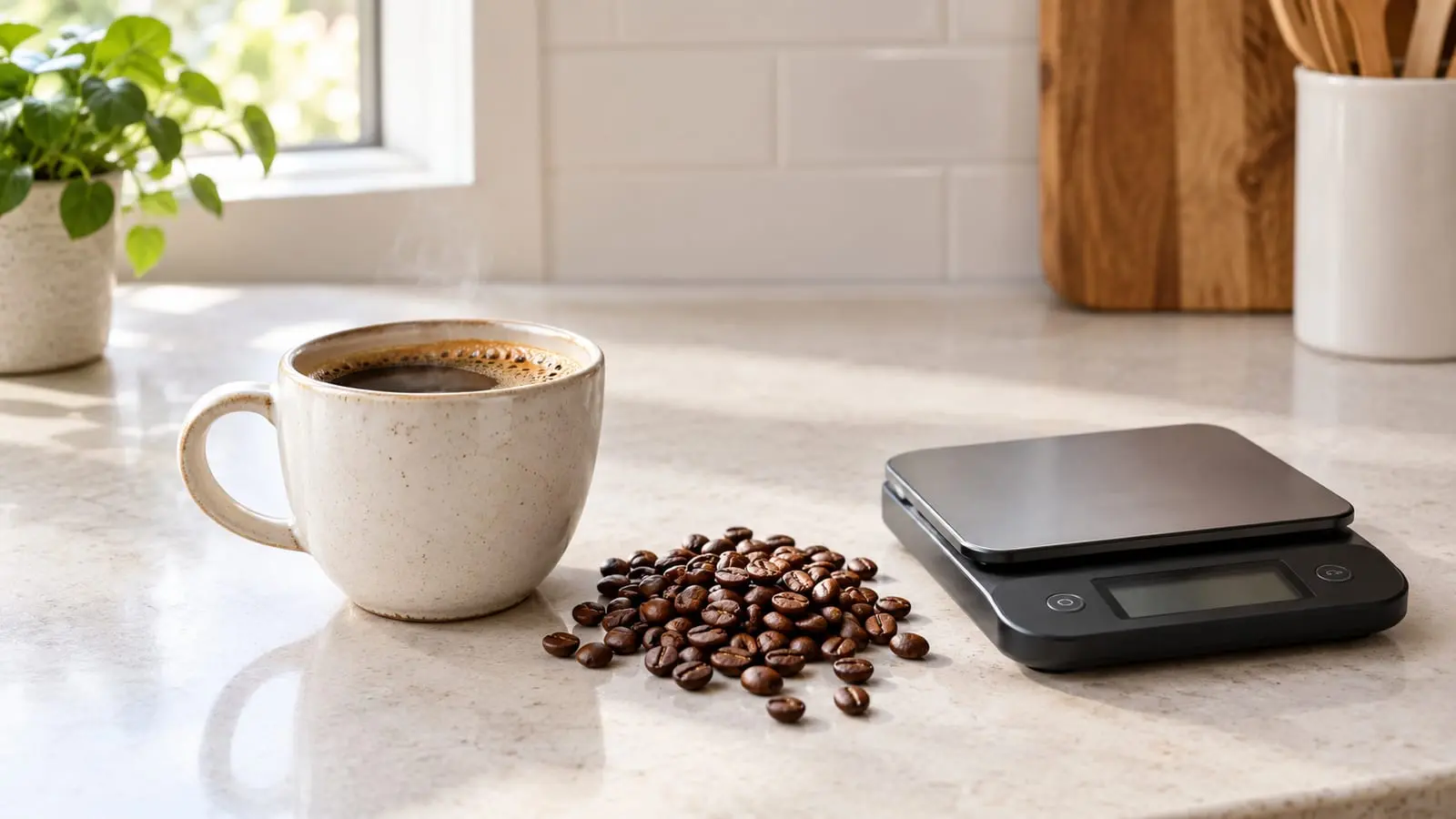
Weight doesn't care how fluffy your grounds are. A gram of coffee is a gram, whether it's fine, coarse, light roast, or dark. As a result, weighing is the most reliable way to brew the same cup two days in a row.
Here's a trick that bridges the two. Find the spoon dose you love, then weigh it once on a kitchen scale and write the number down. From then on, you're brewing your favorite cup by weight, and nothing about grind or roast can throw it off.
A simple weighing routine

- Put your brewer or mug on the scale and press tare to zero it out.
- Add fresh-ground coffee until you hit your number.
- Tare again.
- Pour your water and stop at the same weight every time.
Weighing the water matters as much as the coffee. Otherwise your "cup" quietly grows and shrinks each morning, and the ratio drifts with it. Any basic kitchen scale works. You don't need a fancy coffee scale with a built-in timer to do this.
The scoop in the bag isn't a tablespoon
Those plastic scoops tucked into coffee bags and machine boxes are all over the place. Some hold about a tablespoon. Others hold more, and some hold less. Using one without checking it is like following a recipe with a mystery measuring cup.
Check yours once. Fill a level tablespoon with grounds, tip it into the scoop, and see how full the scoop gets. Now you know what your scoop is actually worth.
| Method | How consistent | Effort | When to use it |
|---|---|---|---|
| Level tablespoon | Fair, if you use the same spoon and grind | Low | Everyday drip when you're half awake |
| Bundled scoop | Poor until you check it against a spoon | Low | Only after you know what it holds |
| Kitchen scale | Best, cup after cup | A few extra seconds | Anytime you want to dial in a cup you love |
What about a full pot?
Scale it the same way. Count how many base portions of water you're brewing, then multiply your grounds by that count. A mug that holds two portions gets double the coffee. A full carafe gets the total for every portion in it.
Watch the cup markings on your coffee maker. Many machines count a "cup" as smaller than a measuring cup. So the cup count on the carafe may be far less water than the same number of measuring cups. Go by the actual water you pour, and ignore the marketing math on the side of the pot.
Brew method shifts the target slightly:
- Drip: stay inside the Golden Ratio range. It was built for drip coffee.
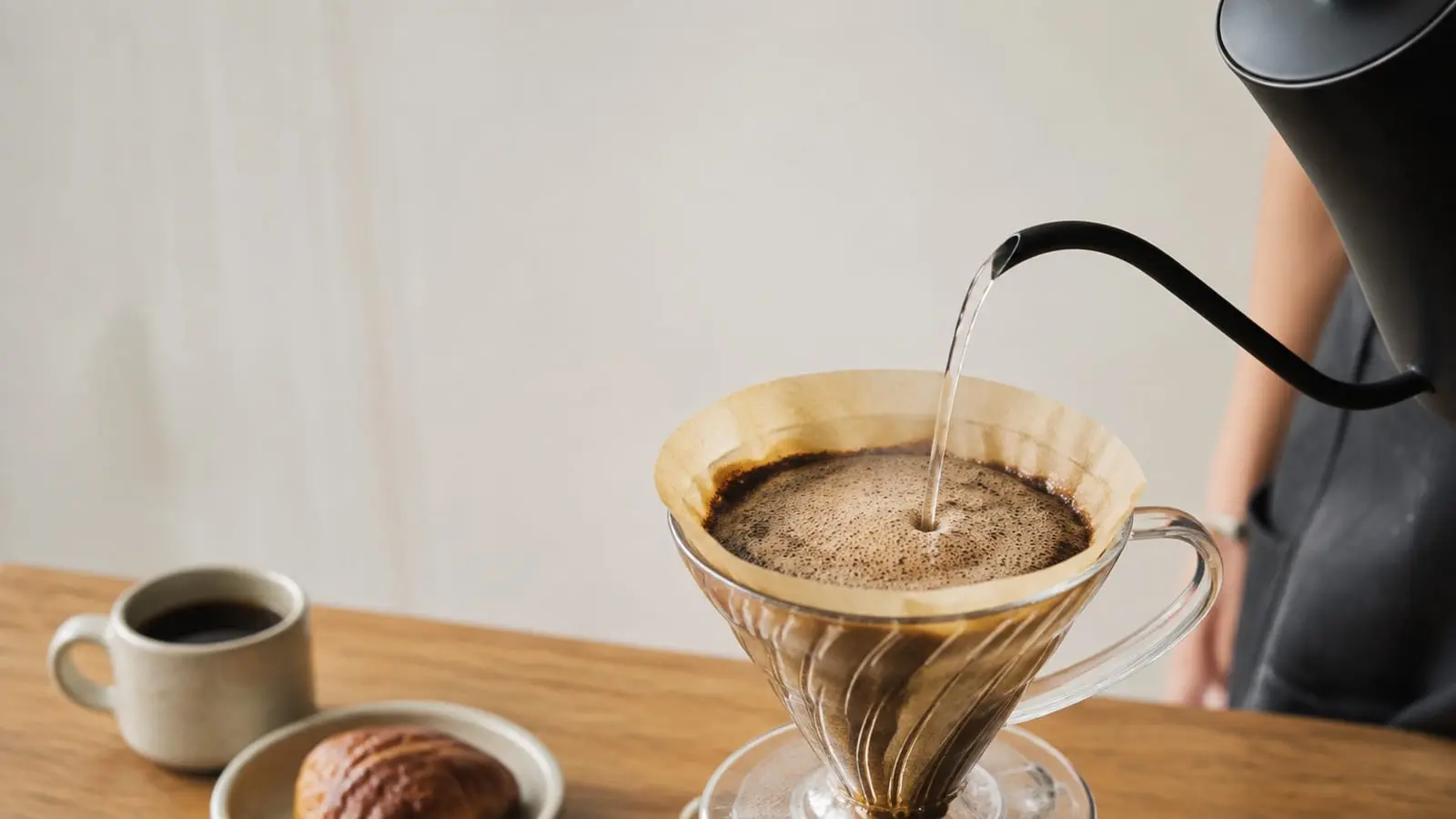
- Pour-over: the drip range wasn't written for it, so start from a dose you already like and taste and adjust from there.
- French press: it usually wants a slightly heavier dose than drip for a fuller body, so add grounds a little at a time until it tastes right.
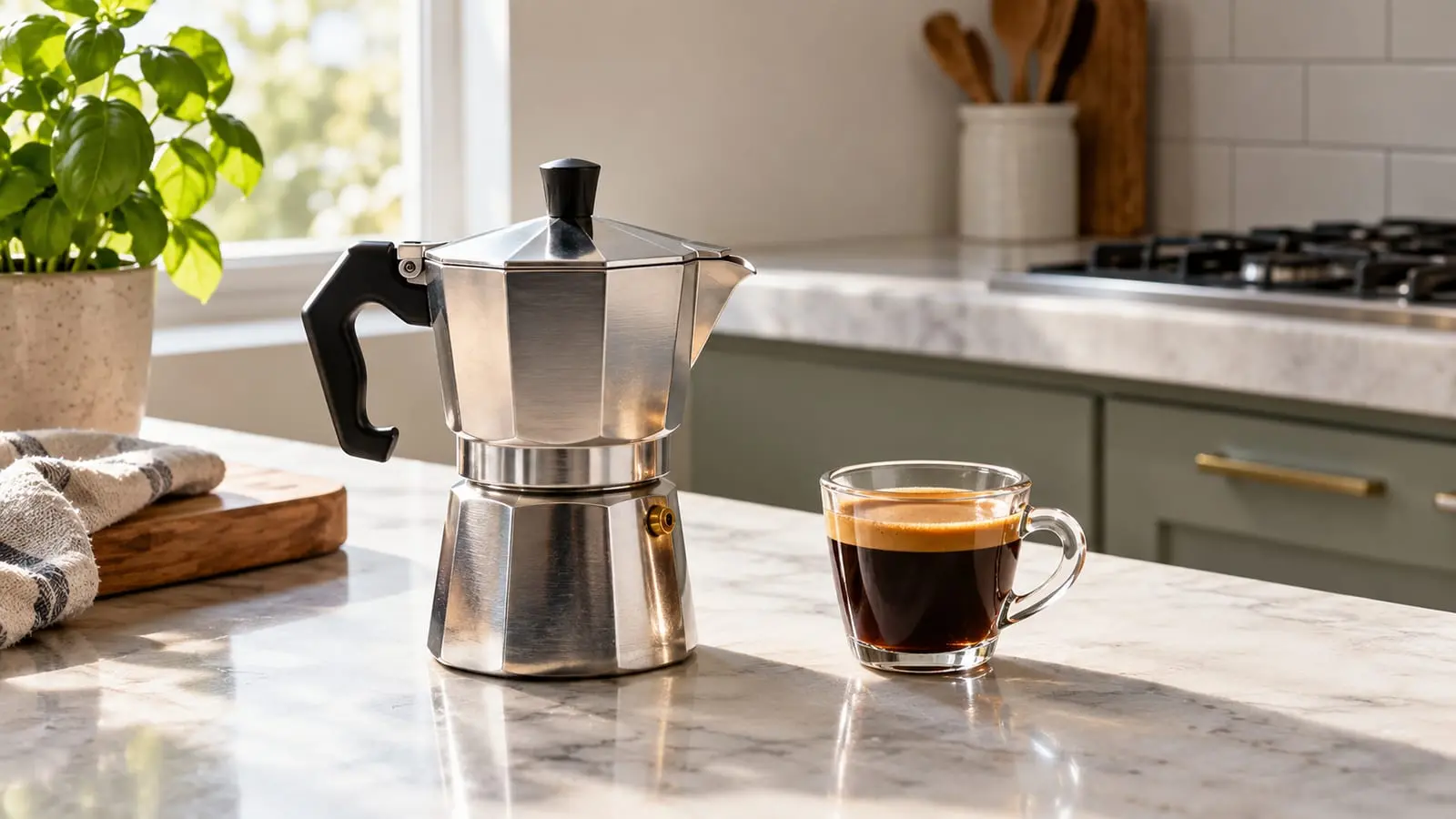
- Espresso and moka pot: use their own recipes. Espresso is far stronger by design, so a drip ratio won't apply.
If you want a worked example of a single brew method and its ratio, this Colombian coffee recipe walks through one start to finish.
Hot water matters as much as the dose
The right amount of coffee still tastes wrong with the wrong water. The National Coffee Association puts the ideal water temperature for extraction at 195°F to 205°F, as this Coffee Bean & Tea Leaf guide to water temperature explains. At sea level, that range sits just under the 212°F boiling point. Here in Denver, water boils at a lower temperature, so the gap is much smaller.
At sea level, boil the kettle and let it sit for a short moment before you pour, because water at a full boil runs hotter than the range and pulls out harsh, bitter flavors. At Denver's altitude, freshly boiled water needs little or no rest, so pour soon after the kettle clicks off. Lukewarm water, on the other hand, leaves the cup sour and flat, and you'll blame the dose when the dose was fine.
Taste and adjust from there
The ratio is a starting line. Your taste decides where you finish. Read the cup and change one thing at a time:
- Thin, sour, or hollow: add more coffee next time.
- Heavy and bitter: use a little less coffee, or grind a click coarser.
- Bitter and harsh even at a normal dose: check your water temperature and grind before touching the dose.
- Flat and dull: your beans may be stale, so grind fresh right before you brew.
Only change one thing per cup. If you change the dose and the grind together, you won't know which one helped. For more on getting the beans themselves right, these Arabica brewing tips cover bean choice and freshness.
FAQ
Does decaf need a different amount of coffee?
No. Decaf beans brew well at the same dose as regular beans. Some decaf tastes a little muted, so if yours seems weak, nudge the grounds up a touch and see if it brightens.
Does using more coffee mean more caffeine?
Yes. More grounds in the filter means more caffeine in the cup, so a stronger brew packs a bigger kick. Caffeine also varies a lot by blend and roast. This breakdown of Café Bustelo caffeine shows how much one serving can carry.
Does this ratio work for instant coffee?
It doesn't. Instant coffee is already brewed and dried, so it dissolves instead of extracting. Follow the jar's directions for the base amount, then add more or less powder to taste.
Should I grind finer if I want stronger coffee?
Add more coffee first. A finer grind does make coffee taste stronger, but it also pulls out more bitterness. Adding grounds raises strength with less risk of a harsh, muddy cup.