
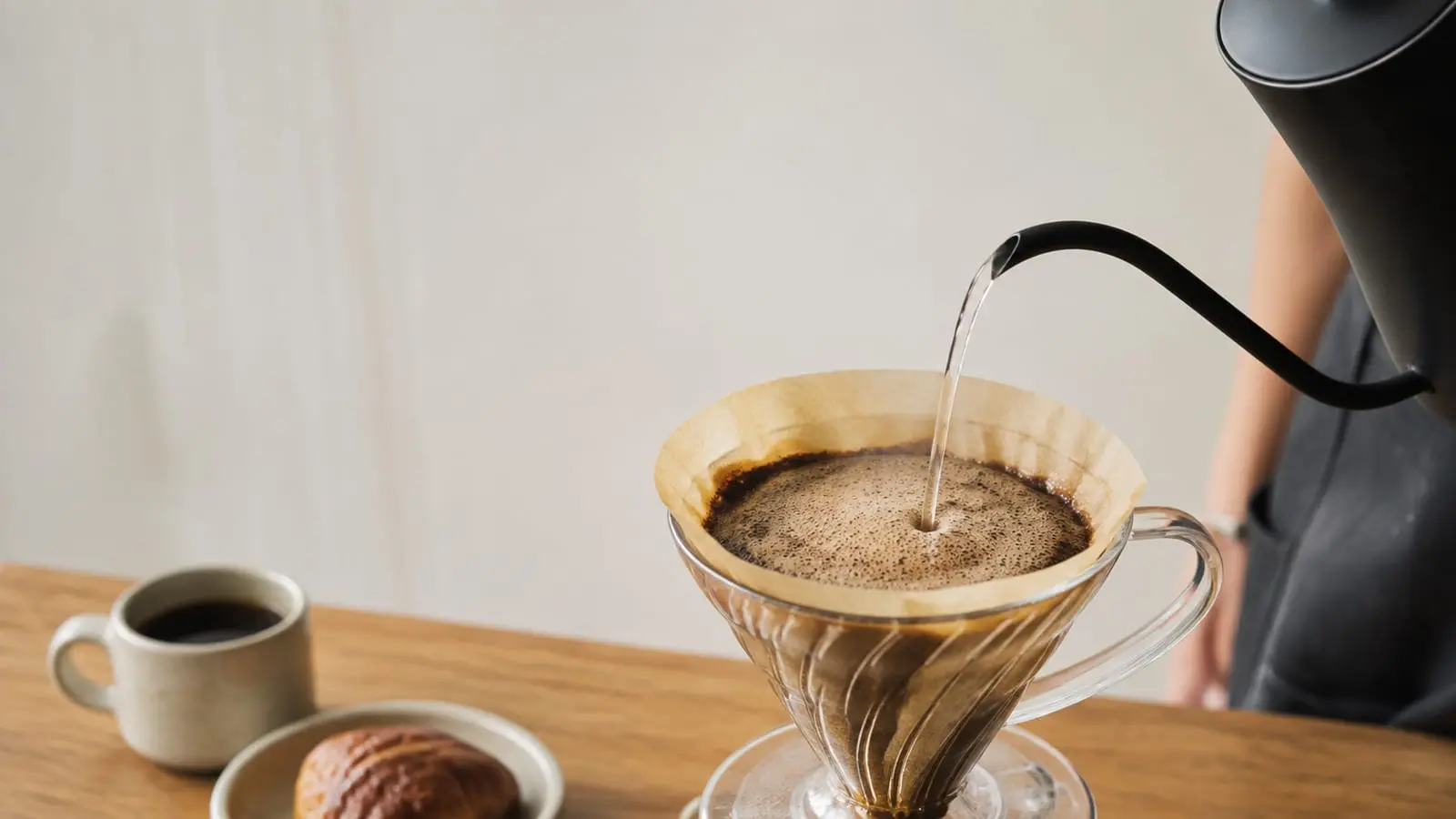
Coffee bloom and espresso pre-infusion are related, but they aren’t the same step. Blooming releases trapped carbon dioxide from fresh coffee before full filter brewing, while pre-infusion gently wets an espresso puck before the shot reaches full pressure. This coffee bloom vs pre-infusion explanation comes down to one practical choice: bloom filter coffee, use pre-infusion for espresso, and taste before you start chasing fancy settings.
Neither step needs expensive gear. Fresh-ground coffee, a sensible ratio, good water, and a willingness to adjust will do more for your cup than a machine menu full of buttons.
The coffee bloom, explained
A coffee bloom is the brief wetting and resting stage at the start of filter brewing. You add a small amount of water to the grounds, make sure everything is wet, then pause before adding the rest.
Fresh coffee holds carbon dioxide from roasting. When water hits the grounds, that gas escapes and makes the bed swell and bubble. The bloom is that release in action.
This short pause helps prepare the grounds for more even brewing. If parts of the bed stay dry, water will find the easy routes around them. You’ll get a cup with sharp sour notes beside dull, bitter ones.
A good bloom also makes pouring easier. The grounds settle after the gas escapes, so the next pour can move through the bed instead of fighting a dry, puffy mound.
If you’re still getting uneven cups, the bloom probably isn’t the only problem. Your pour speed, grind size, and coffee-to-water ratio matter just as much. The guide to speed control in pour-over brewing covers the part most bloom advice skips: how water movement changes flavor.
Carbon dioxide and the bloom
Roasted coffee contains carbon dioxide, and the gas comes out faster once the grounds meet water. Recently roasted coffee usually releases more gas, so it often swells more during the bloom.
That gas can push water away from the grounds. In plain terms, trapped bubbles get between the water and the coffee. The result is less contact in some spots and too much flow through others.
The carbon dioxide release is also a useful freshness clue. A lively bloom suggests the coffee still has plenty of gas left, but it doesn’t prove the coffee will taste good. A stale bean can brew evenly and still taste flat.
Don’t judge the coffee by bloom size alone. Some coffees swell dramatically, while others barely move because of the roast, processing method, or age. Taste the cup. The flavor gets the final vote.
Espresso pre-infusion, explained

Espresso pre-infusion is the low-pressure wetting stage before full brewing pressure reaches the puck. The machine introduces water gently, allowing it to spread through the compressed coffee before the shot speeds up.
The puck is the compact bed of ground coffee inside the portafilter. If water hits it at full pressure immediately, weak spots can open before the whole bed is properly wet.
Pre-infusion gives the puck time to saturate more evenly. Once the main pressure arrives, the water has fewer dry gaps and weak paths to exploit.
This step is built into some espresso machines. Other machines let you control it through a lever, a button, or a pressure setting. A basic machine may not offer it at all, and that’s not a reason to replace the machine.
Pre-infusion also isn’t the same as letting the shot sit forever before brewing. Too much delay can produce a flat or uneven shot, especially if the puck starts to break down. Use the feature your machine provides, then adjust by taste.
How is coffee bloom vs pre-infusion different?

Bloom and pre-infusion both add water gradually, but calling them interchangeable is wrong. Blooming mainly gives gas time to escape in filter coffee. Pre-infusion mainly gives an espresso puck time to wet before pressure rises.
| Feature | Coffee bloom | Espresso pre-infusion |
|---|---|---|
| Main purpose | Release trapped gas and wet the grounds evenly | Saturate the puck before full pressure |
| Usual brewing method | Pour-over and other filter brewing | Espresso |
| Water pressure | Gentle hand pouring or brewer flow | Low machine pressure |
| What follows it | The rest of the filter brew | The main pressure-driven shot |
| Main risk it addresses | Dry pockets and uneven flow | Cracks, weak spots, and channeling |
| What it cannot fix | Poor grind, bad pouring, or stale coffee | Poor distribution, bad tamping, or the wrong grind |
Blooming is a pause near the start of a filter brew. Pre-infusion happens immediately before the main espresso shot.
So, coffee bloom vs pre-infusion explained in one sentence: blooming lets gas escape, while pre-infusion lets water spread through a compressed puck. They overlap in spirit, not in job.
Timing in the brewing process
Blooming comes first in filter brewing. You wet the grounds, wait briefly, then continue with the main pours.
That pause gives the coffee bed a chance to settle. You can then pour more evenly and control the brew speed. If the bed rises high or looks dry in places, give it a gentle stir before continuing.
Pre-infusion also comes first, but only just. The machine wets the espresso puck, then increases pressure for the main extraction.
The difference is easy to miss because both steps happen at the beginning. In filter brewing, you control the bloom with your pour and pause. In espresso, the machine controls pre-infusion unless your model gives you a manual option.
If you want a broader look at where these methods fit, this beginner’s guide to coffee brewing techniques lays out the larger picture without treating every brew method like a lab experiment.
How does low-pressure puck saturation improve espresso?
Gentle water entry can wet the espresso puck more uniformly before high pressure starts pushing water through it. That matters because compressed coffee resists water, and water always looks for the easiest route.
If one section wets first, pressure can carve a channel through it. A channel is a fast path through the puck that lets water rush through one area while leaving other coffee underused.
Pre-infusion can reduce that uneven start. It cannot repair a puck that was distributed badly, tamped at an angle, or ground too coarse or too fine.
You still need to prepare the puck properly. Spread the grounds evenly, tamp level, and keep the portafilter steady as the shot starts. Pre-infusion is a helpful handrail, not a rescue helicopter.
Can bloom and pre-infusion improve extraction consistency?
Yes, both can make brewing more repeatable. Blooming reduces the effect of trapped gas in filter coffee, while pre-infusion gives espresso water a calmer path into the puck.
However, neither step controls the whole brew. Grind size, dose, coffee-to-water ratio, freshness, and water quality still dominate the result.
If filter coffee tastes sour and thin, the grounds may need more contact with water. Try a slightly finer grind or a slower pour, then taste again. If it tastes harsh and dry, back off a click coarser or move the brew along faster.
For espresso, a bitter shot may need a coarser grind or a shorter brew. A sharp, watery shot may need a finer grind or more time. Change one thing at a time so you know what helped.
A bloom that looks impressive can still produce a poor cup. A machine with adjustable pre-infusion can still make a bitter shot. Consistency comes from controlling the whole brew, not admiring one clever step.
Channeling and uneven flow
They can reduce the chance of uneven flow, but they don’t prevent it on their own. Blooming helps filter grounds wet more evenly. Pre-infusion helps espresso water spread through the puck before full pressure arrives.
Channeling still starts with weak preparation. In filter coffee, that can mean dry clumps, an uneven bed, or a pour that hits one spot too hard. In espresso, it often comes from poor distribution, an uneven tamp, or a grind that doesn’t suit the basket.
Look for practical signs instead of trusting the settings. A filter bed that drains in one fast stream may have developed a weak path. An espresso shot that sprays, runs pale early, or tastes both bitter and sour may be extracting unevenly.
Fix the puck or coffee bed first. Then use bloom timing or pre-infusion to smooth out the process. The order matters.
Choosing the right step
Bloom your filter coffee, especially when the beans are fresh and still release plenty of gas. Wet all the grounds, let the bed settle, then continue with your normal pour.
Use espresso pre-infusion when your machine offers it. Keep the setting modest, prepare the puck carefully, and judge the shot by flavor rather than by the presence of a pre-infusion function.
Skip both steps when they don’t fit the brew method. French press doesn’t need a formal bloom because the coffee steeps in a full body of water. Adding extra stages just gives you more chances to fuss without improving the cup.
Do these basics first:
- Grind fresh and choose a grind suited to the brewer. Fancy settings can’t rescue stale grounds or a poor grind.
- Use a consistent coffee-to-water ratio. If that changes every morning, your taste test won’t tell you much.
- Wet all filter grounds during the bloom. Dry clumps are an uneven start.
- Distribute espresso grounds evenly before tamping. Pre-infusion won’t repair a crooked puck.
- Use clean, good-tasting water. Bad water makes both methods look worse than they are.
- Change one variable at a time. Otherwise, you won’t know what fixed the cup.
- Taste and adjust before buying new gear. The problem is usually in the recipe first.
The practical choice is simple. Bloom for filter coffee, use pre-infusion for espresso, and don’t confuse either one with a cure for poor grinding or poor preparation.
FAQ
Is blooming required for every filter coffee?
No. Blooming earns its keep with fresh coffee that releases plenty of gas. Older coffee may need little resting time, but wetting the grounds evenly still helps prevent dry pockets.
Can you bloom espresso grounds before pulling a shot?
No, not in the filter-coffee sense. Espresso machines use pre-infusion to wet the puck under low pressure. Pouring water onto the puck by hand usually makes a mess and throws off the dose.
Does a bigger bloom mean fresher coffee?
Not reliably. A large bloom can mean the coffee still contains more trapped gas, but roast level, processing, grind size, and coffee structure also control how much the grounds swell.
Should you stir during the bloom?
Yes, but keep it gentle. Stir only enough to wet clumps or dry pockets. Aggressive churning disturbs the bed and changes how quickly the water drains.
Does pre-infusion make espresso taste stronger?
No. It can make the shot more even, but strength still comes from the coffee dose, water amount, grind, and extraction. If the espresso tastes weak, adjust the recipe before extending pre-infusion.