Espresso grounds should be about as fine as table salt, and anyone who hands you one magic grinder setting is guessing. That texture, a little finer than sand and gritty between your fingers, only gets you started. The shot tells you the rest. Aim for a balanced double in roughly 25 to 30 seconds, taste it, then move your grinder one small step at a time until the cup tastes sweet and full.
How fine should espresso grounds be?
Fine enough to clump loosely when you pinch it, but still gritty. Rub a little between your thumb and finger, and you should feel tiny, separate grains, like table salt or a touch finer. If it feels smooth and soft like flour or cocoa, you've drifted into Turkish coffee territory. Your machine will choke on that.
Here's where espresso sits next to other brew methods:
| Brew method | Grind | Feels like |
|---|---|---|
| French press | Coarse | Sea salt or breadcrumbs |
| Pour-over and drip | Medium | Beach sand |
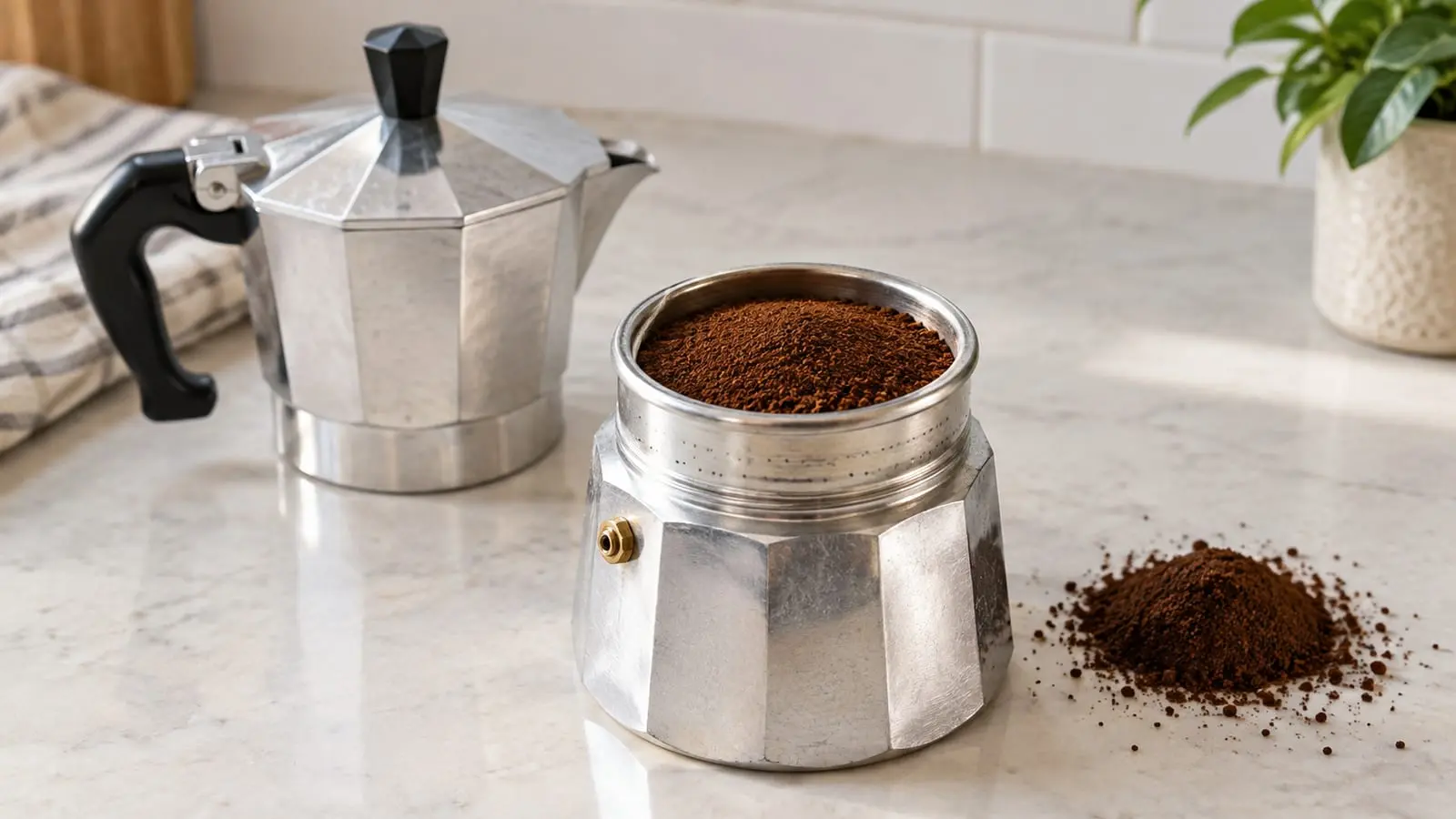
| Moka pot | Medium-fine | Fine sand |
| Espresso | Fine | Table salt |
| Turkish coffee | Extra-fine | Flour |
If you've been grinding for a press, the ideal French press grind sits at the opposite end of this same scale.
Use the table to get into the right neighborhood, then stop staring at the grounds. Two grinders can make coffee that looks identical and still pours very differently. That's because burr shape and the amount of fines change how fast water moves through the puck. Fines are the dust-sized bits every grinder makes.
So the practical answer to how fine espresso grounds should be is "table salt, then let the shot decide."
Let the shot tell you when the grind is right
Your eyes get you close. The shot gets you the rest of the way, so start from a simple baseline and read what the grind is doing.
The heritage definition from the Specialty Coffee Association of America (SCAA), now the Specialty Coffee Association, gives you a solid frame. It describes a single espresso as a 25 to 35 ml drink made from 7 to 9 grams of coffee, with twice that for a double, which means 14 to 18 grams. It calls for water between 195 and 205°F.
A home baseline that works:
- Dose: whatever your double basket is built for, inside that double range.
- Brew ratio: 1:2. Brew ratio means the weight of coffee in versus liquid out, so 18 grams in gives you about 36 grams out.
- Time: start counting when you press the button, and aim for roughly half a minute.
Then read the result. If you hit your yield way early, grind finer. If it crawls way past your target, grind coarser. If the timing is close and the shot tastes sweet and balanced, leave it alone, because that's the sweet spot.
Taste still outranks the clock. A shot that runs a little long but tastes great is a good shot.
Why does my espresso run fast and taste sour?
Your grind is too coarse. Big particles leave wide gaps, so water rushes through before it can pull out the sugars and heavier flavors. You'll see the shot gush early, turn pale within a few seconds, and finish well short of your target time.
The cup tastes sour, thin, and a little salty, with almost no body. The crema, that golden foam on top, looks pale and fades fast. This is underextraction, which means the water grabbed the quick-dissolving acids and left before the sweetness showed up.
Go one step finer and pull again at the same dose. Smaller particles pack tighter and slow the flow. As a result, the water has more time to balance those acids with sweetness. Keep moving a step at a time until the sour edge turns bright and juicy.
Why does my shot choke and taste bitter?
A choking shot means the grind is too fine. The puck gets so dense that the machine can barely push water through it. The shot starts late, drips in slow, dark beads, or barely trickles at all.
When it finally lands in the cup, expect bitterness and a harsh, dry finish. Even a medium roast can taste burnt. That drying, puckering feel is astringency, the same squeeze you get from tea that steeped too long. It tells you the water sat too long and pulled out the harsh stuff along with the good.
Back off a click and try again. However, watch for one trap. A grind that's too fine can also run fast if water punches a hole through the puck. If a fast shot tastes sour and bitter at once, suspect channeling before you touch the grinder.
Change one small step, then taste
To dial in means adjusting until the shot tastes right. It goes fastest when you change exactly one thing at a time. Move the grinder, keep everything else locked, and taste every shot.
- Weigh the same dose every time.
- Pull to your target yield and note the time.
- Taste it straight, before any milk or sugar.
- If it's sour and fast, go one step finer. If it's bitter and slow, go one step coarser.
- Purge a little coffee through the grinder after each change, because old grounds sit in the chute and skew the next shot.
- Repeat until it tastes balanced, then write the setting down.
Step size depends on the grinder. On a stepped grinder, one click usually does it. Stepless grinders let you move a hair at a time, which is great when you're close and maddening when you're far off. Either way, small moves win, while big jumps overshoot and send you chasing the shot back the other way.
Grinder quality shows up here more than anywhere else. If I could spend money on only one thing for espresso, it would be the grinder. If yours can't make small enough moves, our guide to the best coffee grinders for espresso can help you pick one that can.
Keep the dose steady or the grind will lie to you
Dose changes flow almost as much as grind does. Add a gram and the puck gets thicker and slower. Drop one and it speeds up. If you scoop by eye while you adjust the grind, you can't tell which change caused what, so you end up "fixing" the grinder for a problem that came from the scoop.
So weigh your dry coffee on a kitchen scale every time. Pick a dose that fills your basket properly, then leave it alone while you dial in. An overfilled basket presses into the shower screen and leaves a messy puck. An underfilled one leaves too much headspace and a soupy puck.
Treat yield the same way. Pick a ratio and hold it. Also stop the shot by weight instead of volume, because crema makes a shot look bigger than it is.
A longer ratio tastes lighter and more tea-like. A shorter one tastes thicker and punchier. That's a flavor choice, and you make it after the grind is set.
Tamp level and stop worrying about force

A level tamp matters far more than a hard one. Once the coffee is pressed firm enough to stop compressing, extra force adds almost nothing. Meanwhile, leaning in hard often tilts the tamper. A tilted puck is thinner on one side, so water finds that shallow edge and floods through it.
Press down firmly until the grounds feel solid. Check that the tamper sits flat against the basket rim, then lift straight up. Don't tap the portafilter sideways afterward, because that cracks the edges of the puck.
Tamp the same way every shot. That consistency is what makes your grinder adjustments mean something.
Channeling makes a fine grind run fast
Channeling happens when water finds a weak path through the puck and rushes down it instead of soaking through evenly. Part of the coffee gets overextracted while the rest barely gets touched. The result tastes sour and bitter at the same time, and that's the giveaway.
Watch for these signs:
- Shots that run fast even though the grind is fine
- Spurts or sprays from the spouts, or from the bottom of a bottomless portafilter (one with no spouts, so you can see the flow)
- One side of the stream turning pale early
- Pinholes or cracks in the spent puck
The fix is better puck prep. Fine espresso grounds clump easily, and clumps leave gaps, so break them up before you tamp. Stirring the grounds in the basket with thin needles does this well. Baristas call it WDT, short for the Weiss distribution technique, and an unbent paperclip works in a pinch.
After stirring, level the bed, tamp flat, and lock the portafilter in gently so you don't knock the puck. Our full guide on why espresso channels form covers the rest. Whatever you do, don't grind coarser to fix a channeling shot, because it'll only run faster.
Can preinfusion fix a stubborn shot?
Often, yes. Preinfusion means wetting the puck at low pressure for a few seconds before full pressure kicks in. The grounds swell and settle evenly, which closes weak spots before the real push arrives. As a result, you get fewer channels and a more even extraction.
It helps most when you're grinding fine, using a light roast, or fighting a shot that channels no matter how carefully you prep. A gentle start also lets you grind a touch finer without the puck cracking under sudden force. Finer, when the puck holds, usually means a sweeter and more silky shot.
Many home machines have preinfusion built in. Some without it let you fake it by running the pump briefly, pausing, then starting again, so check your manual before trying that. Preinfusion time counts toward your total, so time from the first press of the button and expect a slightly longer shot.
Where pump pressure fits
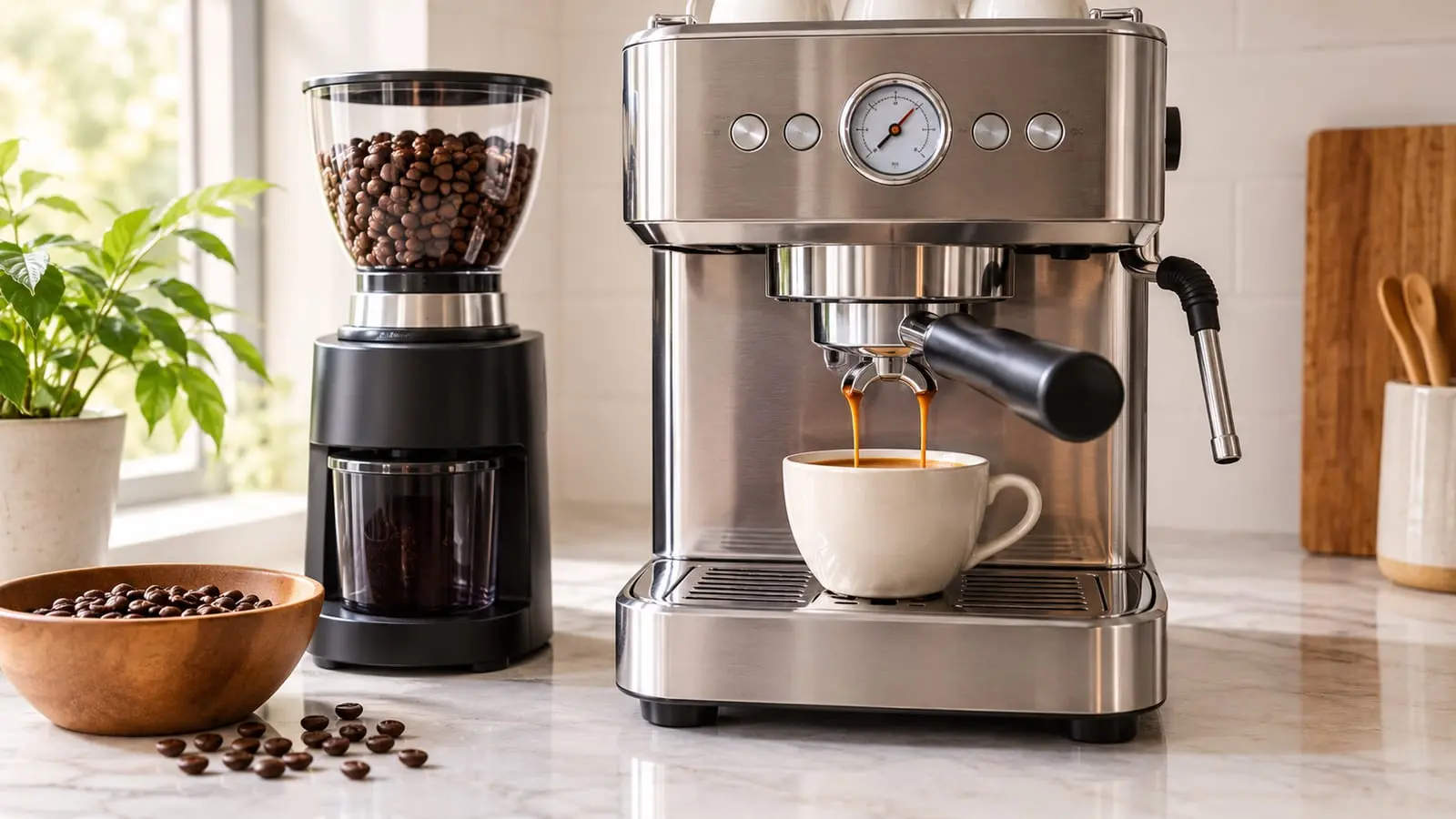
Every espresso machine works by forcing hot water through a tight puck of coffee. The grind decides how hard the puck pushes back. Fine grounds resist more, so flow slows. Coarse grounds resist less, so water races through, which means your shot time is a readout of that resistance.
That's why the pressure claims printed on the box matter less than the ads suggest. More pressure won't rescue a bad grind. It just pushes a bad grind through faster. Most machines deliver plenty of pressure for good espresso, and what you control shot to shot is the resistance, mainly through the grinder.
If your machine has a pressure gauge, use it as a sanity check. A needle that barely moves means the puck isn't resisting much, so grind finer. A needle sitting high while the cup only gets a trickle means you've gone too fine.
Fresh-ground coffee makes fine espresso easier

Stale coffee hurts espresso more than any other brew method. Freshly roasted beans hold carbon dioxide, and that gas helps build crema and gives the puck structure. Once coffee is ground, the gas and aroma escape fast. A can of pre-ground espresso has usually lost most of both before you open it.
Pre-ground also locks you into someone else's grind size. You can't go a step finer when the shot runs fast, so you start bending the dose and tamp to compensate, and that rarely works. Pre-ground is fine for a moka pot. For a machine, a burr grinder and fresh-ground beans are the upgrade that matters most.
Buy whole beans with a roast date on the bag, and finish them within a few weeks of that date. Beans roasted only days ago can be gassy and make shots spurt, so let them rest a few days first. Store them airtight, away from light and heat, and keep them out of the fridge.
Beans also change as they age. Expect to nudge the grinder finer as a bag gets older.
A simple espresso dial-in checklist
Run this sequence every time you open a new bag:
- Weigh your dose and keep it fixed.
- Grind to roughly table salt and break up any clumps.
- Level the bed and tamp flat.
- Pull to your target yield and time the shot.
- Taste it straight.
- Sour and fast: one step finer. Bitter and slow: one step coarser. Sour and bitter together: fix your puck prep first.
- Change one thing, purge the grinder, and pull again.
- When it tastes balanced, write down the dose, setting, yield, and time.
You don't need a fancy machine for any of this. A scale, your phone's timer, and a grinder that makes small steps will get you most of the way. Every bag answers the question of how fine your espresso grounds should be a little differently, so taste and adjust each time. New to the machine itself? Start with our beginner's guide to using an espresso machine.
FAQ
Should light roasts be ground finer than dark roasts?
Usually, yes. Light roasts are denser and harder to extract, so they tend to want a finer setting and sometimes a longer ratio before they taste sweet. Dark roasts are more brittle and give up their flavor easily. Grind them too fine and they turn ashy fast, so start a little coarser.
Does a single shot need a different grind than a double?
Often it does. Single baskets hold less coffee and are usually shaped differently, so they tend to need a finer setting to slow the flow down. Singles are also harder to keep consistent. Plenty of home baristas skip them and split a double into two cups.
What grinder setting should I start with?
Check the grinder's manual first, since many list a suggested espresso range. If yours doesn't, start near the fine end and back off a click at a time until the machine stops choking. Coming down from a drip setting takes longer, because a gushing shot tells you almost nothing about how close you are.
Why did my shots change when the weather changed?
Humidity and temperature affect how beans grind and how grounds clump. On a damp day, the same setting can run slower. In dry weather it may run faster and throw more static. Tweaking your setting now and then, even with the same bag, is normal.