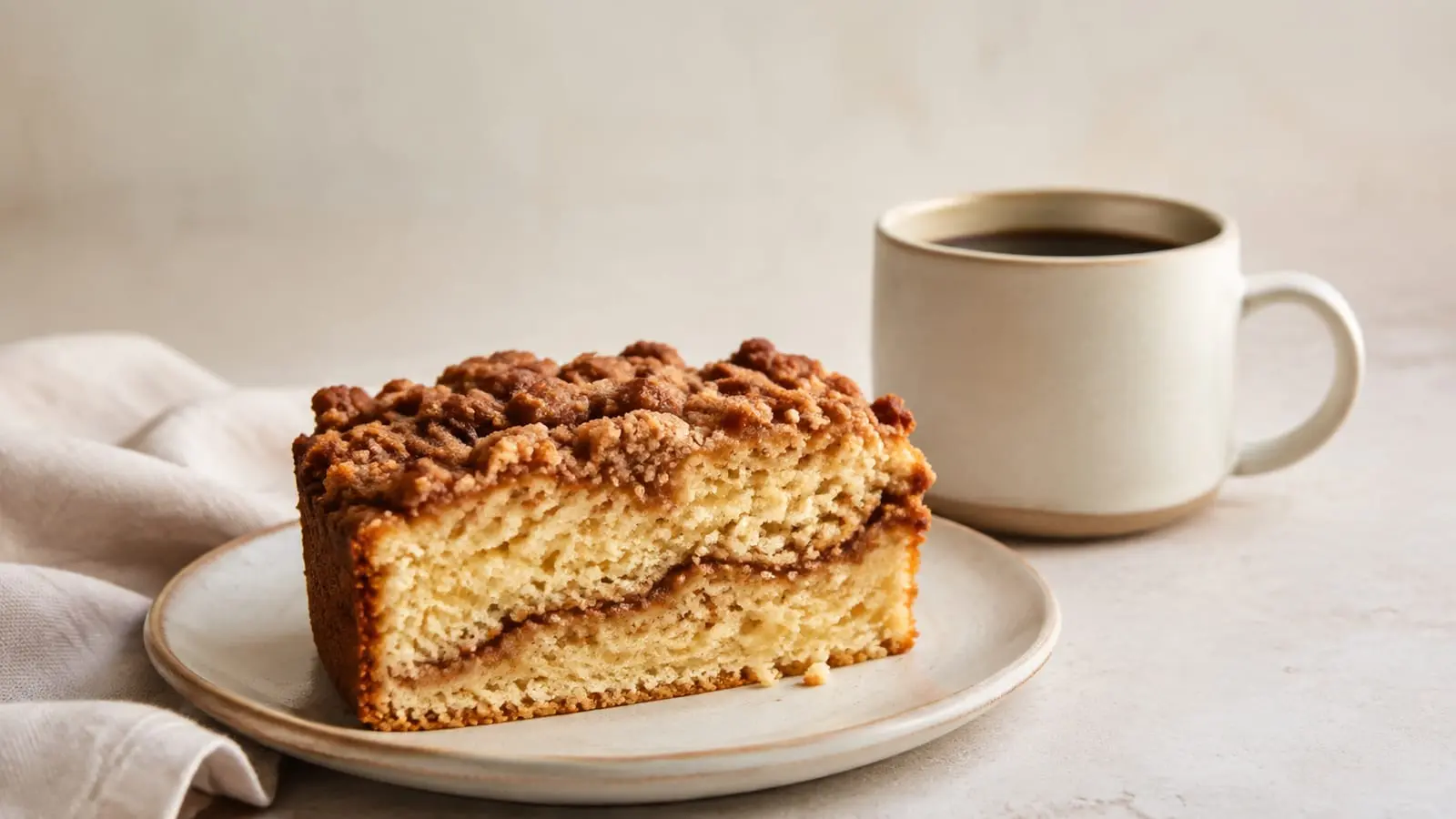
A classic coffee cake with cinnamon streusel needs a thick, moist butter cake, a cinnamon and dark brown sugar ribbon, and chunky crumbs on top. Use sour cream or full-fat plain yogurt for a tender crumb, fresh leavening for lift, and a light-colored square pan for even baking.
What does a classic coffee cake recipe with cinnamon streusel need?
Classic coffee cake contains no coffee. The name comes from how the cake is served: beside a cup of coffee, usually at breakfast, brunch, or an afternoon break.
The dependable version has these parts:
- A rich, tender butter cake
- A cinnamon and dark brown sugar ribbon through the middle
- A generous streusel topping with irregular buttery crumbs
The filling should taste warm and deep, not dusty. The streusel should crack under your fork instead of melting into the batter. If the topping disappears, the butter was too warm or the crumbs were mixed too smoothly.
This cake is for anyone who likes a proper breakfast bake without frosting. It also works as dessert with whipped cream or vanilla ice cream. Skip it if you want something light and airy. Coffee cake is meant to be substantial, buttery, and crumbly.
The moist, buttery coffee cake base
Start with softened butter, granulated sugar, eggs, vanilla, flour, a fresh leavener, salt, and full-fat sour cream or plain yogurt. The sour cream keeps the crumb moist and adds enough tang to stop the sugar from taking over.
Use a thick batter. It should spread with a spatula, but it shouldn't pour like pancake batter. A loose batter lets the filling sink and leaves the center greasy.
Use this order:
- Cream the softened butter and sugar until pale and fluffy.
- Beat in the eggs one at a time.
- Stir in the vanilla.
- Mix the flour, leavener, and salt separately.
- Add the dry mixture in portions, alternating with the sour cream.
- Stop mixing as soon as no dry flour remains.
The butter needs to be soft enough to press, not melted. Melted butter gives you a heavier cake with less lift. Cold butter leaves hard pieces that never blend properly, so the crumb bakes unevenly.
If the batter looks curdled after adding the eggs, don't panic. A small amount of the flour mixture will bring it back together. Still, add the flour gradually. Dumping it in all at once encourages overmixing.
This classic coffee cake base should taste lightly sweet before baking. If it tastes flat, check the salt and vanilla before adding more sugar. Sugar affects texture as much as flavor, so random extra spoonfuls can make the center collapse.
The cinnamon-sugar ribbon filling
Mix dark brown sugar with cinnamon and a small amount of flour. The sugar supplies sweetness and moisture, while the flour gives the filling enough body to stay in a ribbon instead of running into the bottom of the pan.
Use the filling between two layers of batter. Spread the first layer gently, then scatter the cinnamon mixture evenly across it. Keep the filling away from the pan sides so it doesn't burn against the metal.
Add the remaining batter in small spoonfuls over the filling. Then smooth the surface with a spatula. Don't drag hard across the middle, or you'll pull the sugar into the batter and lose the clean stripe.
The filling should be generous but not thick enough to separate the cake. Too much sugar creates a wet trench. Too little gives you a plain cake with a few cinnamon flecks pretending to be a ribbon.
Give the cinnamon a quick smell before using it. Stale cinnamon tastes woody and weak, even after baking. Fresh cinnamon makes the whole cake taste warmer without forcing you to add more sugar.
For a cozier coffee pairing, serve a slice with a cinnamon roll cappuccino. The drink is sweet, so keep the cake itself balanced.
Chunky, crunchy streusel topping
Combine flour, dark brown sugar, cinnamon, salt, and cold butter. Rub the butter into the dry ingredients with your fingertips until you have a mix of fine crumbs and larger clumps.
Stop before the mixture becomes a smooth paste. Those irregular pieces are what bake into a substantial topping. Fine crumbs alone sink into the batter or bake into a thin, sandy crust.
Squeeze some of the mixture in your palm, then break it into rough chunks over the cake. Vary the crumb size. Small pieces add a crisp surface, while larger ones give you the buttery bites people actually reach for.
Keep the streusel cold while you finish the batter. If the butter softens too much, chill the topping before assembling the cake. Warm streusel spreads across the surface and loses its shape in the oven.
Don't press the topping down. Scatter it over the batter and leave it alone. The cake will rise around it.
A little salt matters here. Without it, the topping can taste like plain sugar and flour. With it, the butter and brown sugar taste fuller.
How dark brown sugar improves coffee cake
Dark brown sugar brings molasses depth, moisture, and a deeper caramel flavor. It makes the filling taste rounder and gives the streusel a darker, toastier edge.
Use it in both places, but don't make every part of the cake brown sugar-heavy. Granulated sugar helps the butter cake rise and keeps the crumb lighter. Dark brown sugar belongs in the ribbon and topping, where its dense flavor has room to work.
Pack it firmly if you're measuring by volume. Better yet, weigh it. Loose brown sugar can change the sweetness and moisture from one bake to the next.
Dark brown sugar also browns faster than plain white sugar. Watch the top near the end of baking. If the streusel is dark but the center still moves, cover the cake loosely with foil and keep baking until the middle sets.
A tender crumb with enough density
Creaming creates small air pockets in the butter and sugar. Those pockets expand with the leavener and give the cake lift. Skip proper creaming and the cake turns compact.
Flour gives the batter strength, but too much makes it tough. Spoon flour into a measuring cup and level it if you don't have a scale. Do not scoop directly from the bag. That packs in extra flour and is one of the easiest ways to dry out a cake.
Mix the batter only until the flour disappears. More mixing develops gluten, the network that gives baked goods chew. That may be useful in bread. It is not what you want in coffee cake.
The right batter holds a soft peak and spreads without tearing. If it feels stiff, the flour may be heavy or the sour cream may be too cold. If it feels runny, the butter may have melted or the eggs were unusually large.
Fresh baking powder and baking soda make a real difference. Old leavening leaves you with a low, heavy cake and a topping that seems too thick. If the cake barely rises, don't blame the pan first.
The pan for the most even bake
A light-colored metal square pan is the safest choice. It transfers heat evenly without darkening the edges too quickly. A glass pan works, but the center may need more time while the sides brown.
A dark metal pan gives you deeper edge color and a crisper crust. It can also make the corners too dark before the center is ready. Lower the oven heat slightly if you know your pan runs hot, and watch the cake rather than trusting the clock.
A round pan works for a thinner cake, but the slices won't have the same clean layered look. A loaf pan makes the cake deeper and increases the risk of a wet center. Use it only if you want a tall, narrow bake and have room for slower baking.
Choose a pan that gives the batter room to rise. Fill it too deeply and the middle stays underbaked while the streusel turns dark. Fill it too shallowly and the cake loses the thick, tender bite that makes this style worth baking.
Grease the pan and line the base with parchment. Leave the sides greased so the cake releases cleanly. Parchment also gives you a way to lift the cooled cake out without breaking the streusel.
Accurate batter weighing and portioning
A kitchen scale gives you even layers. Place the mixing bowl on the scale, note the total batter weight, then divide it into equal portions. You don't need to guess by eye.
Spread the first portion across the pan. Aim for an even layer, especially in the corners. If one side is thin, the filling will sit closer to the pan and may burn there.
Add the cinnamon mixture across the middle. Keep the layer level instead of building a mound in the center. Then portion the remaining batter over the filling and smooth it carefully.
A scale also helps if you want consistent slices. Uneven batter creates a lopsided cake, a thin patch around the edge, or a wet section under a thick pocket of sugar. None of those problems are fixed by more cinnamon.
If you don't have a scale, use the same spoon and divide the batter as evenly as you can. Still, this is one recipe where a basic kitchen scale earns its counter space.
Assemble and bake the coffee cake

Prepare the batter, filling, and streusel before you start layering. Once the batter is mixed, work steadily. The leavener begins working as soon as it meets moisture, so it shouldn't sit around while you hunt for cinnamon.
Follow this order:
- Grease the pan and line the base with parchment.
- Spread half the batter in the pan.
- Scatter the cinnamon filling over the batter.
- Spoon the remaining batter over the filling.
- Smooth the top without dragging the filling through it.
- Cover the surface with chunky streusel.
- Bake until the center feels set and a skewer comes out with a few moist crumbs.
The skewer should not come out coated in wet batter. A completely dry skewer can mean you've baked the cake too far, especially if the edges are already dark.
The center should spring back lightly when pressed. If it wobbles, keep baking. Check the cake near the end and cover the top loosely if the streusel is browning too quickly.
Let the cake cool in the pan before slicing. A hot coffee cake has a soft filling and fragile crumb. Cut it too soon and the ribbon smears, the base tears, and the streusel scatters across the plate.
Cool it until the sides feel firm and the center no longer radiates heat. Then lift it out by the parchment and slice with a sharp knife. Wipe the blade between cuts if you want tidy layers.
Serving and storing classic coffee cake

Serve the cake slightly warm or at room temperature. Warmth softens the butter and brings out the cinnamon, but piping-hot slices can fall apart.
Pair it with black coffee, a lightly sweetened latte, or a bright brew that cuts through the buttery crumb. A cinnamon drink works too, but keep the sugar in the cup modest. The cake already brings plenty.
For dessert, add vanilla ice cream while the cake is still warm. The cold cream against the dark brown sugar topping is the right kind of excess.
Store the cooled cake in an airtight container at room temperature. Keep it away from heat and sunlight, which soften the streusel and dry the edges.
The topping loses some crunch after storage. Rewarm individual slices briefly to soften the crumb, but don't expect the streusel to return fully to its first-baked texture. Refrigeration keeps the cake longer but makes the butter firm and the crumb less pleasant, so use it only if your kitchen is hot.
Freeze slices without icing or ice cream. Wrap them tightly, then thaw at room temperature. Add a short warm-up before serving if you want the buttery texture back.
If you want a second coffee pairing with chocolate and spice, try this cinnamon chocolate coffee. Keep the drink less sweet than the cake. That's the sweet spot.
FAQ
Why is my coffee cake dry?
Extra flour, overmixing, or overbaking usually causes dryness. Weigh the flour, stop mixing as soon as it disappears, and take the cake out once the center is set and the skewer carries only a few moist crumbs.
Why did the cinnamon filling sink?
A thin batter or an overly wet filling usually sends the cinnamon layer downward. Thicken the mixture with flour, keep the batter spreadable, and distribute the sugar evenly instead of piling it in one spot.
Can you make coffee cake without sour cream?
Yes. Full-fat plain yogurt is the sensible substitute because it keeps the batter moist while adding mild tang. Thin yogurt brings extra water and can turn the neat cinnamon stripe into a blur.
How do you keep streusel from becoming soft?
Let the cake cool all the way before sealing it in an airtight container at room temperature. Trapped steam softens the crumbs, so closing the lid over a warm cake defeats the whole point of making streusel.
Can you add nuts to the streusel?
Yes. Chopped pecans or walnuts bring crunch and a toasted flavor. Keep them small enough to blend into the crumbs; large pieces can form a hard layer that breaks away during slicing.