
Tanamera Coffee is the best Indonesian coffee brand overall. Toarco Toraja is the polished Sulawesi pick, Anomali Coffee is the easiest everyday bag, and Kapal Api is the budget workhorse. Gayo Kopi suits people who already like earthy Mandheling. Tanamera earns the top spot the boring way: it buys direct from growers across Sumatra, Sulawesi, and Bali, roasts to show the bean instead of hiding it under char, and proves that great Indonesian coffee comes from freshness and the right ratio, not novelty beans or a luxury price tag.
Last updated: 2026-07-28
What Indonesian coffee tastes like
Wet hulling is the big reason Indonesian coffee tastes heavy, low-acid, and a little wild beside a clean African washed coffee. Farmers strip the parchment off the bean while it's still damp, so the bean dries fast and picks up earthy, cedar, and tobacco notes people either love or can't stand.
Volcanic soil and an equatorial climate do the rest. The mineral-rich ground and steady warmth build a syrupy body and knock the brightness way down. So if you've found Indonesian coffee "muddy," that wasn't a bad bag. That's the style working as intended, and it's why brand and freshness matter more here than with almost any other origin. A stale wet-hulled bean goes from earthy to flat-out ashy fast.
The upside is forgiveness. That heavy body holds up to a rough grind and a lazy pour better than a delicate light roast ever will. You have to work to make Indonesian coffee taste bad, which makes it a great place to stop overthinking gear and dial in your ratio.
Which Indonesian coffee brands are worth your money?
Tanamera Coffee wins for me because it does the two things most brands fudge: it tells you where the beans came from, and it roasts to let the origin speak. You get real clarity across multiple islands without paying a novelty tax. The rest depends on what you want in the cup.
| Brand | Best for | Flavor notes | My verdict |
|---|---|---|---|
| Tanamera Coffee | Best overall | Clean, origin-forward, balanced body | Buy this first |
| Toarco Toraja | Single-origin Sulawesi | Cedar, dark chocolate, heavy body | Worth it if you love Toraja |
| Anomali Coffee | Everyday brewing | Reliable, well-sourced, approachable | Great daily driver |
| Gayo Kopi | Sumatra lovers | Earthy Mandheling, low acidity | Skip if you hate earthy |
| Kapal Api | Budget workhorse | Bold, earthy, no surprises | Fine, know what it is |
Tanamera Coffee (best overall). Direct-trade sourcing and honest roasting. It's the benchmark because you can taste the island instead of the roaster's ego. If you buy one bag to learn what good Indonesian coffee tastes like, buy this.
Toarco Toraja (best single-origin Sulawesi). A polished, heavy-bodied cup with cedar and dark-chocolate notes. This is the standard for what Toraja coffee should be. Worth the extra spend only if that specific profile is what you're after.
Anomali Coffee (best for everyday). Consistently well-sourced beans at a price that doesn't sting. It rewards simple methods and an honest ratio, which is most of the game. My pick for the bag you actually finish every week.
Gayo Kopi (best Sumatra option). Full-bodied Mandheling with the acidity dialed way down. It holds up brilliantly in a French press with zero fuss. Skip it if earthy and syrupy isn't your thing, because this leans all the way in.
Kapal Api (best budget workhorse). Indonesia's familiar mass-market name. It's earthy, bold, and predictable, and no, it's not specialty coffee. But for a reliable daily cup that costs next to nothing, it does the job without pretending to be more.
Each Indonesian island brings a different cup

Match the island to what you like, not to hype. The major growing regions are Sumatra, Java, Bali, and Sulawesi, and each one gives you a different cup before the roaster touches it.
- Sumatra: the heaviest, earthiest, lowest-acid coffee of the bunch. Think cedar, tobacco, and a syrupy body. This is peak wet-hulled character, so start here if bold and earthy sounds good.
- Java: cleaner and more balanced, with a nutty, chocolatey backbone. A safe crowd-pleaser and the easiest island for someone new to Indonesian coffee.
- Sulawesi: polished and full-bodied, often with cedar and dark chocolate. It's Sumatra's smoother cousin, less muddy, more composed.
- Bali: the bright one. Highland Bali coffee leans fruity and citrusy with real acidity, which surprises people who think all Indonesian coffee is heavy.
- Flores: softer and sweeter, with chocolate and a floral edge. Underrated and worth grabbing if you spot it.
- Papua: rare, clean, and mild, with a rounded body. Hard to find, but a treat when you do.
If you're new, start with Java or Bali and work toward Sumatra as your palate settles. Want a wider tour of how origin changes a cup? Our guide to regional coffee flavor profiles is a good next stop.
History explains the flavor, not the freshness
A little, and mostly in ways worth knowing. The Dutch planted coffee across Java in the late 1600s because the volcanic soil was perfect for it, and Europe went wild for those strong beans. That colonial push is why "Java" became slang for coffee at all, and it's still why old estates carry a premium name today.
Wet hulling came later, and not by choice. Farmers in humid Sumatra needed beans to dry fast in a climate that rots slow-dried coffee, so they hulled wet. What started as a survival trick became the signature that gives Indonesian coffee its heavy, earthy soul. You're tasting a workaround that outlived its problem.
So heritage matters, but not the way marketing wants you to think. A famous old estate name doesn't guarantee a fresh, well-roasted bag. Buy the roast date and the sourcing story, not the colonial nostalgia. History explains the flavor in your cup; it doesn't roast the beans this month.
Skip Kopi Luwak and pay for better coffee
Skip Kopi Luwak. It's the famous one made from beans a civet eats and passes, sold for a small fortune, and it's the clearest case of paying for a story instead of a cup. The taste is smooth and mild at best, not better than a good clean Sumatra, and the ethics are grim.
Most "wild-sourced" luwak on the market comes from caged civets force-fed cherries in bad conditions. So you're paying a premium for a novelty that's often cruel and rarely delicious. That's not a snobby take, it's a value one: the money buys a label, not a better morning.
Fancy single-origin micro-lots are a different story. A carefully processed, transparently sourced Sumatra or Sulawesi at a fair premium can earn its price in clarity and body. The line I draw is simple. Pay more for better sourcing and fresher roasting, never for a gimmick. If a coffee's main selling point is how it was harvested rather than how it tastes, keep your wallet closed.
Read the bag before you buy
Start with the roast date, always. Whole beans hold their flavor for only a short window after roasting, and wet-hulled Indonesian coffee turns ashy faster than most when it's stale. A bag with a roast date beats a bag with a "best by" date every time, because "best by" tells you nothing about freshness.
Here's what actually matters on the label:
- Roast date within the last few weeks. No date at all is a red flag. Buy what you'll finish in a month.
- Processing method. "Wet hulled" or "giling basah" means the classic heavy, earthy profile. Washed means a cleaner, brighter cup.
- Single-origin vs blend. Single-origin (one island, sometimes one farm) lets you taste the region. Blends aim for consistency. For learning, go single-origin.
- Roast level. Medium shows off the bean's character. Dark buries the origin under smoke, which is a waste of good Indonesian coffee.
- Whole bean. Always. Grind right before you brew or you lose the best of it in minutes.
Certifications like organic or fair trade are a nice bonus, not a flavor guarantee. A fresh roast date does more for your cup than any logo. If you want a broader primer, our rundown of how to choose good coffee beans covers the basics without the jargon.
You can read more about how Indonesian coffee is grown and processed if you want the full background.
Brew for body and clarity

Nail the ratio first, because that fixes more bad coffee than any gadget. For Indonesian beans, I like a French press or drip that leans into their heavy body rather than fighting it. Here's where to start:
- French press (my pick for Sumatra): use 1:15, about 60 grams of coffee per liter of water, ground coarse. Steep four minutes, give it a stir, press slow. That full body is the whole point of these beans.
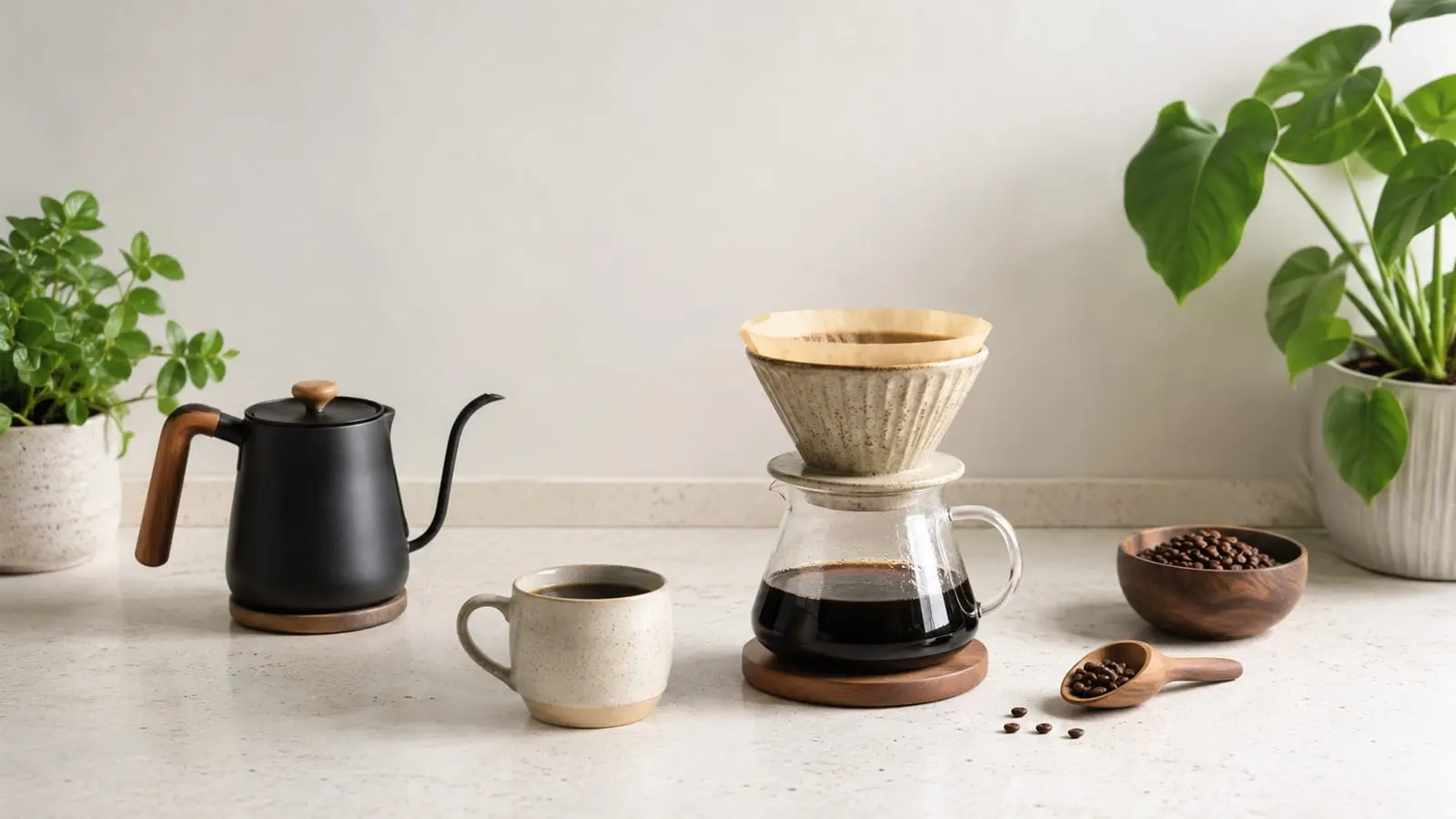
- Pour-over: go 1:16, around 60 grams per liter, medium grind. It'll pull out more clarity and a touch of the sweeter, chocolatey notes hiding under the earth.
- Drip: the same 1:16 works fine. Use fresh-ground beans and off-the-boil water, and you're most of the way there.
Weigh your coffee instead of scooping it. That one change does more for consistency than a fancy machine, and it's free. Then taste and adjust: thin and sour means add more coffee, heavy and bitter means back off a click on the grind.
Indonesian beans forgive a rough hand, so don't fuss. Get the ratio right, use fresh beans and water just off the boil, and the volcanic soil does the rest. That's the sweet spot.
FAQ
What is the best Indonesian coffee brand for a beginner?
Anomali Coffee. It's well-sourced, easy to brew, and doesn't punish a rough ratio, so you can learn on it without wasting money. Start there, then branch into single-origin Sumatra once you know what you like.
Is Indonesian coffee stronger than other coffees?
Not in caffeine, but it drinks bolder. The heavy body and low acidity from wet hulling make it feel thicker and more intense in the mouth than a bright African or Central American cup. "Strong" here means body, not a bigger buzz.
Why does my Indonesian coffee taste muddy or ashy?
Usually stale beans or too dark a roast. Wet-hulled coffee goes flat fast, so check your roast date and buy whole bean. If it's fresh and still muddy, your grind may be too fine for a French press, so bump it coarser.
Is Kopi Luwak the finest Indonesian coffee?
No. It's the most expensive, which isn't the same thing. A fresh, well-roasted single-origin Sumatra or Sulawesi will out-taste it for a fraction of the cost, and without the animal-welfare baggage.
Can I trust supermarket brands like Kapal Api?
For an everyday cup, yes. Kapal Api is consistent, earthy, and cheap, and it won't surprise you. Just don't expect specialty clarity from it, and grind fresh if you can to get the most out of it.