
Café au lait is the best everyday coffee drink for anyone who wants a creamy cup and doesn't own an espresso machine. Brew strong coffee, scald an equal amount of milk, and pour them together at a 1:1 ratio. That's it. You get a silky, balanced cup with no steam wand, no barista tricks, and none of the fuss a latte demands. My favorite version is inspired by Café du Monde coffee, and this homemade café au lait is a simple blend of strong coffee and creamy milk that starts the day right.
Last updated: 2026-07-25
What exactly is a café au lait, and how is it different from a latte?
A café au lait is brewed coffee mixed with hot milk, usually equal parts of each. That's the whole thing. It's the classic French breakfast drink, and traditionally the milk is scalded on the stove, not steamed.
The difference from a latte is the coffee base. A latte uses espresso, so you need a machine or a moka pot to pull it. A café au lait, however, uses regular brewed coffee, which means a French press or drip pot does the job.
So which is better for a home brewer? The café au lait, easily. A latte tastes great, but it locks you into gear and technique. The café au lait, meanwhile, gives you a comparable creamy cup with tools you already own. If you want the milk-forward espresso version instead, my café con leche recipe covers that ground.
The ratio matters more than your machine
Start with a strict 1:1 ratio: equal parts strong brewed coffee and hot milk. That's the traditional café au lait ratio in France, and it's the number to memorize. Weigh or eyeball equal amounts and you land on a balanced cup every time.
Want it stronger? Nudge toward two parts coffee to one part milk. Want it gentler and creamier? Add a splash more milk. But 1:1 is home base, and I'd dial in from there rather than starting anywhere else.
Here's why the ratio beats the equipment. An expensive machine can't rescue weak coffee drowned in milk, while a cheap stovetop pot makes a great cup when the proportions are right. Get the ratio and the coffee strength dialed in, and the gear barely matters.
The one tool worth owning is a cheap kitchen scale. Coffee scoops lie, since a spoon of light roast and a spoon of dark roast weigh different amounts. Weighing takes ten seconds and makes your cup repeatable.
How to make a café au lait at home, step by step

To make the best café au lait at home, start with strong coffee and hot milk in equal parts. My recipe has a few key steps: brew the coffee base, heat the milk right, and pour them together.
- Brew strong coffee. Use a French press with a coarse grind, roughly the size of raw sugar. Go with about a heaping tablespoon of coffee per small cup of water, then push it a touch stronger than you'd drink black so it holds up against the milk. Steep four minutes and press.
- Heat the milk. Pour whole milk into a small pot over medium-low heat. Warm it until it steams and small bubbles ring the edge, but don't let it boil. You want it hot and silky, not scalded to a skin.
- Pour 1:1. Fill your mug halfway with coffee, then add an equal amount of hot milk, holding back any foam with a spoon.
- Taste and adjust. Too milky? Add coffee. Too sharp? Add milk. Change one thing at a time so you know what fixed it.
Whole milk gives the richest body. Oat milk is the best dairy-free swap here, because it stays creamy and doesn't split in hot coffee. Skim works but tastes thin, so I'd skip it unless that's what's in the fridge.
French press, drip, or pour-over: which base wins?
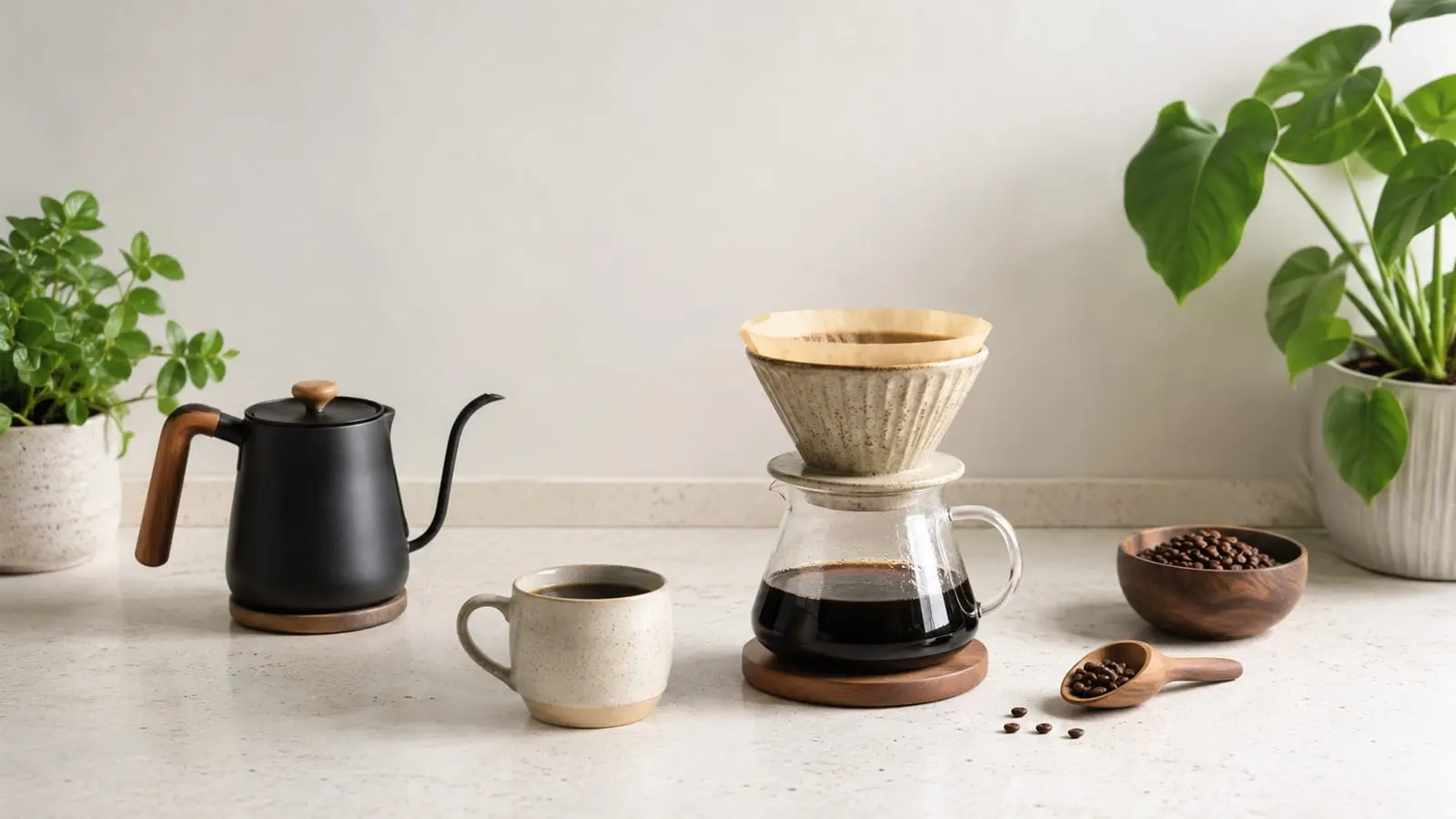
Use a French press. It brews full-bodied coffee that stands up to equal parts milk without tasting watery, which is exactly what this drink needs.
Drip is the easy runner-up. A standard drip pot makes coffee strong enough for a café au lait, especially if you add an extra scoop. As a result, it's the most hands-off option if you already have a machine going in the morning.
Pour-over is the one I'd skip for this. It makes a clean, delicate cup that shows off bright, floral notes, and all of that disappears the second you add half a mug of milk. You'd waste good beans and effort. Save pour-over for drinking black.
| Method | Body | Effort | Best for |
|---|---|---|---|
| French press | Full, heavy | Low | The everyday go-to, holds up to milk |
| Drip | Medium | Very low | Hands-off mornings, add an extra scoop |
| Pour-over | Light, clean | Higher | Drinking black, not this drink |
Scalded milk or steamed milk?
Scald the milk on the stove. It's the traditional method, it costs nothing, and it gives you the warm, slightly sweet, full-bodied milk a café au lait is supposed to have. Heating milk gently coaxes out its natural sweetness without any foam.
Steamed milk from a wand adds airy microfoam, which is lovely on a latte but beside the point here. A café au lait wants smooth hot milk, not a foam cap. If you own a machine, warm the milk to around 140 to 150 degrees Fahrenheit, the sweet spot for steaming, and stop before it froths up.
No machine? A small pot and your eyes are all you need. Pull the milk off the heat the moment it steams and bubbles ring the pan. Boil it, however, and you scorch the sugars, which is where that scalded-milk smell comes from.
What makes the New Orleans version different?
New Orleans café au lait uses coffee blended with chicory, and that's the whole reason it tastes bolder and rounder than the plain French cup. Chicory root, roasted and ground, gets brewed right alongside the coffee. It adds a woody, slightly chocolatey depth and cuts any bitterness.
This tradition started as a way to stretch expensive coffee during shortages, and it stuck around because people loved the flavor. Café Du Monde sells the classic blend, a 15-ounce can of dark roasted coffee and chicory, and it's the easy shortcut to that New Orleans cup at home.
Is it worth trying? Absolutely. This is the best variation for anyone who wants more depth without buying an espresso machine. Brew the chicory blend strong in your French press, pour it 1:1 with hot milk, and you've got a legitimate upgrade over the standard version.
Bowl or cup?
The wide French bowl isn't just for show, but it also isn't required. Traditionally, a café au lait is served in a shallow bowl you can wrap both hands around, warming your palms on a cold morning. The wide shape also cools the drink a little faster and, some say, opens up the aroma.
Does the vessel change the taste? Barely. A big mug does the same job and won't slosh. Use a bowl if you want the ritual and the hand-warming, but don't think you need one to make the drink right. The ratio matters. The dish doesn't.
Skip the Starbucks Caffe Misto
Don't order a Caffe Misto if you can help it. A Misto is Starbucks' name for a café au lait: brewed coffee topped with steamed milk, usually around half and half. That's the same drink, near enough.
The problem is the price. Starbucks charges close to latte money for what is essentially drip coffee and hot milk. You can make one at home for a fraction of the cost, because you control the milk and brew the coffee stronger than their batch. For the full breakdown, see my café misto recipe built on the 1:1 ratio.
Order it only when you're already out and craving one. Otherwise, it's the same drink you can pour at home for a fraction of the cost.
Which café au lait should you make?
Here's how the options stack up, plus my pick for each type of drinker.
| Pick | What it is | My verdict |
|---|---|---|
| Classic French café au lait | 1:1 strong coffee and scalded whole milk | The gold standard, hits the ratio every time |
| New Orleans chicory version | Coffee-chicory blend, poured 1:1 | Worth it, bolder and more complex |
| French press base | Full-bodied brew under equal milk | Best everyday method, never tastes thin |
| Starbucks Caffe Misto | Their name for the same drink | Skip it, you're paying latte prices |
If you want more ideas once you've nailed the basic cup, my café au lait with a twist adds a few flavor spins worth a weekend try.
FAQ
Why does my café au lait taste weak?
You either brewed the coffee too light or poured in too much milk. Brew the base stronger than you'd drink it black, and hold the milk to equal parts, not more. Nudge the ratio toward extra coffee until it tastes right.
Can I make a café au lait iced?
Yes, and it's easy. Brew the coffee double-strong so the ice doesn't water it down, chill it, then pour it over ice with an equal amount of cold milk. Cold whole milk or oat milk both work well here.
Is a café au lait strong or high in caffeine?
The caffeine comes from the brewed coffee, so it lands close to a regular cup, because half the drink is milk. It tastes mellow since the milk softens the coffee, but you're getting real drip-coffee caffeine, not a decaf sip.
What kind of coffee beans should I use?
Reach for a medium or dark roast whole bean and grind it coarse for the French press. Dark roast punches through the milk best, which is why the New Orleans chicory blend works so well. Light roasts get lost once the milk goes in.
Do I have to use whole milk?
No, but it makes the creamiest cup. Oat milk is my top dairy-free swap because it stays smooth and won't curdle in hot coffee. Skim and almond milk both taste thinner, so use them only if that's what you have.