Jump to Recipe
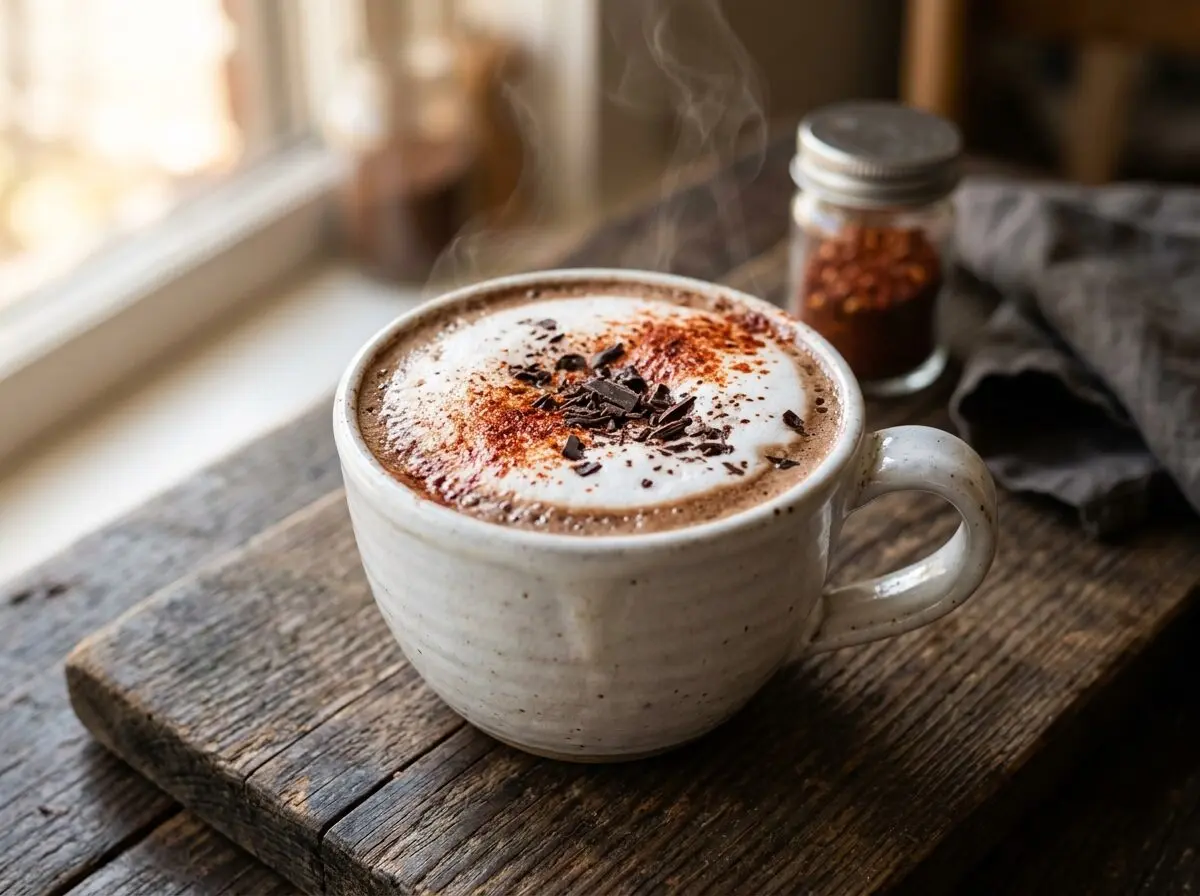
Black Pepper Mocha is a spiced espresso drink that layers dark chocolate and freshly cracked black pepper over a double shot of espresso, topped with steamed milk.
The pepper is not a gimmick. It adds a dry, lingering heat that cuts through the sweetness of the chocolate and makes the coffee taste deeper. I started making this when I ran out of cinnamon one morning and never went back.
The one mistake most people make is using pre-ground pepper from a jar. It tastes flat and dusty. Crack it fresh from whole peppercorns and the difference is immediate – sharper, more aromatic, with a real bite at the finish.
This drink works as a morning coffee or an afternoon pick-me-up on cold days. It takes about 10 minutes from start to finish.

Why You’ll Love This Recipe
- Fresh-cracked pepper adds real heat, not just spice flavor
- Dark chocolate keeps it rich without being too sweet
- Ready in under 10 minutes with basic equipment
- Easy to adjust heat level by changing pepper amount
Ingredient Notes
- Black pepper: Use whole peppercorns and crack them fresh just before adding. Pre-ground pepper loses most of its volatile oils and the heat falls flat.
- Dark chocolate: Choose a bar with at least 70% cacao for a bitter edge that balances the pepper. Milk chocolate makes this too sweet and muddies the spice.
- Espresso: A double shot (about 60 ml) works best here. Brewed strong drip coffee can substitute if you do not have an espresso machine – use about 80 ml.
- Whole milk: Whole milk steams to a thicker, creamier foam. Oat milk works but produces a lighter, less stable foam and a slightly sweeter result.
- Cocoa powder: Used for dusting the top. Dutch-process gives a smoother look and less astringency than natural cocoa.
- Granulated sugar: Start with 1 teaspoon and adjust after tasting. The dark chocolate already carries some bitterness so you may want less than you expect.
Black Pepper Mocha with a Warm Spiced Kick
Ingredients
Method
- Place the whole peppercorns on a cutting board and press the flat side of a heavy knife down firmly to crack them into coarse, uneven pieces. You want irregular shards, not a fine powder.
- Pull a double shot of espresso (60 ml) directly into your mug. The shot should be dark brown with a thin tan crema on top.
- Add the finely chopped dark chocolate and granulated sugar to the hot espresso immediately. Whisk with a small whisk for about 30 seconds until the chocolate is fully melted and the mixture is glossy with no visible lumps.
- Stir the cracked black pepper into the chocolate-espresso base. Let it sit for 1 minute so the pepper infuses into the liquid before you add the milk.
- Pour 220 ml of cold whole milk into a frothing pitcher. Steam using a steam wand, angling the pitcher so the milk spins in a spiral. Stop when the outside of the pitcher feels hot to the touch and the milk reaches 65 C / 150 F on an instant-read thermometer. The surface should look glossy and smooth, not bubbly.
- If using a handheld frother, heat the milk in a small saucepan over medium heat until it just begins to steam (about 65 C / 150 F), then froth for 20 to 30 seconds.
- Pour the steamed milk slowly over the chocolate-pepper base, holding back the foam slightly with a spoon, then spoon the foam on top.
- Dust the surface with a pinch of Dutch-process cocoa powder through a small sieve. Serve immediately.
Notes
- Crack pepper coarsely on a cutting board with the flat of a knife for best texture.
- Melt chocolate into hot espresso immediately after pulling the shot.
- Do not exceed 2 full cracks of a pepper mill - too much pepper overwhelms the chocolate.
- Use a small whisk to fully incorporate chocolate before steaming milk.
- Dutch-process cocoa for dusting gives a cleaner finish than natural cocoa.

Tips for Success
- Crack peppercorns coarsely, not fine – larger fragments release heat slowly as you drink.
- Melt the dark chocolate in the espresso while it’s still hot so no lumps form before adding milk, the same way you would build a warmly spiced syrup-based espresso drink.
- Steam milk to about 65 C / 150 F for a microfoam that blends into the drink rather than sitting on top.
- Add the cracked pepper directly to the chocolate-espresso base, not on top, so heat infuses through the whole drink.
- Taste the base before adding milk – if the pepper is too sharp, add a small pinch of fine salt to round it out.
Variations
- Iced version: pour the chocolate-espresso base over ice, then add cold-frothed milk and cracked pepper.
- Vegan swap: use oat milk and a vegan dark chocolate bar with at least 70% cacao.
- Extra spice: add a small pinch of cayenne alongside the black pepper for a two-heat-layer effect.
Storage and Reheating
The chocolate-espresso base (before milk is added) keeps in a sealed jar in the refrigerator for up to 2 days. Reheat it gently in a small saucepan over low heat, stirring until warm.
Do not store the finished drink with steamed milk – the foam collapses and the pepper steeps too long, making it sharp and unpleasant. Always steam fresh milk to order.
For meal prep, mix a batch of the chocolate-pepper base ahead and refrigerate, a strategy that works just as well with any homemade coffee syrup you brew in advance. Steam milk fresh each morning and the full drink is ready in under 3 minutes.
Serving Suggestions
Black Pepper Mocha pairs well with foods that have a slightly fatty, neutral base – a plain butter croissant, shortbread, or a thick slice of banana bread let the spiced coffee stand out without competing flavors.
For a dessert pairing, serve it alongside a small piece of dark chocolate or a square of ginger cake, much like the layered richness behind a blood orange mocha with dark chocolate. The pepper in the drink echoes the heat in ginger and makes both taste more pronounced.
If you are serving this to guests, dust the top with Dutch-process cocoa and add 3 to 4 whole peppercorns on the saucer as a visual cue for what makes the drink different.

FAQ
Why does my Black Pepper Mocha taste bitter instead of spicy?
The most common cause is too much dark chocolate relative to the sugar, or using natural cocoa powder in the base instead of Dutch-process. Try increasing sugar by half a teaspoon and check that your chocolate is 70% cacao, not higher. Over-extracted espresso also adds sharpness – pull your shot to about 60 ml and stop there.
Can I use white pepper instead of black pepper in this mocha?
White pepper works but gives a more earthy, fermented heat that clashes slightly with the dark chocolate. Black pepper has a brighter, more floral bite that complements the cocoa. Stick with black unless you specifically want a murkier, deeper spice note in the background.
Can I make the Black Pepper Mocha base ahead and freeze it?
Yes. Pour the chocolate-espresso-pepper base into an ice cube tray and freeze for up to 1 month. Drop 2 to 3 cubes into a mug, let them melt with a splash of hot water, then add fresh steamed milk. The flavor holds well; just re-crack a little fresh pepper on top when serving.
How do I know when the milk is steamed correctly for this drink?
The milk should reach 65 C / 150 F and look glossy with tiny, uniform bubbles – not large frothy foam. If it starts to smell slightly cooked or takes on a faintly sweet scalded note, it has gone too far. Pull the pitcher away from the steam wand just before it reaches temperature, as carryover heat will finish the job.
Is Black Pepper Mocha gluten-free?
Yes, this drink is naturally gluten-free as written. Espresso, dark chocolate, black pepper, milk, and sugar contain no gluten. The only thing to check is your dark chocolate bar – a small number of brands process chocolate on shared equipment with wheat-containing products, so look for a gluten-free label if that matters to you.
What is the difference between a Black Pepper Mocha and a regular mocha?
A standard mocha is espresso, chocolate, and steamed milk – sweet and straightforward. A Black Pepper Mocha adds freshly cracked black pepper to the base, which introduces a slow-building heat and makes the chocolate taste less sweet and more complex. The pepper also brings out woody, earthy notes in the espresso that a plain mocha does not have.