
Maragogipe coffee earns its “elephant bean” name from unusually large, porous seeds, but the cup matters more. Expect a soft, perfumed drink with gentle acidity, rounded body, and a lingering finish. Freshness, a steady ratio, and careful tasting decide whether those beans deserve your money.
Last updated: 2026-08-26
What Maragogipe coffee is
Maragogipe, also called Marago coffee, is a natural mutation of Typica, one of the old Coffea arabica coffee varieties. It was first discovered in the municipality of Maragogipe in Bahia, Brazil, which gave the variety its name.
The mutation affects more than the seed. The plant produces unusually large leaves, cherries, and branches, along with its oversized coffee beans. That broad growth makes Maragogipe easy to recognize, but it also creates a practical problem: the plants produce less coffee than standard Arabica varieties.
Maragogipe yields only 68-75% as much as other varieties. Lower productivity helps explain why genuine Maragogipe coffee beans can be harder to find and why a rare lot may cost more. Scarcity alone doesn’t make the coffee good, though. A poorly handled elephant bean still makes a dull cup.
Maragogipe has also helped shape newer coffee varieties. Its genetics appear in crosses such as Pacamara and Maracaturra, which borrow its large-seed character along with traits from other Arabica lines.
If you enjoy unusual coffee genetics, you’ll find more useful context in this guide to unique coffee varietals.
Why Maragogipe is called the elephant bean
The name comes from the beans’ remarkable size and shape. Maragogipe seeds are broad, long, and visibly different from the smaller, tighter seeds most people recognize as coffee.
The bean’s structure also stands out. Maragogipe has a more open, porous surface, which changes how heat moves through the seed during roasting. The outside can develop faster than the center, so a careless roast may taste toasted on the surface while the inside stays flat.
The elephant bean label describes appearance. Flavor depends on how the coffee was grown, roasted, and brewed. You can roast a large bean badly, just as you can brew a modest-looking coffee that tastes far more complex.
The variety’s oversized morphology makes it interesting, but the farm, processing, roast, and freshness decide what reaches your cup.
How about physical appearance?
Maragogipe coffee beans are noticeably larger and broader than typical Arabica beans. They may have a pale or bluish cast, especially before roasting, and their porous surface can look less dense than the beans in a standard blend.
The green beans often appear slightly irregular. That isn’t a defect by itself. The variety naturally has a different structure, so comparing every seed to a compact, familiar Arabica bean misses the point.
Still, appearance can’t tell you whether the coffee will taste silky, floral, woody, or flat. Color won’t reveal how long the beans sat after roasting. Size won’t tell you whether the coffee was picked ripe or processed carefully.
Treat the look as a clue; it can’t grade quality. The roast date, storage, and cup aroma deserve more attention.
Where Maragogipe coffee beans grow best
Maragogipe performs best in places with high elevation, fertile soil, cool growing conditions, and enough rainfall to support slow cherry development. Those conditions give the fruit more time to build sweetness and aroma.
Altitude can sharpen the cup, especially when cooler nights slow ripening. Fertile, well-drained soil supports healthy plants and can help preserve the variety’s floral and sweet character. The farm still needs good shade, pruning, picking, and processing. A favorable site won’t rescue neglected coffee.
Growing conditions also affect the plant’s already modest productivity. Larger plants and lower yields demand more care per usable pound of coffee. That extra work can limit supply, especially for small farms growing Maragogipe alongside more productive varieties.
You may see Maragogipe from Brazil, Central America, Hawaii, and other coffee-growing regions. Don’t assume one region always produces the best cup. A careful lot from one country can beat a careless lot from a more famous place.
What does Maragogipe coffee taste like?

Maragogipe usually tastes soft, perfumed, and gently sweet. Expect low acidity, a rounded body, floral aromas, and a lingering finish that stays on the tongue without turning harsh.
The cup often leans toward honey, soft fruit, citrus peel, white flowers, or mild chocolate. Some lots taste airy and tea-like. Others feel heavier, with more syrupy body and dried-fruit sweetness.
Maragogipe is rarely the coffee I’d choose for a sharp, punchy cup. Its charm is quieter. The flavors unfold slowly, and the finish does more work than the first sip.
Maragogipe coffee tastes soft, floral, and full-bodied, with mild acidity and a long finish. Its large beans create interest, but careful growing, roasting, and brewing create the flavor you actually drink.
Common flavor traits
| Cup trait | What you may notice |
|---|---|
| Acidity | Low, gentle, and rounded |
| Aroma | Floral, perfumed, honeyed, or lightly citrusy |
| Body | Smooth, broad, and sometimes syrupy |
| Sweetness | Soft fruit, honey, caramel, or cocoa |
| Finish | Persistent, mellow, and lightly sweet |
Treat these traits as a starting map, not a promise on the bag. Coffee is an agricultural product, so each lot reflects its growing conditions and processing choices.
Why origin changes the elephant bean cup
Origin changes Maragogipe more than the name suggests. Soil, elevation, rainfall, shade, cherry ripeness, and processing all shift the final profile.
A washed lot may taste cleaner and more floral. A natural lot can bring heavier fruit and a rounder sweetness. Honey processing may sit somewhere between them, keeping some clarity while adding a fuller texture.
Higher-growing lots often show more perfume and delicate fruit. Lower or warmer sites may produce a heavier cup with cocoa, nuts, or dried fruit. Those patterns help you choose, but they aren’t strict rules.
The same variety can taste restrained in one place and richly fruity in another. Read the lot description, then taste with an open mind. The farm’s work matters more than the elephant bean nickname.
Cafe Maragogipe, Marago coffee, and the names buyers see
Cafe Maragogipe usually refers to coffee made from the Maragogipe variety. Marago coffee can be a shortened name for the same variety, especially on informal product labels.
The label still needs a closer look. A bag called cafe Maragogipe may contain a single-origin lot, a blend, or a roast named after the variety. “Marago” may identify the cultivar, but it doesn’t automatically tell you the country, processing method, roast level, or freshness.
Look for these details:
- The variety name, clearly listed as Maragogipe.
- The growing region or farm.
- The processing method.
- A clear roast date.
- Whole beans if you have a burr grinder.
- Tasting notes that mention body, floral aroma, fruit, or sweetness.
Skip vague packaging that leans on giant-bean imagery but says little about the coffee itself. The elephant picture is easy marketing. Traceable details are more useful.
For more context on naming and unusual coffee varieties, see this guide to heirloom coffee varieties.
Brewing Maragogipe without fussy rules

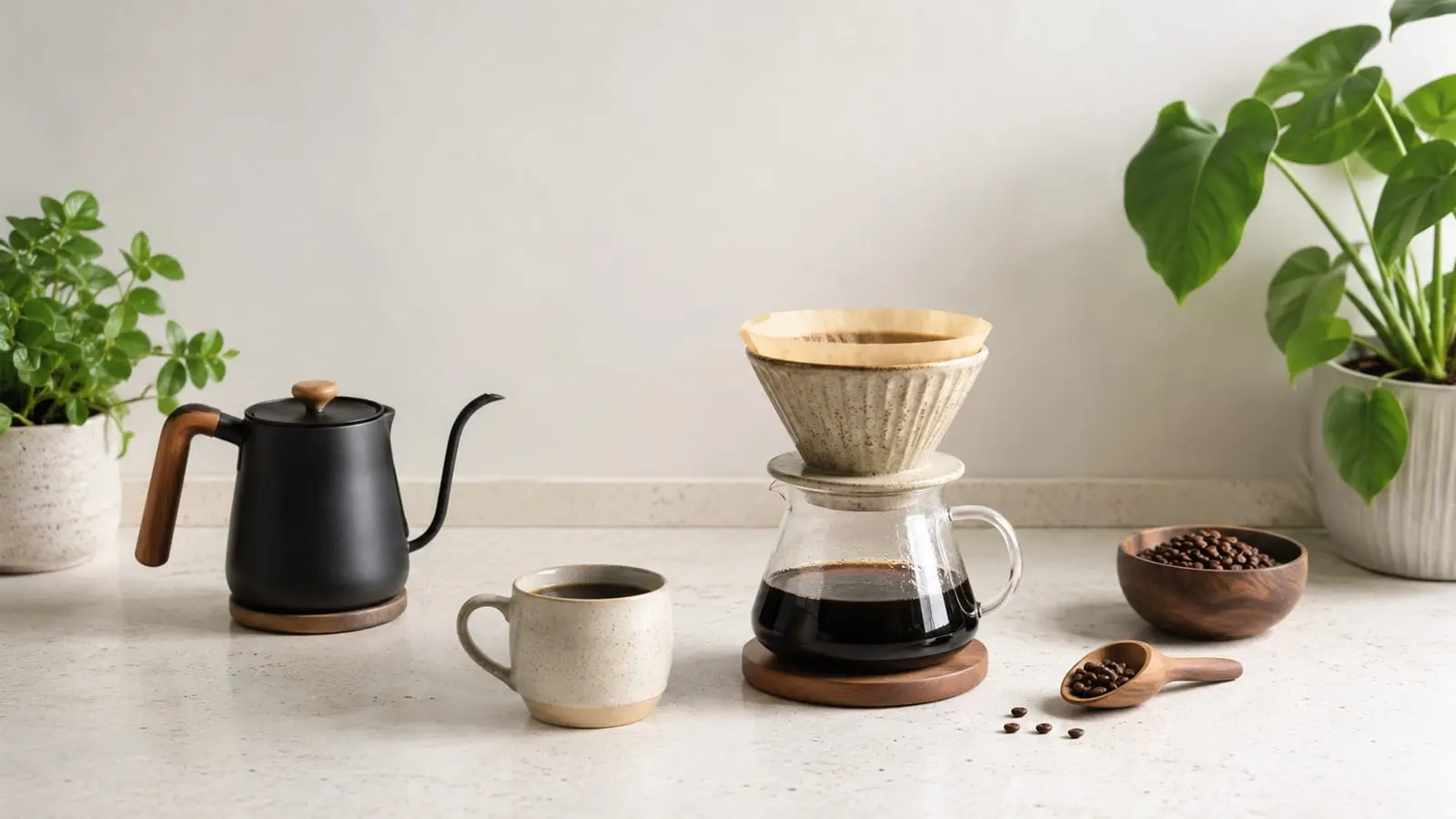
Start with a pour-over or gentle immersion brewer. These methods give the coffee enough contact time to show its perfume and body without burying the softer flavors under pressure.
Use fresh beans and measure your coffee and water. A kitchen scale helps keep the ratio steady, which matters more than buying a costly brewer. Grind just before brewing, then start with the setting you normally use for a similar light or medium roast.
Taste the first cup before making changes. If it tastes thin and sour, use a little more coffee or grind slightly finer. If it tastes bitter or dry, back off a click and use a little less extraction. Change one thing at a time so you know what helped.
A simple brewing plan keeps the cup under control:
- Use freshly roasted whole beans.
- Weigh the coffee and water.
- Grind shortly before brewing.
- Wet the grounds first and let them bloom.
- Give the grounds a gentle stir if water is bypassing the coffee.
- Taste the finished cup once it cools to room temperature.
- Adjust the grind or ratio on the next brew.
Don’t roast or brew Maragogipe as if it were a dark, dense espresso bean. Its floral character can disappear under heavy roasting, and its broad structure may extract unevenly if you push the grind too fine.
Espresso is possible, but I’d start elsewhere. Pressure can produce a thick shot, yet the cup may lose the delicate perfume that makes Maragogipe worth trying.
What usually goes wrong
The biggest mistake is buying Maragogipe for its size and ignoring freshness. Old beans can taste papery and flat, no matter how impressive they look.
The next mistake is roasting too dark. Dark roasting brings smoke and bitterness forward, while Maragogipe’s floral and soft fruit notes fade into the background. A lighter or medium roast gives you a better chance of tasting the variety itself.
Grinding too fine can also cause trouble. The porous structure may create a mix of fast-extracting fines and larger particles, leaving the cup both bitter and weak. Start a little coarser, then dial in from there.
Finally, don’t pile several changes into one brew. New ratio, new grind, new water, and a new brewer tell you nothing. Adjust one lever, taste again, and keep the change that improves the cup.
Is Maragogipe coffee worth trying?
Yes, if you like gentle perfume, rounded body, and a finish that lasts. Maragogipe is a good choice for drinkers who find sharp, high-acidity coffees tiring but still want more character than a basic chocolate-heavy blend.
Skip it if you’re chasing intense berry acidity or a smoky, heavy roast. Maragogipe can taste fruity, but it usually presents fruit with a softer voice.
Buy a specific lot for its freshness, origin, processing, and roast quality. Don’t pay extra just because the beans are large. The large beans make Maragogipe memorable on the table. Good farming and careful brewing make it memorable in the cup.
If you want to compare how growing regions shape coffee, this guide to regional coffee flavor profiles will help.
FAQ
Is Maragogipe stronger than regular coffee?
Maragogipe doesn’t automatically deliver more caffeine or a stronger-tasting cup. Its large seeds describe the plant’s structure. Your ratio, grind, extraction, and serving size decide how forceful the drink feels.
Can you drink Maragogipe with milk?
Yes, but keep the milk modest. A small splash can make the rounded body feel silkier, while a larger pour may cover the floral character that makes this coffee distinctive.
Does a larger coffee bean mean better quality?
No. Bean size comes from genetics, not from a quality grade. Freshness, ripe harvesting, processing, roasting, and storage have a much bigger effect on the drink.
Should Maragogipe be stored differently from other coffee?
No special storage method is needed. An airtight container protects the beans from heat and light, while the fridge brings moisture and stale odors into the equation. Grind only what you need for each brew.
Is Maragogipe a rare coffee?
It can be less common because the plants produce less coffee than standard Arabica varieties. Availability also depends on the harvest, farm, and importer. A rare label still needs the basics: fresh beans, clear details, and a cup you actually enjoy.