
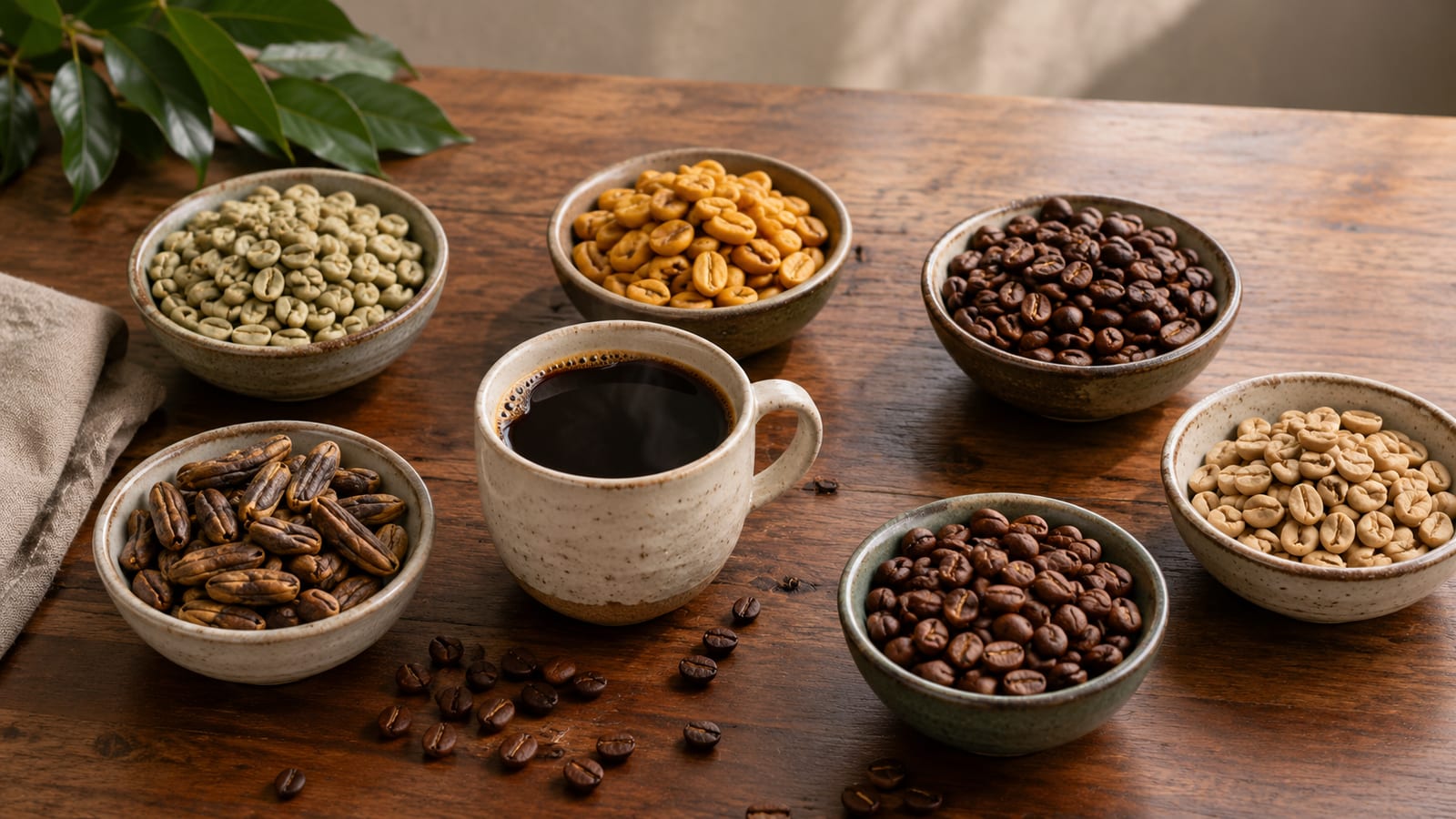
The rare beans worth chasing have a clear flavor reason to exist. The 7 most exotic coffee choices are Sudan Rume, Laurina, Coffea eugenioides, Wush Wush, Mokka, Liberica, and St. Helena coffee. Each brings something unmistakable to the cup, from wine-like berries to jackfruit and spice. Their value comes from genetics, place, and careful production, not because a seller found a shinier bag.
Last updated: 2026-10-11
What makes a coffee bean exotic?
Exotic coffee beans come from an uncommon species, variety, or isolated growing region. More importantly, they taste different enough that you can spot the difference in a blind tasting.
Rarity alone proves little. A tiny harvest can taste dull, stale, or scorched. Meanwhile, a well-grown rare variety can show flavors that common arabica seldom produces, including lavender, tropical candy, wine, tea, and woody fruit.
Processing also matters, but it shouldn’t carry the whole cup. Animal-digested coffee gets attention because the story sounds wild. Kopi luwak, for example, comes from beans partially digested and passed by civets. Ethical concerns and uneven quality make it a poor benchmark for exotic coffee.
The beans below earn their place through flavor. That’s the useful definition.
What are the 7 most exotic coffee beans worth tasting?

| Rank | Coffee | What makes it unusual | What to expect |
|---|---|---|---|
| 1 | Sudan Rume | Scarce wild-selected variety from the Boma Plateau in South Sudan near Ethiopia's border | Berry, flowers, wine |
| 2 | Laurina | Naturally low-caffeine arabica variety | Citrus, caramel, floral tea |
| 3 | Coffea eugenioides | Little-known parent species of arabica | Tropical fruit, candy, flowers |
| 4 | Wush Wush | Tiny Ethiopian variety | Lavender, peach, blueberry |
| 5 | Mokka | Distinctive small, round beans from a variety named for the Yemeni port of Mokha | Cocoa, spice, dried fruit |
| 6 | Liberica | Separate coffee species with oversized beans | Wood, ripe fruit, jackfruit |
| 7 | St. Helena coffee | Bourbon-type coffee from an isolated volcanic island | Citrus, stone fruit, caramel |
1. Sudan Rume
Sudan Rume is the first bag to buy if you want fruit without processing tricks. This scarce wild-selected variety comes from the Boma Plateau in South Sudan, near Ethiopia's border. It can taste intensely floral, berry-heavy, and wine-like. The acidity feels bright, but a careful roast keeps it juicy rather than sharp.
Its best cups have the perfume people often chase in prestige coffee, plus enough sweetness to hold everything together. However, darker roasting can flatten that range into ordinary bitterness. Buy it from a roaster that lists the variety, farm or producer, process, and roast date.
Brew it as a clean pour-over first. A paper filter makes the fruit and floral notes easier to separate.
2. Laurina
Laurina, also called Bourbon Pointu, is the rare low-caffeine coffee that still tastes complete. Expect delicate citrus, caramel sweetness, and tea-like flowers. The body stays light, yet the cup shouldn’t feel watery.
That balance makes Laurina useful for people who want less caffeine but find decaf flat. Its caffeine level comes from the plant itself rather than a later removal process. As a result, the original flavor structure stays intact.
Laurina needs a gentle roast. Push it too dark and you erase the exact qualities that make the variety worth buying.
3. Coffea eugenioides
Coffea eugenioides can make coffee taste like tropical candy. It’s one of arabica’s parent species, yet it remains far less familiar than arabica or robusta. Good lots bring flowers, ripe tropical fruit, and an unusually gentle bitterness.
The body can feel light, so anyone chasing a thick, punchy mug may find it too delicate. Drink it black before adding milk. Otherwise, you may cover the soft sweetness you paid to taste.
Eugenioides also shows why species matters. Fermentation can add fruit, but it can’t manufacture this bean’s naturally mild bitterness and candy-like character.
4. Wush Wush
Wush Wush is the splurge for drinkers who want loud aroma. This tiny Ethiopian variety can deliver lavender, peach, blueberry, and a sweetness that hangs around after each sip.
Processing has a large effect here. A clean washed lot can feel bright and floral, while a natural lot often pushes harder into ripe berries. Heavy experimental fermentation may turn those flavors into a boozy blur, so check the process before buying.
Choose Wush Wush over a prestige label with vague sourcing. The variety gives you a real reason to pay attention, and careful processing makes that reason obvious.
5. Mokka
Mokka gets its name from Mokha, the Yemeni port, and is known for its tiny, round beans. It produces a compact, syrupy cup with cocoa, dried fruit, and warm spice. The flavor is dense rather than flashy.
Mokka grows in several places, including Maui, where farmers cultivate it across different microclimates. Maui Mokka is instantly recognizable by its small, round seed shape. A related form called tall Mokka, a hybrid of Yemeni Mokka and Typica, arrived from Brazil in the 1960s.
This is the pick for drinkers who prefer chocolate and spice over flowers. It also handles immersion brewing well because its heavier sweetness suits a fuller-bodied cup.
6. Liberica
Liberica is the boldest departure from familiar arabica. It’s a separate coffee species with oversized beans and an aroma often compared with wood, ripe fruit, and jackfruit. Some cups feel smoky and strange; good ones pair that wild aroma with real sweetness.
That profile divides people fast. If you want clean citrus and a tea-like finish, skip it. If ordinary coffee has started tasting predictable, Liberica can reset your expectations.
Roasting skill matters because its large beans behave differently from standard arabica. Look for a roaster that names Liberica clearly rather than burying it inside an anonymous blend.
7. St. Helena coffee
St. Helena coffee earns attention through isolation and cup quality. It grows on a remote volcanic island and commonly shows clean citrus, stone fruit, and caramel. The best lots feel balanced and polished instead of aggressively unusual.
Its famous origin can inflate the story around it. So judge the bag by traceability and freshness before paying for the island name. A clear producer, process, harvest, and roast date mean more than a paragraph about Napoleon.
Start with a washed lot if you can find one. That gives you the clearest view of the coffee’s citrus and caramel structure.
Place changes what reaches the cup
Genetics sets the range, while place decides how that range develops. Temperature, rainfall, soil, shade, and elevation affect how slowly coffee cherries ripen. Slower development often builds denser sweetness and more layered acidity, though careful farming still decides whether that potential survives.
Isolation also preserves unusual plants. St. Helena’s remote setting is part of its identity, while Ethiopian varieties such as Wush Wush come from coffee’s deepest genetic home. You can explore more of these connections in this guide to regional coffee flavor profiles.
Regional rarity and genetic rarity aren’t the same thing. Ka‘ū on Hawai‘i Island, for example, has approximately 830 acres of coffee-growing area, 80–90 farms, and elevations from 1,100–2,700 feet. Coffee was first cultivated there in 1894 by J.C. Searle, and its better-known flavors include chocolate, cherry, floral, and citrus notes.
That context helps when reading labels. “Hawaiian” names a broad origin. “Mokka” names a variety with a recognizable seed shape and flavor pattern.
Genetics creates the strange flavors
Coffee species and varieties aren’t interchangeable labels. They control bean size, caffeine, bitterness, plant shape, disease response, and the flavors a skilled producer can reveal.
Most specialty coffee comes from Coffea arabica. Robusta, usually Coffea canephora, tends to bring more bitterness, heavier body, and less delicate acidity. Liberica steps farther away with its large beans and woody fruit aroma.
Within arabica, varieties such as Laurina, Sudan Rume, Wush Wush, and Mokka still carry distinct traits. Laurina’s lower caffeine and fine sweetness come from the plant. Mokka’s small beans and dense cocoa-spice profile do too.
This is why variety should appear on a rare coffee label. If the bag only says “exotic blend” and gives you no species, variety, or origin, the seller has removed the one detail you need most.
Processing can reveal or bury the bean

Processing is how producers remove the fruit around the coffee seed and prepare it for drying. It can sharpen a rare variety’s character or smear it under fermented flavors.
- Washed processing removes most fruit before drying. Expect cleaner acidity, clearer florals, and easier flavor separation.
- Natural processing dries the seed inside the cherry. It often adds berry sweetness, fuller body, and fermented fruit.
- Honey processing leaves some sticky fruit layer on the seed. It can sit between washed clarity and natural sweetness.
- Experimental processing may use controlled fermentation, sealed tanks, or added steps. Results range from vivid to exhausting.
Sudan Rume and Laurina often benefit from clean processing because their genetics already provide plenty of character. Wush Wush can handle a fruitier natural process, though heavy fermentation may make every sip taste like the same boozy berry.
Read the process before buying. Then taste the coffee with that information hidden and see if the cup holds up without the sales pitch.
Quality still comes before rarity
Specialty grading looks for clean flavor and limits defects, but a grade alone can’t tell you whether you’ll enjoy the cup. Rare coffees still need sound picking, careful drying, stable storage, and a roast that suits the bean.
Use the label as a basic quality check:
- The species or variety is named.
- The growing country and region are clear.
- The producer, farm, or washing station is identified.
- The processing method is listed.
- The bag carries a recent roast date.
- The beans smell fresh, sweet, and clean.
Traceability matters more as prices rise. A bag labeled only “rare African coffee” gives you nothing useful to verify. Browse this guide to choosing better coffee beans if you need help reading the rest of the bag.
Also inspect the roast. Oily beans usually signal a dark roast, which can bury floral, citrus, and tea-like flavors. That’s a poor use of Laurina, Sudan Rume, or eugenioides.
The rarest coffee is not automatically the best coffee
Scarcity can come from tiny harvests, difficult farming, low yields, remote shipping, or simple hype. Only some of those factors improve flavor. Auction attention and ornate packaging can push demand while the coffee inside remains merely pleasant.
Freshness causes another problem. Rare coffee often sits in collections because the buyer saves it for a special day. By the time that day arrives, the bright fruit has faded and the cup tastes like expensive cardboard.
Buy rare coffees to drink them. A fresh, well-roasted lot from a less famous region will beat a stale trophy bag every time.
This is also why Geisha missed the main list. It can be superb, and its Ethiopian roots produce the famous floral, tea-like profile. However, it’s now well known among specialty coffee drinkers, and the name attracts enough marketing noise to deserve its own guide to why Geisha tastes floral.
Taste rare coffee without fussy rules
A fair tasting needs consistency more than ceremony. Use the same brewer, water, grind setting, coffee-to-water ratio, and cup shape for every bean. Then compare aroma, sweetness, acidity, body, and finish.
- Grind each coffee just before brewing.
- Label the cups underneath so you can taste blind.
- Brew each coffee with the same measured ratio.
- Let the cups cool slightly before judging them.
- Smell first, then take a small sip.
- Write down specific flavors and textures.
- Reveal the labels after you choose a favorite.
Temperature changes flavor. A hot cup can hide sweetness and make acidity harder to read, while a cooler cup exposes florals, fruit, and defects.
If one coffee tastes sharp and thin, grind finer next time. If it turns dry or bitter, back off a click. Change one thing, then taste again.
Should you buy a blend or a single-origin lot?
Buy a single-origin lot first when you want to understand a rare bean. It gives you the cleanest read on Sudan Rume’s berries, Laurina’s tea-like sweetness, or Liberica’s woody fruit.
Exotic coffee blends make sense when the blender tells you what each component contributes. Laurina could soften a sharper coffee, while Mokka could add cocoa and body. That kind of blend has a clear job.
Avoid mystery blends built around a token amount of rare coffee. If the label hides the percentages, varieties, and origins, you can’t know what you’re tasting. You’re paying for the rare name printed on the front.
Build a collection you’ll actually drink
Start with contrast rather than buying seven similar floral coffees. Sudan Rume, Mokka, and Liberica make a useful opening set because each pulls in a different direction: bright fruit, syrupy cocoa, and wild woody fruit.
Then add Laurina or eugenioides for delicate sweetness. Move to Wush Wush when you want a louder floral cup. Save St. Helena for a clean, balanced comparison with the more dramatic beans.
Buy small bags and rotate them. Keep whole beans in airtight containers away from heat, moisture, and direct light. Grind only what you’re about to brew.
Finally, write down the variety, process, roast, and your own tasting notes. An exotic coffee collection should become a map of what you like, not a shelf of unopened souvenirs.
FAQ
Can you brew rare coffee as espresso?
Yes, but choose the bean carefully. Mokka and some Liberica lots can make rich, punchy espresso, while Laurina and eugenioides may feel delicate under pressure. Start with a balanced recipe, then adjust the grind based on taste.
Do exotic coffees always taste fruity?
No. Sudan Rume and Wush Wush lean toward fruit and flowers, but Mokka brings cocoa and spice. Liberica can taste woody, smoky, or like ripe jackfruit, depending on the roast and processing.
Can you drink these coffees with milk?
You can, though milk covers the finer flavors in Laurina, eugenioides, and St. Helena coffee. Mokka and Liberica usually stand up better because they carry more body and heavier flavors. Taste each one black first, then add a splash if the cup needs softening.
Is freezing rare coffee a good idea?
Freezing can slow staling if the beans are sealed tightly against air and moisture. Divide them into small portions before freezing, then let each sealed portion reach room temperature before opening it. Repeated thawing invites condensation and dulls the coffee.
Why is Geisha absent from the main seven?
Geisha remains distinctive, but it’s hardly unheard of now. Its jasmine, citrus, and tea-like profile has become the public face of premium specialty coffee. This list gives the space to varieties and species that still sit outside that spotlight.