
Passionfruit espresso tonic works when the espresso stays bold, the fruit stays tart, and the tonic keeps its fizz. The recipe card pairs a 60 ml double espresso with passion fruit pulp, chilled dry tonic, simple syrup, and large ice. The fruit softens tonic's bitterness, and the coffee gives the drink a roasted edge. Pour the espresso slowly over a spoon for clean layers, then stir before drinking.
Last updated: 2026-11-10
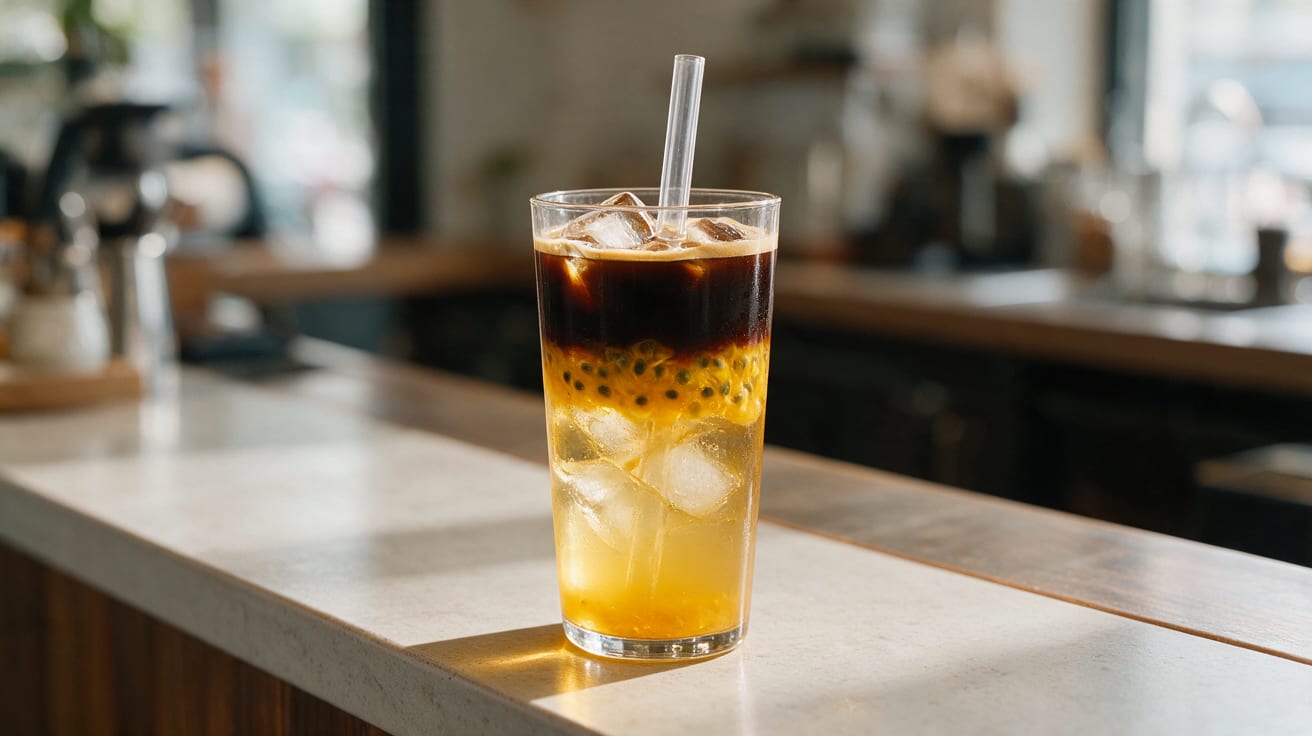
Passion Fruit Espresso Tonic Recipe
Ingredients
Method
- Pull a double espresso shot (60 ml) and set it aside to cool for 2 to 3 minutes.
- Scoop the passion fruit pulp from 1 to 2 fresh fruits and stir briefly to loosen it.
- Fill a tall highball glass with large ice cubes to about three-quarters full.
- Pour the chilled tonic water over the ice and add the simple syrup. Stir gently once to combine.
- Spoon the passion fruit pulp directly into the glass and let it sink through the tonic naturally.
- Hold a bar spoon just above the surface of the tonic and pour the cooled espresso slowly over the back of the spoon so it layers on top.
- Serve immediately with a wide straw and stir before drinking to combine all the layers.
Notes
What makes the flavors work
Espresso, tonic, and passion fruit each bring a clear job to the glass. The coffee tastes roasted and intense, and the fruit brings tart floral flavor. Tonic adds bubbles plus a gentle bitterness from quinine, the bark-derived ingredient that gives tonic water its bite. Together, they make a bright tropical drink with enough edge to keep the fruit from tasting sugary.
The better the espresso tastes on its own, the better the finished drink tastes. A smoky shot can turn harsh beside passion fruit. So choose espresso with clear citrus, floral, chocolate, or nutty notes. The layers look striking, but flavor matters more than keeping them separate.
How do you make passionfruit espresso tonic?

The drink is the same whether a menu calls it passion fruit espresso or espresso tonic with passion fruit. The recipe card above has the full method. The key move is the order: add the tonic, syrup, and pulp over ice, then pour cooled espresso slowly over the back of a spoon.
Stir before drinking so the tart fruit, bitter tonic, and coffee come together. You can use sparkling water for a lighter, soda-like drink. Still, tonic gives the bitter edge that keeps the fruit from tasting too sweet.
The ratio that keeps it balanced
The recipe card gives you a dependable starting point: one double espresso, passion fruit pulp, and chilled tonic, with simple syrup adjusted to taste. Keep the espresso concentrated. Too much tonic makes the coffee fade. Too much pulp can bury its roasted flavor.
Taste the tonic before adding syrup. If the fruit and tonic already taste sweet enough, use less. If the drink feels too sharp, add syrup gradually rather than pouring in more by habit.
Ingredients and substitutions that matter
Fresh passion fruit gives the drink tart flavor and seeds that settle through the tonic. Frozen pulp works well after thawing. Stir it briefly to loosen it without crushing the seeds.
Passion fruit syrup is an option when you want a smoother, sweeter drink. In that case, use less simple syrup alongside it. Strained purée gives you fruit flavor without seeds or pulp. Either way, taste and adjust: sweeter fruit needs less syrup, while sharper fruit may need a little more.
Use chilled, dry tonic. Flavored tonic can fight with the passion fruit, so keep the base simple. Large ice melts more slowly and keeps the drink cold without diluting it too fast. A small squeeze of citrus can sharpen the fruit, but add it lightly so it doesn't overpower the coffee.
Keep the layers clean
Cool the espresso briefly before pouring. Hot coffee warms the tonic and knocks down its sparkle faster. Then pour slowly over the back of a bar spoon held just above the drink.
A tall glass shows the layers clearly, but you don't need special equipment. The back of a teaspoon works too. Add the pulp before the espresso so the seeds settle through the tonic naturally.
Passion fruit and espresso, adjusted to taste
An espresso-led version keeps the coffee in front, with the fruit and tonic adding lift. Use the pulp as written and keep the syrup restrained. For a more fruit-forward drink, add more passion fruit flavor carefully. Then taste before increasing the sweetness.
Fresh pulp gives the most texture. Syrup makes a smoother, sweeter drink, while strained purée keeps the fruit flavor without the seeds. Whatever you choose, keep the espresso strong enough to stand up to the tonic.
A tropical drink with a crisp finish
The first sip is tart and fizzy, followed by roasted coffee and tonic's dry bitterness. Passion fruit brings a floral, tropical aroma, while the bubbles keep the drink lively. Stirring blends the layers into a more balanced flavor.
That bright, cold profile makes a passionfruit espresso tonic especially good in warm weather. Serve it right away, while the tonic is still lively and the ice hasn't melted much.
Espresso maracujá and other names
Maracujá is the Portuguese word for passion fruit. So espresso maracujá describes the same core fruit flavor. You'll also see it called passion fruit coffee. Across these names, the useful test is still the balance in the glass: fruit, espresso, and tonic should each be easy to taste.
Garnishes and serving
Large cold ice keeps the drink crisp. A passion fruit half makes a simple garnish. Meanwhile, a strip of lime or orange peel adds aroma without changing the drink much.
Serve it in a clean highball glass with a wide straw. Skip heavy garnishes and flavored toppings, because they crowd the fruit and coffee instead of helping them.
Common mistakes and easy fixes
- Flat tonic: Open a fresh bottle and build the drink just before serving. Once the bubbles fade, the drink loses its crisp finish.
- Weak coffee flavor: Use a freshly pulled double espresso. Drip coffee is too thin for this combination.
- Harsh bitterness: Check the espresso first. An over-extracted shot can taste burnt and dry, so fix the shot before reaching for more syrup.
- Too much sweetness: Reduce the syrup, especially if your passion fruit is already sweet.
- Pulpy texture: Strain the passion fruit if you want a smoother drink. The fresh pulp and seeds are part of the card's version, but they don't suit everyone.
- Muddy layers: Cool the espresso and pour it slowly over a spoon. If the layers mix early, the flavor will still be good. The striped look just won't last.
Small variations worth trying
The standard passion fruit espresso recipe is already balanced, so keep changes small.
- Softer tropical flavor: Add a splash of coconut water to the tonic layer. It makes the drink less bitter, but also less punchy.
- Brighter fruit: Add a little lime, then taste before adding more. Too much citrus can take over.
- Warmer aroma: Express orange peel over the glass. Keep the peel as a garnish rather than adding a lot of juice.
- A little heat: Add a small amount of ginger. It brings warmth, but too much will cover the coffee.
- Less sweetness: Use less simple syrup, or choose a less-sweet tonic if one is available.
For another sharp fruit-and-coffee pairing, try this grapefruit espresso tonic. A yuzu espresso tonic leans brighter and more citrusy.
Make it fresh, then serve it
Assemble the drink right before serving. The carbonation fades and the layers break down once the espresso hits the tonic. You can prepare the passion fruit pulp ahead and keep it sealed in the fridge. Pull the espresso fresh when you're ready, though.
For a group, set out the ingredients and build each glass to order. A large batch goes flat before everyone gets a good sip.
FAQ
Can I use passion fruit juice?
Yes, but expect less texture and a sweeter result. If the juice is sweetened, use less syrup and taste before adding more.
Can I make it without simple syrup?
Yes. The drink will taste sharper because passion fruit and dry tonic can both be tart or bitter. Stir, take a sip, and add syrup only if the balance needs softening.
Why does foam form when espresso meets tonic?
Fresh espresso carries crema and trapped gas, while tonic is carbonated. A little foam is normal. Cooling the shot and pouring slowly helps control it.
Is one glass a lot of caffeine?
A double shot is a moderate dose for most people. For context, the FDA's guidance on caffeine cites 400 milligrams a day as an amount not generally linked to negative effects for most adults. If you're sensitive, try it with a decaf shot.
Can I prepare the assembled drink ahead?
No. The tonic loses its fizz, and the layers won't stay distinct. Keep the fruit ready, then build each glass just before serving.