
Cranberry espresso is genuinely good when the tart fruit, concentrated coffee, and sweetness stay in balance. The best version is iced, fizzy, and bright, with fresh espresso and cold tonic doing the heavy lifting. Orange rounds the drink out, while cranberry gives it a clean snap. Start with the ratio, then taste and adjust.
Last updated: 2026-11-09
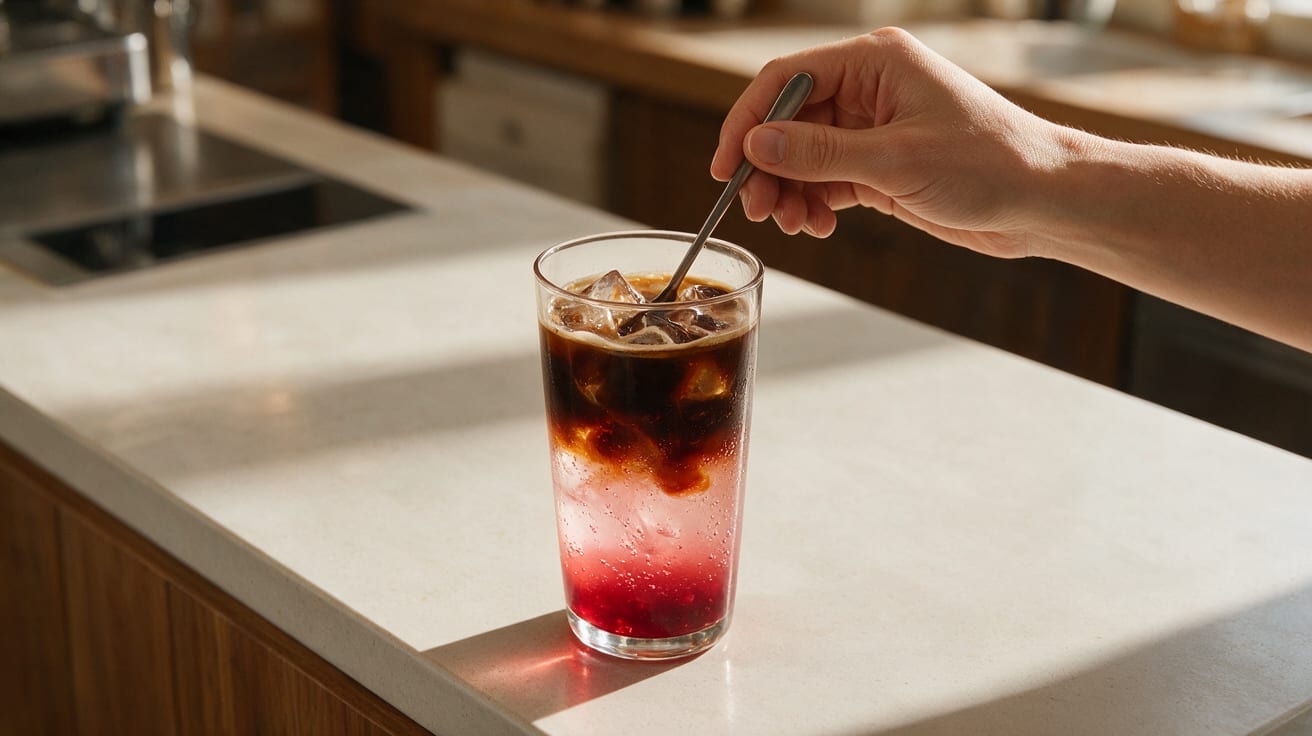
Cranberry Orange Espresso Tonic
Ingredients
Equipment
Method
- Fill a cocktail shaker with ice.
- Add the espresso, cranberry juice, orange juice, and simple syrup to the shaker.
- Shake until well chilled.
- Strain the mixture into a glass filled with ice.
- Top off with tonic water and give it a gentle stir.
Notes
What does cranberry espresso taste like?
Cranberry espresso works best as a bright, lightly sweetened drink with fizz. Use concentrated espresso, tart cranberry, chilled tonic or ice, and enough citrus to lift the flavor without burying the coffee.
Cranberry makes espresso taste brighter and fruitier. Meanwhile, tonic adds bubbles and a dry bitter edge. The finished drink lands somewhere between iced coffee and a grown-up cranberry soda.
An espresso tonic is cold, lightly bitter, and carbonated. Cranberry adds pucker, while citrus keeps the coffee from tasting heavy. You should still taste the espresso after every sip.
This is a spritzer rather than a hot flavored coffee. If you came looking for a cranberry latte, you can make one, but the fizzy version gives the fruit more room to work.
Ingredients and ratios
Ratio decides whether this drink tastes balanced or like coffee poured into fruit punch. Treat the espresso as the base. The recipe card pairs cranberry and orange, then uses simple syrup.
Tonic water is added alongside the espresso. That sounds generous, but the coffee is concentrated enough to hold its ground. Use cold tonic so the ice doesn’t have to do all the chilling.
The cranberry espresso recipe below uses orange in the main build, while lime gives the drink a sharper, drier edge. Orange is the safer starting point because it softens both cranberry and tonic.
| Ingredient choice | What it adds | Best use |
|---|---|---|
| Cranberry juice | Sharp, clean fruit | The standard tonic recipe |
| Unsweetened cranberry juice | More pucker and less sweetness | A dry drink with extra simple syrup as needed |
| Cranberry syrup | Sweetness, fruit, and more body | Creamy drinks or an easier mix |
| Dried-cranberry infusion | Softer fruit with less juice texture | Strong brewed coffee or frozen variations |
| Fresh orange juice | Round, juicy sweetness | The main recipe |
| Fresh lime juice | A sharper, leaner finish | Dry tonic variations |
Use fresh espresso with enough body to survive the tonic and melting ice. However, dark, oily coffee can turn harsh beside cranberry. A balanced medium roast is the easier fit.
The core recipe
The cranberry orange espresso tonic is the strongest everyday version. Tart cranberry, fresh orange, and concentrated espresso land bright and lightly sweet. Tonic adds bubbles and a dry finish.
The recipe card uses cranberry juice, fresh orange juice, simple syrup, espresso, and tonic. Orange makes the drink rounder and softer than lime, so it’s the better starting point.
The full measurements and method are in the card below. These details make the biggest difference:
- Pull the espresso fresh, then chill it with the fruit mixture.
- Keep the tonic cold until you’re ready to pour.
- Taste the mixed coffee and fruit before adding more syrup.
- Add the tonic last so the bubbles stay lively.
- Give it one gentle stir and serve it straight away.
Fresh espresso matters more than fancy equipment here. Stale coffee tastes flat before the tonic even hits the glass.
How to make it clean and fizzy
Start by chilling everything you can. Warm espresso melts ice fast, and that extra water thins the cranberry before you’ve tasted the drink properly.
Shake the espresso, cranberry, orange, and syrup with ice as directed in the card. Then strain the cold mixture over fresh ice. This gives you a cleaner flavor than building every warm ingredient in the serving glass.
Add the tonic slowly. A hard pour makes it foam, while aggressive stirring knocks out the carbonation. One gentle stir is enough.
Finally, taste before adding anything else. If the cranberry bites too hard, add a little more syrup. If the drink feels heavy, a small squeeze of citrus gives it lift without washing out the coffee.
Building the tonic
A cranberry espresso tonic needs cold bubbles and a firm coffee base. Weak brewed coffee disappears once tonic and ice enter the glass, so use espresso whenever you can.
For a clean presentation, pour the tonic slowly over the chilled base. You’ll get a brief gradient before stirring, with dark coffee below and lighter bubbles above. The effect won’t last, which is fine. Flavor matters more than a layered photo.
Lime gives the drink a crisp, dry edge. Use cranberry syrup for a smoother result or unsweetened juice for more bite. If the juice is too aggressive, add sweetness rather than more tonic because extra tonic only makes the coffee weaker.
If you like the bitter citrus side of this drink, try a grapefruit espresso tonic. For a sweeter tropical version, a passion fruit espresso tonic keeps the same cold, sparkling build.
Coffee and fruit variations
The standard orange version is the one to make first. After that, change one element at a time so you know what helped.
Juice, syrup, and dried cranberries
Cranberry juice gives you the cleanest drink. Unsweetened juice is sharper, while sweetened juice may need less simple syrup. Check the label, then taste before adding more sugar.
Homemade cranberry syrup gives you more control and a fuller berry flavor. Cook cranberries with water and sugar until the berries burst and the liquid turns ruby red. Then strain it without crushing the fruit hard, which can make the syrup cloudy and thick.
Use syrup sparingly because cranberry can overwhelm espresso fast. Extra sugar won’t rescue a drink that already tastes muddy.
For a softer variation, steep dried cranberries in hot water until the liquid takes on their color and flavor. Strain and cool the infusion before mixing it with coffee. Sweetened dried fruit can add plenty of sugar, so taste it first.
Strong coffee and frozen crystals
Strong brewed coffee works if you don’t have an espresso machine. Brew it more concentrated than your normal cup, cool it, and use the same place in the build. The result will taste lighter and less punchy.
You can also freeze cranberry and coffee mixtures in separate shallow containers. As they set, scrape each one with a fork to form loose ice crystals. Layer the two flavors in cold cups so each spoonful carries both fruit and coffee.
This frozen version benefits from a crisp cookie garnish, especially one with orange or plain butter flavors. Skip heavy chocolate cookies because they flatten the cranberry’s bright edge.
Hot and creamy versions
A hot cranberry latte works best with syrup. Sharp juice can taste thin beside warm milk, while syrup spreads more evenly through the espresso.
Steam the milk until it looks glossy and silky. Then keep the cranberry restrained. A latte that tastes like warm candy has gone too far.
For an iced creamy drink, build the coffee and cranberry over ice, then add lightly sweetened vanilla cold foam. Whole milk gives the richest topping, while barista-style oat milk stays soft and silky. A jar works for shaking foam, so there’s no reason to buy another gadget first.
Serving and adjusting the drink

Use a glass with enough room for ice and rising foam. Large, solid cubes melt more slowly, while crushed ice chills fast but dilutes the drink sooner.
A thin orange wheel or a few cranberries make a clean garnish. However, don’t pack the glass with fruit. It gets in the way of drinking and adds little flavor.
You can make the cranberry syrup or dried-fruit infusion ahead and keep it chilled in a sealed container. Brew the espresso and open the tonic close to serving. Flat tonic is dead weight in this drink.
| Problem | What happened | How to fix it |
|---|---|---|
| Too sour | Cranberry or citrus took over | Add a little syrup or use orange instead of lime |
| Too sweet | Juice, syrup, and tonic stacked up | Add more espresso or use a drier tonic |
| Too weak | The coffee was under-brewed or over-diluted | Use fresh espresso and less melting ice |
| Too bitter | The espresso or tonic is dominating | Add a splash of orange or back off the coffee slightly |
| Flat | The tonic warmed up or was stirred hard | Use a fresh cold bottle and stir once |
| Muddy | Too much syrup or fruit concentrate | Start again with less fruit and adjust slowly |
Change one thing at a time. Otherwise, you’ll fix the sourness, lose the coffee, and have no idea which adjustment caused it.
FAQ
Can you make this drink with decaf espresso?
Yes. Decaf espresso works the same way in the recipe, though its flavor can be softer. Use a fresh-ground coffee with enough body to stand up to cranberry and tonic.
How much caffeine is in the espresso?
A 2-ounce double shot of espresso contains about 126 milligrams of caffeine, typically between 125 and 150 milligrams. The actual amount changes with the beans, grind, dose, and extraction.
Why does tonic foam when espresso is added?
Espresso contains dissolved gas and fine coffee particles, which give tonic bubbles more places to form. Pour slowly over cold ingredients and leave room at the top of the glass. Stirring hard only makes the problem worse.
Will cranberry juice curdle milk?
Highly acidic cranberry juice can make some milks separate, especially when heat is involved. Cranberry syrup is the better choice for a latte or cold foam drink because it blends more smoothly. Add it to the coffee before pouring in the milk.
Can you use cranberry juice cocktail?
You can, but it’s already sweetened and usually softer than pure cranberry juice. Reduce the added syrup at first, then taste and adjust. Otherwise, the drink can turn sticky before the espresso has a chance to show up.