
Elderflower is a small flavor, so the whole trick is restraint. Elderflower coffee works when the flower sits behind the coffee as a soft, honeyed lift, and it fails when you pour in enough syrup to taste like a candle. For a hot cup, stir a little elderflower syrup into well-brewed coffee, taste, then add more only if you want it. For the smoothest version, steep dried blossoms with the grounds as cold brew, which is the recipe below.
Last updated: 2026-11-09
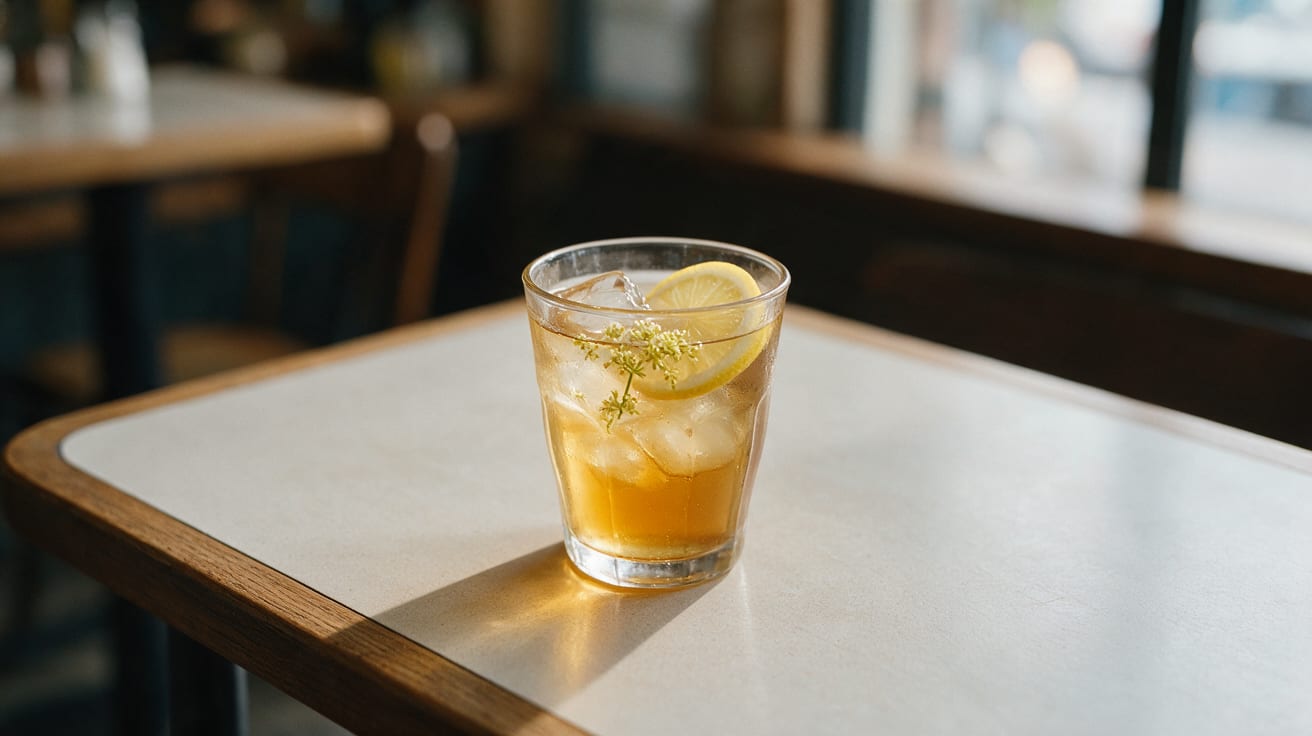
Elderflower Cold Brew with Floral Honey Notes
Ingredients
Method
- Add the coarse-ground coffee and dried elderflower blossoms to the mason jar. Pour in the filtered cold water and stir gently for about 20 seconds until all the grounds are saturated.
- Seal the jar and place it in the fridge. Steep for exactly 12 hours. Set a timer - past 14 hours the elderflower note turns soapy.
- Set a fine-mesh sieve over a large measuring jug or bowl. Pour the steeped mixture through the sieve to catch the grounds and blossoms.
- Line the sieve with a paper coffee filter and pour the strained liquid through a second time. This removes fine particles and gives a clear, clean concentrate.
- Transfer the finished concentrate into a sealed glass jar and refrigerate until ready to serve.
- Fill a glass with ice. Pour 120 ml (about 4 oz) of concentrate over the ice, then add 120 ml of cold water or oat milk. Stir briefly.
- Add a lemon slice and a teaspoon of honey if you want a hint of sweetness. Serve immediately.
Notes
- Use food-grade dried elderflower only - ornamental varieties are not safe to consume.
- Grind coffee no finer than a coarse sea-salt texture to avoid cloudy, over-extracted concentrate.
- Do not steep longer than 14 hours or the elderflower turns soapy and the batch is lost.
- Filter twice if concentrate looks cloudy: once through a sieve, once through a paper coffee filter.
- Dilute concentrate 1:1 with cold water or milk before serving unless you prefer it strong.
What does elderflower coffee taste like?
Expect a floral nose first: something between honeysuckle, pear, and fresh-cut grass. On the tongue it reads as sweetness, even when you haven't added sugar. The coffee still carries the body and the finish, so the cup should taste like coffee with a bright edge.
Balance is where it goes wrong. Too much elderflower and the cup turns perfumed or even soapy. Too little and you'll only catch it in the smell. A light roast gives the flower room, while a dark roast covers it up.
How to make elderflower coffee at home
The fastest route is elderflower syrup or cordial in coffee you've already brewed. Start with a small spoonful in a mug of fresh-ground, well-brewed coffee, give it a stir, and taste before adding more. Cordial is already sweet and concentrated, so it adds up fast.
Hot coffee lifts the floral aroma right away, so you'll smell it more than you taste it. Iced coffee tones that down, which means you may want a touch more syrup over ice. If you like making your own syrups, the method in our homemade lavender coffee syrup works the same way with dried elderflower in place of lavender.
The syrup route is quick, but it's sweeter and less subtle. For a cleaner floral cup with no added sugar, steep the blossoms with the coffee.
Elderflower cold brew
Elderflower cold brew is cold-brewed coffee infused with dried elderflower blossoms, steeped together in cold water for 12 hours to produce a concentrate that's smooth, low-acid, and gently floral. At the right ratio, it adds a faint honeysuckle background that makes a light-roast single origin taste almost like it was sweetened, even when it wasn't. It's the same quality you get from other floral cold brews, like this jasmine cold brew.
The one thing that goes wrong most often is steeping too long. Leave the jar in the fridge well past the time on the card and the elderflower can turn soapy, and there's no fixing that once it happens. Set a timer.
I use roughly a 1:8 coffee-to-water ratio here: 85 grams of coffee to 700 ml of water. That gives a concentrate you can serve over ice, cut half and half with cold water or oat milk.
Why this version works
- No heat needed, just a jar and a fridge
- Floral aroma without added syrup or sweetener
- Lower acidity than hot-brewed coffee
- Scales up easily for batch prep
Why the steep stops at half a day
The steep time is about flavor and body, not squeezing out more caffeine. One study of cold brew samples found that caffeine and 3-CGA (a chlorogenic acid, one of coffee's main acids) leveled off after 6 to 7 hours of cold brewing. So going longer than the card mostly gives the elderflower more time to turn harsh. Stick to the full steep, then strain right away.
Choose the coffee and elderflower carefully
You don't need special gear. You need the right roast, fresh blossoms, and clean water.
- Coarse-ground light roast coffee: Light roast lets the elderflower come through. Medium works, but the floral note is less distinct. Grind coarser than drip; the texture should look like rough sea salt.
- Dried elderflower blossoms: Buy food-grade dried elderflower from a tea supplier or herbalist. These come from the European elder, Sambucus nigra. Fresh heads work in late spring, but dried is more concentrated, so you'll need a good deal more fresh flower for the same effect.
- Filtered cold water: Hard tap water can mute the floral notes. Filtered or lightly mineral water gives a cleaner result.
- Honey (optional): A light floral honey like acacia pairs well if you want a touch of sweetness. Add it at serving, never during steeping.
- Lemon slice (optional): A thin slice in the glass brightens the elderflower and gives the drink a more defined finish.
Here's how roast level plays with elderflower:
| Roast | What you taste | Verdict |
|---|---|---|
| Light | Bright fruit plus clear honeysuckle | Best match |
| Medium | Caramel and nuts, softer floral note | Fine if that's what you have |
| Dark | Smoke and bittersweet, flower mostly gone | Skip it here |
Tips for success
- Grind coffee to a coarse, even texture before you weigh it, to avoid overextraction (pulling out bitter flavors).
- Add the elderflower directly to the jar with the grounds instead of a sachet. The flavor comes out fuller.
- Steep for exactly the time on the recipe card, in the fridge.
- Strain through a fine-mesh sieve, then again through a paper coffee filter to catch every fine particle.
- Store the concentrate undiluted. Add ice, water, or milk only when serving, because diluted coffee goes flat sooner.
Variations
- Elderflower lavender cold brew: Add a small pinch of dried lavender with the elderflower for a deeper floral layer. Go light, since lavender takes over quickly.
- Sparkling elderflower cold brew: Top the concentrate with chilled sparkling water instead of still water for a fizzy finish.
- Elderflower cold brew tonic: Pour concentrate over ice, add tonic water, and finish with a slice of cucumber.
If you like a tart twist instead, hibiscus cold brew uses the same steep-and-strain approach.
Storage
Strain the finished concentrate into a sealed glass jar and refrigerate it. It keeps well for about a week. Keep your fridge at or below 40° F (4° C), the temperature the U.S. Food and Drug Administration recommends for refrigerated food.
Don't freeze the concentrate once the elderflower is infused, because thawing flattens the floral aroma. To batch-make ahead, freeze plain cold brew instead, using the method in our overnight cold brew coffee recipes. Add the elderflower later in a fresh steep.
Easy ways to adjust and serve it

Serve the concentrate over ice with a thin lemon slice and, if you like, a teaspoon of honey. One part concentrate to one part cold water or oat milk is the ratio on the card and the one I go back to most. If the floral note fades behind the coffee, your blossoms may be old, so buy a fresher batch next time.
Oat milk works fine, though it gives a slightly thinner texture than whole dairy. For a quick spritz, pour a short pour of concentrate over ice, top with chilled sparkling water, and add a fresh mint sprig.
FAQ
Why does my elderflower cold brew taste soapy?
The steep ran long. Elderflower gives off pleasant aromatics early, and then the perfumed, soapy compounds build up. Once that happens, the batch can't be saved. Start over and use a timer.
Can I use elderflower cordial instead of dried blossoms?
Yes, but you change the process. Brew plain cold brew, then stir a small amount of cordial into each glass at serving time. Since cordial is sweetened, start low and add slowly. You'll get a sweeter, less delicate drink than the steeped version.
Is elderflower coffee safe during pregnancy?
Small amounts of food-grade dried elderflower used as flavoring are generally treated as safe. The bigger question is caffeine, and cold brew concentrate can be strong even after you dilute it. Ask your doctor or midwife what daily limit fits you, and count this drink toward it.
What food goes well with elderflower cold brew?
Lemon-forward pastries are the easy match: a ricotta lemon tart, almond croissants, or shortbread. The floral note also echoes stone fruit, so a peach galette works. Mild soft cheeses hold up well too, because the low acidity won't clash with creamy textures.