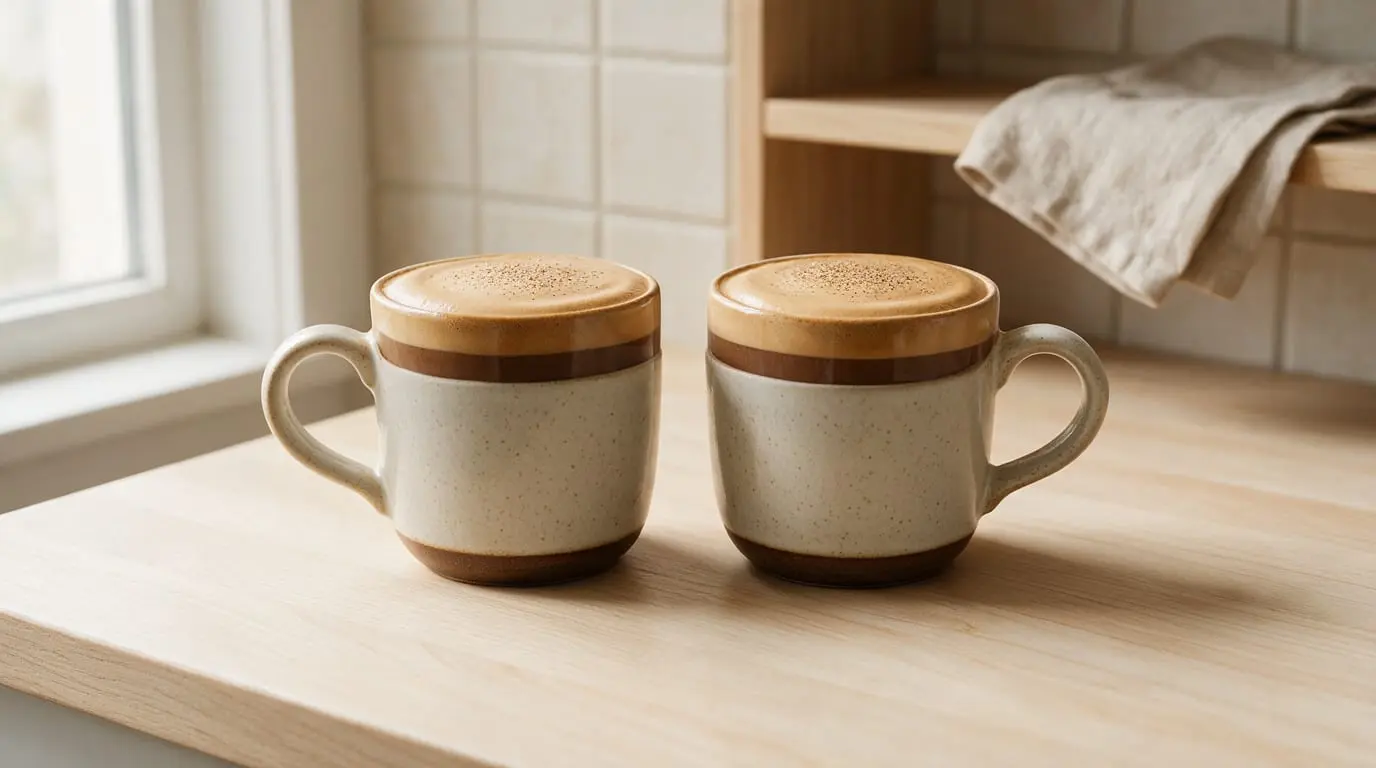
A pandan coconut latte is best as a balanced coffee drink, not a cup of melted candy. Fresh pandan brings vanilla-like, grassy fragrance, full-fat coconut milk adds silky body, and fresh espresso supplies enough bitterness to keep the sweetness in check. Make it at home, taste as you go, and serve it hot or iced instead of chasing an expensive café copy.
Last updated: 2026-08-18


Pandan Coconut Latte with Homemade Pandan Syrup
Ingredients
Method
- Add pandan leaves and 60 ml of water to a blender. Blend on high for 30 seconds until the leaves are finely broken down and the water turns deep green.
- Strain the blended mixture through a fine-mesh sieve into a small saucepan, pressing the solids firmly with the back of a spoon. Discard the fibrous pulp.
- Add the remaining 60 ml of water and 80 g of sugar to the saucepan. Heat over medium-low until the sugar dissolves completely, stirring gently. Do not let it boil - keep the temperature around 85 C / 185 F.
- Simmer for 3 minutes, then remove from heat. The syrup should be pale to medium green and coat the back of a spoon lightly. Let it cool for 5 minutes before using.
- Pour 160 ml of well-shaken full-fat coconut milk into a small saucepan or milk pitcher. For a hot latte, heat to 60 C / 140 F. For an iced latte, keep it cold.
- Froth the coconut milk using a handheld milk frother for 20 to 30 seconds until it's lightly foamy. Full-fat coconut milk won't form stiff peaks like dairy, but it will get creamy and slightly aerated.
- For an iced latte: fill a tall glass with ice cubes. Add 15 ml of pandan syrup, then pour in the cold frothed coconut milk. For a hot latte: add 15 ml of pandan syrup to a warmed 300 ml cup, then pour in the hot frothed coconut milk.
- Pull 2 double shots of espresso (total 120 ml). Pour the espresso slowly over the back of a spoon or directly down the side of the glass to create a visible layer on top.
- Taste and stir. Add the remaining 15 ml of pandan syrup if you want more sweetness or pandan flavor. Serve immediately.
Notes
- Blend pandan leaves with 60 ml water before straining for the most concentrated flavor
- Do not boil the pandan syrup - gentle simmering at 85 C / 185 F preserves the aroma
- Use full-fat canned coconut milk only; carton versions are too thin for a latte texture
- Taste the syrup at room temperature before sweetening further - it reads sweeter when cold
- Pull the espresso shot last so it's fresh and hot when poured over the cold coconut milk
The drink in one glass
A pandan coconut latte layers homemade pandan syrup with coconut milk and fresh espresso. The result is floral, faintly sweet, and rich without being heavy.
Pandan is a tropical plant with long, blade-like leaves. It smells like vanilla crossed with freshly cut grass, and it's been used in Southeast Asian cooking and drinks for generations. The species used in cooking, Pandanus amaryllifolius, belongs to the Pandanaceae plant family.
Here, the leaves become a simple syrup with fresh green color and a soft herbal aroma. Coconut milk rounds out the coffee without burying it. A little gula melaka-style sweetness and salt can make the flavors pop, but too much turns the drink into dessert.
The one place this recipe can go wrong is over-sweetening. Start with a small pour of pandan syrup and taste before adding more. You can serve the latte hot or over ice. Both work, but they show different sides of the drink.
Pandan coffee and pandan latte are different drinks
Pandan coffee is the broader category. It means coffee flavored with pandan, whether the base is espresso, strong brewed coffee, Vietnamese phin coffee, or even cold brew.
A pandan latte puts more emphasis on the milk. In this recipe, full-fat coconut milk softens the espresso and carries the pandan aroma through the drink. Dairy milk or oat milk can work too, but coconut gives the clearest tropical flavor.
So a pandan coffee drink might be black coffee with pandan syrup. A pandan latte is coffee, pandan, and a creamy milk base in the same glass. The names overlap, but the texture is the giveaway.
Why do pandan and coconut work so well with coffee?
Pandan contributes fragrance rather than sharp sweetness. Its vanilla-like scent has a grassy edge, so the drink tastes lighter and greener than a standard vanilla latte.
Coconut milk adds fat and body. Full-fat canned coconut milk gives the smoothest result, while carton coconut milk is thinner and can make the latte watery. Shake the can well before opening because the thick coconut cream settles.
Coffee supplies roast depth and bitterness. That bitterness matters. Without it, pandan and coconut can taste soft and sugary instead of balanced.
Pandan and vanilla aren't the same either. Vanilla reads warm and round, while pandan has a herbal, almost hay-like edge. They can work together, but don't treat them as interchangeable.
The famous café version isn't the target
The café version helped push this flavor combination into the spotlight. Its limited availability made access part of the excitement.
Still, the café version isn't the point. You don't need a branded cup, expensive machine, or imported syrup to make a good pandan coconut latte. You need fresh flavor, enough coffee, and a restrained hand with the sweetener.
The homemade version is better suited to adjustment. Add more syrup if the pandan disappears. Back off if the coconut starts tasting like frosting. A café recipe has to suit a broad audience; yours only has to suit your next glass.
Hot or iced?
The iced version is the better starting point. Cold coconut milk keeps the drink refreshing, and the pandan aroma stands out against the ice. It also shows off the green syrup, white milk, and dark espresso in clear layers.
The hot version has more weight. Warm coconut milk makes the texture feel fuller, while espresso and pandan settle into a deeper, rounder flavor. Heat the milk gently rather than boiling it, or the coconut can taste flat and the pandan aroma will fade.
| Version | What stands out | Best choice when |
|---|---|---|
| Iced | Bright pandan aroma, clean layers, refreshing finish | You want a lighter afternoon drink |
| Hot | Fuller coconut body, deeper coffee flavor | You want a softer, richer latte |
For the iced latte, keep the coconut milk cold and pour it over ice before adding the espresso. For the hot version, warm the coconut milk and use a warmed cup. Serve either one immediately because the finished drink doesn't store well.
The home method that matters

This pandan latte recipe uses fresh pandan leaves, full-fat canned coconut milk, espresso, white sugar, and ice for the cold version. The recipe card below has the complete ingredient list and method, so use it for the exact amounts and steps.
The practical moves matter more than fancy equipment:
- Blend the pandan leaves with water before straining. This pulls out more color and aroma than simply soaking the leaves.
- Strain firmly through a fine-mesh sieve. Fibrous pandan pulp makes the syrup gritty.
- Keep the syrup at a gentle heat. Boiling drives off the delicate fragrance.
- Shake the coconut milk before measuring it. The thick and thin parts separate in the can.
- Froth the coconut milk lightly. It won't make stiff dairy foam, and pretending otherwise only creates a mess.
- Pull the fresh espresso just before assembly. Fresh coffee keeps the drink punchy.
- Add the first pour of syrup, then taste. Add more only if the cup needs more sweetness or pandan.
The standard simple-syrup ratio is equal parts sugar and water by volume. This recipe uses its own measured amount of white sugar and water, plus blended pandan water for a fresher flavor and greener color.

Fresh leaves give the cleanest flavor, but frozen leaves are a sound substitute. Thaw them fully and pat them dry before blending. Pandan extract works as a backup, though cheap extract can taste chemical and artificial. Use it sparingly.
For another creamy coffee with a tropical edge, see this coconut cream coffee. It takes a different route, but the same rule applies: let the coffee stay present.
The syrup stays separate from the milk
The coconut pandan syrup in this recipe starts with fresh pandan leaves, water, and white sugar. The leaves are blended, strained, and gently heated with the sugar. That gives you a fragrant pandan base without relying on bottled flavoring.
The card doesn't add coconut flavor directly to the syrup. The coconut comes from the full-fat coconut milk in the latte, which keeps the syrup brighter and easier to dose. Adding coconut milk to a stored syrup would make it less useful and more prone to separation.
Store the cooled pandan syrup in a sealed glass jar in the refrigerator for several days. Keep it separate from the coconut milk and espresso. The assembled latte will lose its texture and freshness within a couple of hours, so make each serving fresh.
You can also freeze the syrup in small portions. The flavor holds better than you'd expect from freezing. Thaw a portion in the refrigerator or at room temperature before stirring it into the drink.

Dairy-free by design
This pandan coconut latte is fully dairy-free when made with canned coconut milk. There is no butter, cream, or milk solids in the recipe. It's also vegan-friendly when the sweetener and any substitute ingredients you use are vegan.
Use full-fat canned coconut milk for the creamiest result. Carton coconut milk is made for drinking and cereal, not for carrying espresso in a latte. It usually has less body, so the coffee can taste thin.
Coconut milk can separate when chilled or stored. Shake the can well before using it, then froth the milk lightly. Don't expect stiff peaks like dairy foam; a creamy, slightly aerated texture is the sweet spot.
If coconut milk has separated badly after refrigeration, set the can in warm water and shake it again. Don't microwave the can or heat the milk until it boils. High heat won't fix a split latte.
Vietnamese coffee makes a darker variation
Vietnamese coffee makes a strong base for pandan coconut coffee because its concentrated flavor can stand up to coconut milk and syrup.
Brew the coffee with a phin, the small metal filter used for Vietnamese coffee. Let the coffee drip directly into your serving glass, then add the pandan syrup and coconut milk. The result is darker and more intense than an espresso latte, with a thicker coffee presence.
This style needs restraint with sweetness. Vietnamese coffee already has a bold roasted edge, and coconut milk adds plenty of richness. Start with less syrup, taste after stirring, and add more only if the coffee is overpowering the pandan.
For a different Southeast Asian-inspired pairing, try this mango sticky rice latte. It leans sweeter, so the coffee needs enough strength to keep up.
Taste and adjust after every batch

Taste the drink before making a second one. Rigid syrup rules miss the point because pandan leaves vary in age, size, and fragrance.
How do you fix the balance?
| Problem | Fix |
|---|---|
| Too sweet | Add more coconut milk or coffee, then taste again |
| Too weak | Use stronger coffee or reduce the coconut milk slightly |
| Too bitter | Add a splash of coconut milk and check that the espresso isn't overextracted |
| Too heavy | Use less coconut milk or serve it over ice |
| Too salty | Add more unsweetened coconut milk and coffee to spread the salt through the drink |
| Little pandan aroma | Add a small amount of syrup, not a large pour of sugar |
| Pale syrup | Use fresher leaves and avoid boiling the syrup |
If the flavor is close but dull, a tiny amount of salt can sharpen the pandan and coffee. Don't pour in enough to taste salty. Salt should sit behind the drink, not walk into the room first.
If the syrup turns pale or yellowish, the leaves were likely old or the syrup was cooked too hard. Fresh, bright-green leaves give better color. A very small amount of matcha can restore the green color, but use it for appearance only because too much changes the flavor.
The best adjustment is one change at a time. Add syrup, stir, and taste. Then change the coffee or coconut milk if the balance still isn't right.
Serve the iced drink in a clear glass if you want the layers to show. A pandan leaf tucked inside the glass makes it look intentional without adding more sweetness. The latte pairs well with coconut shortbread, pandan chiffon cake, mango sticky rice, or plain butter shortbread.
Strongly spiced pastries are a poor match. Cinnamon and cardamom can crowd the grassy-vanilla pandan notes. Lightly sweet, buttery food gives the drink room to speak.
FAQ
Can you make a pandan latte without espresso?
Yes. Use strong brewed coffee instead of espresso, then keep the coconut milk and pandan syrup the same. The finished latte will taste less concentrated, so taste after stirring before adding extra syrup.
Does pandan latte contain caffeine?
Yes, this recipe contains caffeine because it uses espresso. The amount depends on the coffee you use and how it was brewed, so choose decaffeinated coffee if you want to reduce caffeine.
Why does coconut milk split in coffee?
Coconut milk can separate when it meets hot coffee or sits for too long. Shake the can first, warm it gently for a hot latte, and froth it just before mixing. Stirring also brings the texture back together.
Can you use pandan paste instead of pandan leaves?
You can use pandan paste as a backup, but check its label before adding it. Paste can be sweeter, thicker, and more heavily colored than fresh pandan. Add a little, taste, and adjust the syrup rather than swapping it in at the same volume.
What food pairs well with a pandan coconut latte?
Buttery or lightly sweet baked goods work best. Coconut shortbread, pandan chiffon cake, and plain croissants complement the drink without competing with it. The flavor holds better than you'd expect from freezing, so thawed pandan syrup still works well when you want the latte later.