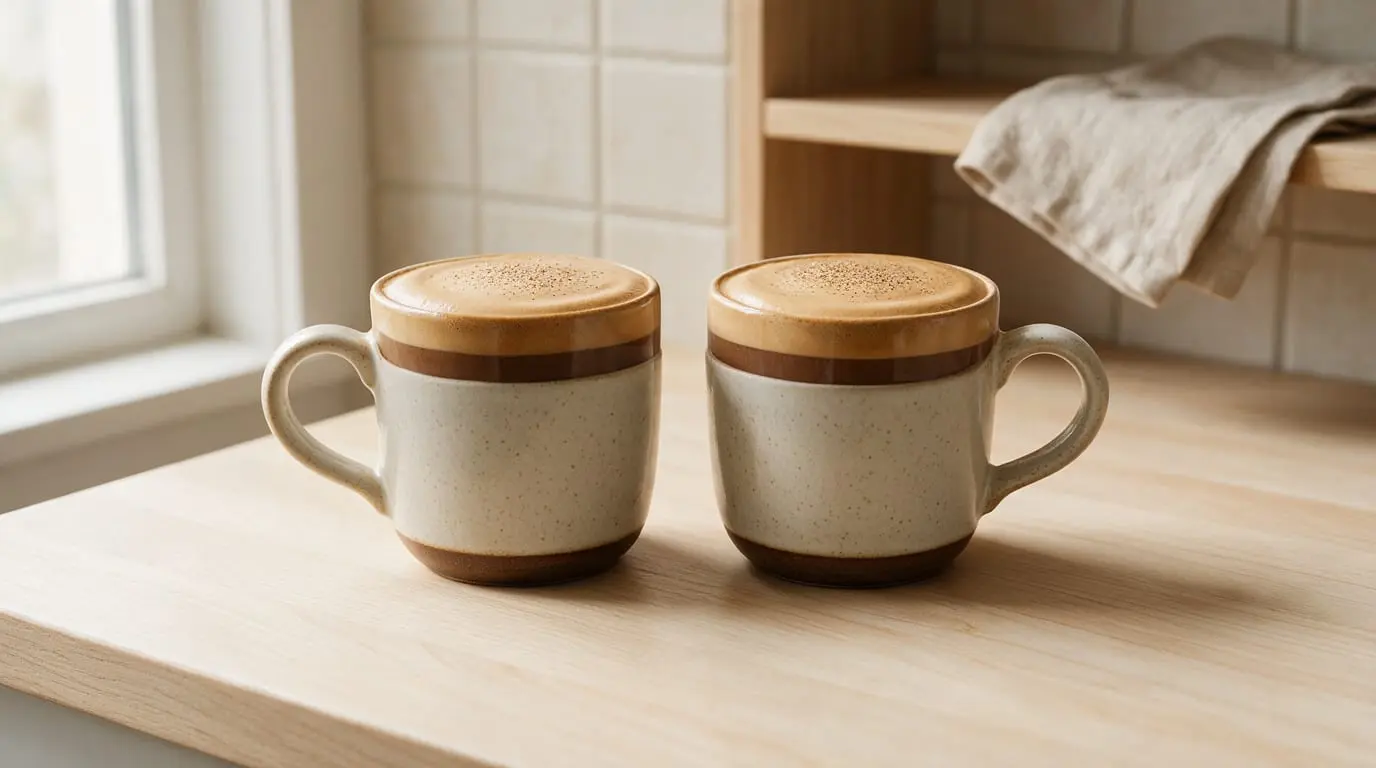
Steam fresh milk until it's silky with a thick cap of foam, then pour one fresh espresso through it slowly. That's the whole latte macchiato recipe for home baristas: milk first, coffee second, into a tall clear glass so the layers hold. A Moka pot and a handheld frother will get you there. Careful ratios and a slow pour matter far more than whatever machine sits on your counter.
Last updated: 2026-08-02
You can make a barista-quality latte macchiato right in your own kitchen. If you've been craving that blend of espresso and frothy milk but felt intimidated by the latte macchiato recipe at coffee shops, you're in for a treat. Nothing below needs professional gear.

Latte Macchiato
Ingredients
Method
- Pull a shot of espresso using an espresso machine or Moka pot. Freshly ground beans work best.
- Warm the milk over the stove or in the microwave until steaming but not boiling.
- If using flavored syrup, add it to the milk now. Use a milk frother to create a light, airy foam. If you don’t have a frother, a whisk works too.
- Pour the steamed milk into a glass, holding back the foam with a spoon. Then, add the foam on top of the steamed milk.
- Slowly pour the espresso over the milk and foam, creating distinct layers. If you prefer, drizzle flavored syrup over the top instead of stirring it into the milk.
Notes
What is a latte macchiato?
Macchiato is Italian for stained, or marked. In this drink the milk is what gets marked, because the espresso goes in last and streaks down through the foam. The name is a description of the pour, not a flavor.
A caffè latte is milk and coffee stirred into one thing. A latte macchiato keeps them apart: a body of hot milk, a dark band of espresso, foam floating on top. Because milk leads, it tastes softer and sweeter than a latte of the same size.
Serve it in a tall, transparent glass, traditionally one holding 250 to 300 ml, so all three layers show. That ability to present a drink so visually appealing raises the whole experience. Mastering the details of this layered coffee drink can make your homemade latte macchiato just as impressive as those from your favorite café. If the naming still trips you up, my guide to the macchiato family sorts the whole group out.
What you need before you start
Two ingredients do the work, and both have to be fresh. The recipe card calls for 8 ounces of whole milk and about 1 ounce of espresso, plus flavored syrup if you want it. Vanilla, caramel and hazelnut all behave well.
Buy whole beans with a roast date on the bag and grind them right before you pull. Ground coffee goes stale in minutes, so this single habit does more for the cup than any upgrade you could buy.
For tools, keep it short:
- An espresso machine or a Moka pot for the shot
- A milk frother, or a whisk if you don't have one
- A tall clear glass, because the layers are half the point
- A regular spoon for holding back foam and slowing the pour
The ratio that keeps it milky, not muddy
Standard latte macchiato recipes land around 200 to 240 ml of steamed milk per serving, which is the 8-ounce pour the card asks for. One shot against that much milk is meant to read as gentle. If you want the coffee louder, pull a second shot rather than cutting the milk, since less milk means fewer layers to see.
Espresso specs vary by roaster, and it helps to see one written out. Coffee Bros. describes a single shot as 7 to 9 grams of ground coffee in a single basket, pulled to 14 to 18 grams in the cup at a 1:2 brew ratio, in 25 to 30 seconds at 201°F with about 30 pounds of tamping pressure. Treat that as a starting point, then taste and adjust.
How do you make latte macchiato at home?
The order on the recipe card is the recipe: pull the shot, warm the milk, froth it, build the milk and foam in the glass, then add the espresso last. Three moments decide whether it works.
Milk temperature comes first. Steaming but not boiling is the target, because boiled milk tastes flat and scorched and its foam collapses. Pull it off the heat while it's still comfortable to sip.
Second, hold the foam back with a spoon as you pour the milk, then spoon the foam on afterward. Dump it all in at once and you get one beige mass instead of two layers.
Third, pour the espresso slowly down the side of the glass or over the back of a spoon. Fast pours punch straight through the milk and mix everything.
Frothing milk without a steam wand

Any of these will give you glossy milk with a thicker cap on top:
- Steam wand. The best texture by far. Keep the tip just under the surface to pull air in, then sink it to spin and heat the milk.
- Handheld frother. Cheap and quick. Work near the surface for a few seconds, then go deeper so the bubbles tighten up.
- French press. Pour warm milk in, then plunge fast for half a minute. It makes a stiff, drier foam that sits well on top.
- Whisk. Slower and armsy, but it works, and the card allows for it.
Skip the sealed-jar shake here. Hot milk in a closed jar builds pressure and can pop the lid, so save that trick for iced drinks and use a frother or whisk for the hot version.
You want small, tight bubbles and a surface that looks like wet paint. Big soapy bubbles mean you let in too much air, so give the pitcher a firm tap on the counter and swirl it before pouring.
Pouring for clean layers

Let the milk sit for a few seconds after it lands in the glass. That short rest lets the foam settle into a distinct cap instead of drifting through the milk. Meanwhile, keep the espresso hot and ready.
Clear glass matters more than people admit. A mug hides the layers, and the layers are the reason this drink exists rather than a caffè latte.
Espresso is denser than foam and lighter than hot milk, so it naturally wants to sit in the middle. Your only job is to pour gently enough to let physics do it.
The other macchiato, the espresso one
A caffè macchiato flips the whole thing. The traditional Italian version is espresso marked with a small amount of steamed milk or milk foam, served in a small cup and finished in a few sips. Coffee leads, milk just takes the edge off.
So if someone hands you a tall layered glass and calls it a macchiato, they mean the latte version. Order the small one when you want the espresso itself, with a softer landing. I've written a longer comparison of espresso macchiato and latte macchiato if you want the side-by-side.
Choosing coffee and milk
Go with a fresh medium to medium-dark roast for espresso. Light roasts can taste sour and thin under this much milk, while very dark, oily beans turn ashy. For roast and brewing standards worth reading, the Specialty Coffee Association publishes the industry reference.
Milk changes everything about how the drink looks and drinks:
| Milk | Foam | Taste | Layering |
|---|---|---|---|
| Whole (what the card uses) | Thick, glossy, holds a long time | Round and sweet | Best |
| Reduced fat | Lighter but stable | Cleaner, less rich | Good |
| Skim | Big, dry, airy, collapses quickly | Thin, more coffee-forward, fewer calories | Fine if you drink it fast |
| Barista oat | Close to whole milk | Sweet, mild | Good |
| Soy | Stiff, decent | Beany, can curdle against hot espresso | Mixed |
| Almond | Thin and bubbly | Watery, nutty | Poor, splits fast |
If you're going dairy-free, buy the barista version rather than the regular carton. The added fat and protein are what let it foam and hold a layer at all.
Fixing a latte macchiato that tastes off
Change one thing at a time, then taste again. Otherwise you'll never know what fixed it.
The coffee tastes weak or lost
Your shot is drowning. Pull a double, or grind a touch finer so the espresso comes out sweeter and denser instead of watery.
It tastes harsh and bitter
Bitterness usually means the grind is too fine or the shot ran too long. Back off a click on the grinder and pull a shorter shot. Scalded milk causes the same complaint, so check the heat too.
The foam is flat
Cold, fresh milk froths best, and old milk barely froths at all. Also check your fat: skim gives volume but almost no staying power.
The layers mixed
You poured too fast, or the milk was too thin to hold anything up. Use the back of a spoon and slow down.
It goes lukewarm halfway through
Warm the glass with hot water first and dry it. Glass pulls heat out of milk quickly, and a latte macchiato is a big drink to work through.
Drink it fresh, within a few minutes. This one doesn't keep, and reheating splits the foam.
FAQ
Can I make a latte macchiato without an espresso machine?
Yes. A Moka pot gives you a strong, concentrated brew that layers nearly as well. Drip coffee is too weak and too watery, and it will just blend into the milk.
Can I make an iced version?
Fill the glass with ice and cold milk, add cold foam, then pour the espresso over the back of a spoon. Layers actually hold better cold, since the temperature difference keeps things separated.
Should I stir it before drinking?
That's your call. Sip through the layers first for the contrast, then stir if you'd rather have one even, milky drink all the way down.
Will flavored syrup ruin the foam?
No. Stirring syrup into the milk before frothing works fine and sweetens the whole glass. A drizzle over the top looks better but only flavors the first few sips.
How much caffeine is in it?
All of it comes from that single shot of espresso, since milk contributes none. Adding a second shot is the only thing that changes the number.
Related on this blog
Related: How to Pour Latte Art at Home Without Espresso Gear
Related: Why Olive Oil Belongs in Coffee, and When It Doesn’t
Related: The Pouring Method Behind Layered Caramel Macchiatos